Medicine Cabinet Organization and Safety Tips
My medicine cabinet was the one spot in my bathroom I avoided organizing for years. It’s small, it’s behind a mirror, and it’s easy to just close the door and pretend the chaos inside doesn’t exist. But when my daughter scraped her knee last summer and I spent four panicked minutes digging through expired cough syrups and loose bandages to find an antibiotic ointment, I knew it was time.
Medicine cabinet organization is about more than just neatness. It’s a safety issue, especially if you have kids. Knowing exactly what you have, where it is, and whether it’s still effective can genuinely matter when someone is sick or hurt at 2 a.m. This guide walks through the full process, from cleanout to a system that stays organized with minimal effort.
The FDA warns that using expired medications can be ineffective or even harmful, as chemical compounds break down over time and may produce unexpected side effects. That alone is a good reason to sort through your cabinet today.
Should You Actually Store Medicine in a Medicine Cabinet?
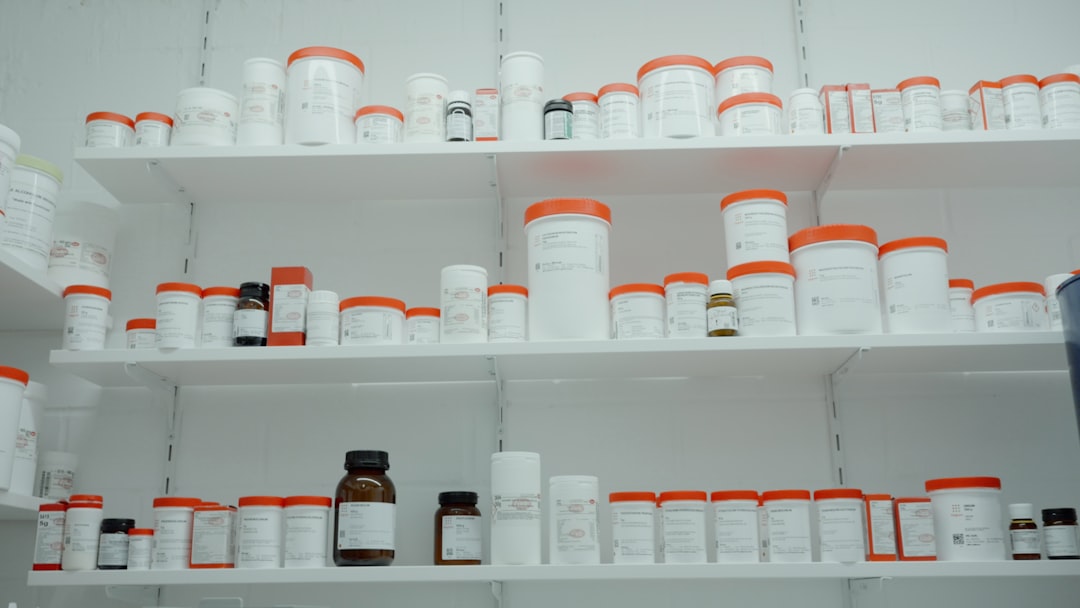
Surprisingly, no. The bathroom medicine cabinet is one of the worst places to store most medications. Heat and humidity from showers cause medications to degrade faster than they would in a cool, dry environment. The FDA recommends storing medicines in a cool, dry place at room temperature, which rules out most bathrooms. A bedroom drawer, hallway closet, or high kitchen shelf is a better choice for prescription and temperature-sensitive medications. Your medicine cabinet is still great for daily-use toiletries, first aid supplies, and non-sensitive over-the-counter products like bandages and cotton swabs.
Step 1: Empty the Entire Cabinet
Take everything out of the cabinet and lay it all on the bathroom counter. This step matters because you need to see what you actually have. I pulled 47 items out of my small three-shelf cabinet, and more than a third of them needed to go.
As you remove items, group them loosely:
- Medications (prescription and over-the-counter)
- First aid supplies (bandages, ointments, thermometer)
- Daily toiletries (toothpaste, skincare, deodorant)
- Random items (everything that doesn’t fit the above categories)
According to a survey by the National Institutes of Health, approximately 80% of American households have at least one expired medication in their home. You’re not alone if your cabinet has some surprises in it.
Step 2: Check Every Expiration Date
Go through each medication and check the date printed on the packaging. This is the most important part of medicine cabinet organization, and it’s the step most people skip.
What to look for:
- Expiration dates on bottles, boxes, and blister packs
- Discolored tablets or capsules that look different from when you bought them
- Liquids that have separated or changed color
- Ointments with a strange smell or texture
I found a bottle of children’s ibuprofen that had expired 18 months earlier. It had been sitting right in front, and I had been reaching past it every day without checking. That’s the kind of thing that becomes a problem when your kid has a fever at midnight and you grab whatever’s closest.
Time estimate: 10 minutes for a thorough expiration check.
How Should You Dispose of Expired Medications Safely?
Never flush medications down the toilet unless the label specifically says to do so. The safest option is a medication take-back program at your local pharmacy. CVS, Walgreens, and many independent pharmacies accept expired medications year-round. If no take-back program is available, the FDA recommends mixing medications with coffee grounds or cat litter in a sealed bag and placing it in household trash. Remove or scratch out personal information on prescription labels before disposal. I drop off expired medications at our local pharmacy every three months. It takes less than five minutes.
Step 3: Clean the Cabinet Interior
With everything removed, wipe down each shelf, the inside of the door, and the mirror surface. Medicine cabinets collect dust, dried toothpaste residue, and product drips that you never see when the shelves are full.
Cleaning steps:
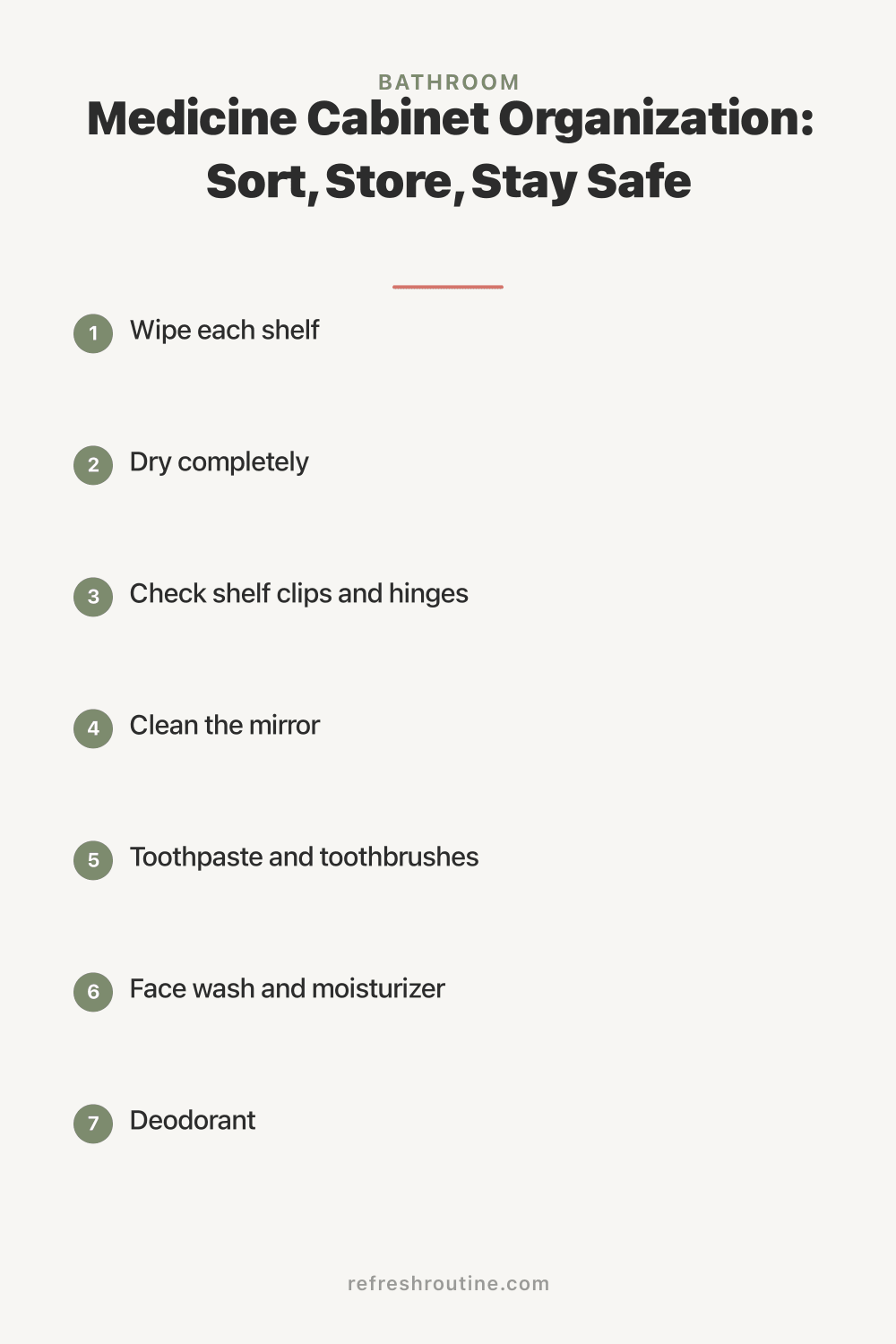
- Wipe each shelf with a damp cloth and mild all-purpose cleaner
- Dry completely before putting anything back (moisture is the enemy of medication storage)
- Check shelf clips and hinges to make sure nothing is loose
- Clean the mirror on the inside of the door if your cabinet has one
I use a mix from our natural cleaning solutions guide for this. A simple vinegar and water spray works perfectly and doesn’t leave chemical residue near items you put on your skin or in your body.
Step 4: Organize by Shelf and Category
Now that everything is clean and you’ve removed expired items, organize what’s left using a zone system. The number of shelves in your cabinet determines how many zones you can create, but the principle stays the same: group by category and put the most-used items at eye level.
Suggested Shelf Layout
- Top shelf: Items used least often. Backup supplies, seasonal allergy medication, first aid items you rarely need.
- Middle shelf (eye level): Daily essentials. Toothpaste, face wash, moisturizer, contact lens solution, deodorant. These are the things you reach for every morning and night.
- Bottom shelf: First aid basics and over-the-counter medications you want accessible but don’t use daily. Pain relievers, stomach remedies, bandages, antibiotic ointment.
Small Containers Make a Big Difference
Inside a medicine cabinet, items slide around every time you open or close the door. Small containers solve this immediately.
- Use a tiny acrylic organizer for lip balms, eye drops, and small tubes
- A magnetic strip on the inside of the door holds bobby pins, tweezers, and nail clippers
- Small jars or cups corral cotton swabs and hair ties
I bought a set of three small acrylic bins for $8, and they transformed my cabinet. Everything stays in place when the door swings, and I can pull out an entire bin to find what I need instead of knocking three other items off the shelf.
Step 5: Add Safety Measures for Families With Kids
If you have children in the house, medicine cabinet organization includes a safety layer. My kids are 7 and 4, and the 7-year-old can absolutely reach our medicine cabinet now.
Safety steps I’ve taken:
- Moved all medications (prescription and over-the-counter) to a high cabinet in our hallway closet, out of reach and out of the bathroom humidity
- Added a child-proof latch to the hallway cabinet where medications now live
- Kept only non-medication items in the bathroom medicine cabinet (toiletries, first aid supplies like bandages, skincare)
- Taught both kids what the poison control number is (1-800-222-1222) and posted it on our fridge
According to Safe Kids Worldwide, over 35,000 young children are treated in emergency rooms each year due to unsupervised access to medications. That number dropped significantly in our household risk profile the day I moved medications out of the bathroom entirely.
What About a Medicine Cabinet That’s Too Small?
Not every medicine cabinet has enough room for everything listed above. If yours is on the smaller side, prioritize.
Items that earn a spot in a small medicine cabinet:
- Toothpaste and toothbrushes (daily use, need to be near the sink)
- Face wash and moisturizer (daily use)
- Deodorant (daily use)
- Basic first aid (a few bandages, antibiotic ointment, tweezers)
Everything else can live elsewhere. Backup toiletries go in a bin under the sink or in your linen closet. Medications go in a cool, dry spot outside the bathroom. Hair products can move to a caddy or basket in the vanity.
I had to make this exact choice because my medicine cabinet has only two narrow shelves. Once I accepted that it couldn’t hold everything, I stopped trying to force items in and the whole system worked better.
What I Wish I Knew About Medicine Cabinet Organization
- The bathroom is genuinely bad for medications. I stored prescription medications in my medicine cabinet for years before learning that humidity degrades them. Now all medications live in a bedroom drawer. It’s a small change that matters for effectiveness.
- A seasonal check is enough. I used to think I needed to audit the cabinet monthly, but every three months works fine. I do it when the seasons change, which is easy to remember.
- Less is more in a tiny space. My medicine cabinet holds about 15 items now, down from 47. Having fewer items means I can find everything instantly, and nothing falls out when I open the door.
- Invest in a good set of small containers. Loose items are the enemy of medicine cabinet organization. A few small bins or acrylic organizers cost less than $10 and make the entire space more functional.
Key Takeaway
Medicine cabinet organization starts with a full cleanout, an expiration check, and a decision about what actually belongs in a humid bathroom environment. Move medications to a cool, dry location. Keep daily toiletries at eye level and first aid supplies within easy reach. Add small containers to prevent items from sliding around. Check and refresh the system every three months to keep it working.
Keep the Momentum Going
Your medicine cabinet is one of the fastest spaces to organize in your entire home, and that quick win makes it easier to tackle the next area. Visit our bathroom organization hub for guides to every zone, or jump to where to start decluttering if you’re ready to work through your whole house one manageable step at a time.

Frequently Asked Questions
How often should you clean out your medicine cabinet?
Check your medicine cabinet every three months to remove expired medications and restock essentials. Do a deeper cleanout twice a year, in spring and fall. Set a phone reminder tied to the start of each season so it becomes automatic rather than something you forget.
What should you keep in a medicine cabinet?
Keep daily-use items like toothpaste, skincare, and contact lens solution on the most accessible shelves. Store a basic first aid kit, pain relievers, allergy medication, and a thermometer. Avoid storing prescription medications in the bathroom since humidity can reduce their effectiveness.
Where should you store prescription medications instead of the bathroom?
Store prescription medications in a cool, dry place like a bedroom dresser drawer or a high kitchen cabinet away from the stove. The FDA recommends avoiding bathrooms because heat and humidity from showers degrade medications faster than room-temperature, low-humidity environments.