Small Closet Organization Ideas That Actually Work
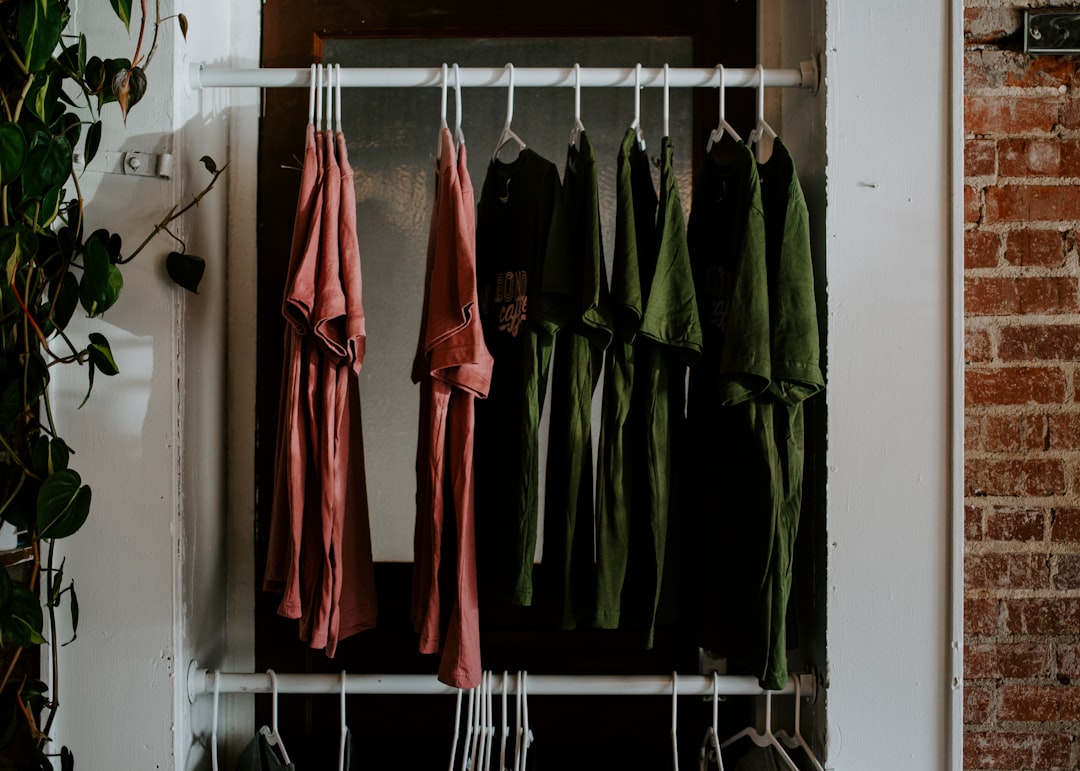
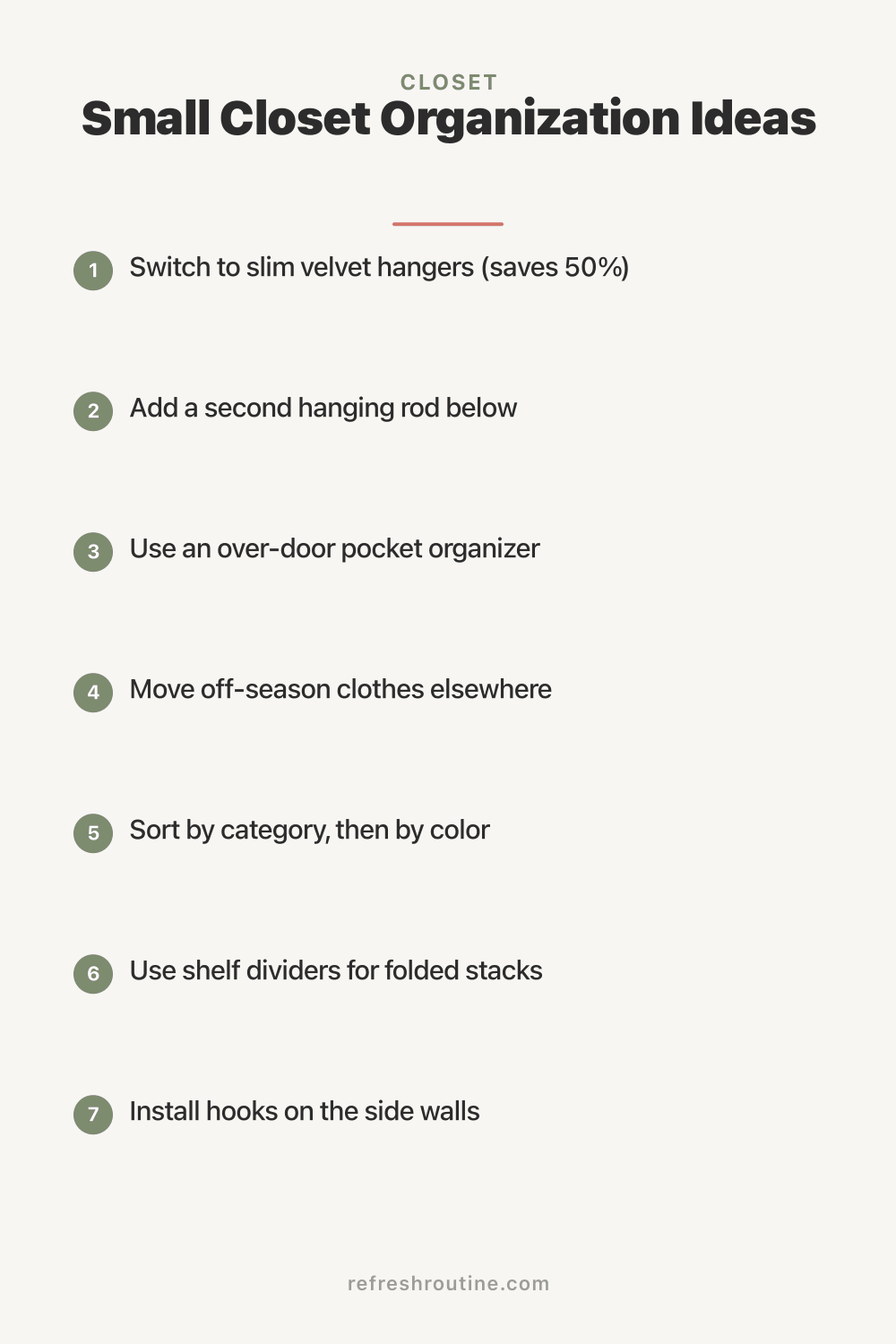
Small closets aren’t a design flaw. They’re a challenge that forces you to be intentional about what you keep and how you store it. And honestly? Some of the most organized closets I’ve seen are the smallest ones, because their owners have mastered the art of making every inch count.
If your closet is stuffed to the brim, I’d suggest decluttering first before organizing. It’s much easier to organize 50 items than 150.
These aren’t Pinterest fantasy ideas that require a contractor. Every solution here works in a standard reach-in closet and costs under $50 to implement. I’ve personally tested most of these in my own tiny closet.
According to a survey by ClosetMaid, the average American has clothing in their closet that they have not worn in over a year. The survey found that 46% of women say they have trouble finding items in their closets. If that sounds familiar, these strategies will make an immediate difference.
How Much Closet Space Does the Average Person Need?
The average person needs approximately 4 to 6 linear feet of hanging rod space and 2 to 3 shelves for folded items. However, most small closets offer only 3 to 4 feet of rod space with a single shelf. The strategies in this guide help you effectively double that capacity without any renovation by using vertical space, the back of the door, and smart folding techniques. The goal is not to fit more stuff in. It is to fit your actual wardrobe in a way that lets you see and access everything easily.
1. Switch to Slim Velvet Hangers
This single swap can reclaim up to 50% of your hanging rod space. Standard plastic hangers are thick and bulky. Slim velvet hangers are a fraction of the width, and the velvet coating prevents clothes from slipping off.
A pack of 50 slim hangers costs $15-20 and transforms your closet instantly. Make the switch all at once. Mixing hanger types creates visual chaos and wastes space. I did this one change first and couldn’t believe the difference.
Here is a specific detail that matters: measure your rod before you buy. A standard closet rod holds about 30 thick plastic hangers comfortably. That same rod holds 50 to 60 slim velvet hangers. That is nearly double the capacity from a single swap that takes about 20 minutes to complete. I put on a podcast and switched all my hangers in one sitting. The visual difference alone was worth it.
2. Add a Second Hanging Rod
Most closets have one rod with a huge gap between the hanging clothes and the shelf above or floor below. Add a second rod below the first to double your hanging space.
This works perfectly for shorter items: shirts, blouses, skirts, and folded pants. Tension rods ($10-15) require zero installation. Just extend and press between the walls.
I mounted my second rod about 38 inches below the first rod, which is the sweet spot for most shirts and blouses. For skirts and folded pants, you can go a bit lower. The key measurement is from the top of the second rod to the closet floor. You need at least 3 inches of clearance so hangers do not drag on the floor.
3. Use Shelf Dividers
Those stacks of sweaters and t-shirts that constantly topple over? Shelf dividers keep them upright and separated. Clip-on dividers ($12 for a pack of 6) attach to existing wire or wood shelves.
Bonus: dividers create visual categories on your shelves without needing separate bins.
4. Go Vertical with the Door
The back of your closet door is prime real estate that most people ignore. An over-door organizer gives you instant storage for:
- Scarves and belts
- Small bags and clutches
- Hair accessories
- Jewelry
- Sunglasses
- Hats
A shoe pocket organizer ($10-15) works for far more than shoes. Each pocket can hold a category of accessories. My favorite trick is using one for all the small items that used to end up scattered on my dresser.
I specifically use a clear pocket organizer so I can see every item at a glance. The opaque fabric ones look cleaner, but you end up forgetting what is in each pocket, and that defeats the purpose. Clear pockets mean zero rummaging and zero forgotten accessories.
5. Store Off-Season Clothes Elsewhere
Your closet only needs to hold what you’re wearing this season. Move off-season clothing to under-bed storage bins, a hall closet, or vacuum-sealed bags on a high shelf.
This alone can free up 30-40% of your closet space overnight. It was honestly a revelation when I first tried it.
I do a seasonal swap twice a year, in early April and early October. It takes about 30 minutes each time. I vacuum-seal heavy sweaters and coats into flat bags that slide under my bed. This frees up enough rod space that my current-season clothes have room to breathe, which also means fewer wrinkles and less time ironing.
6. Use Matching Bins on the Shelf
The shelf above the hanging rod often becomes a dumping ground. I know mine did. Contain the chaos with 2-3 matching bins or baskets. Label them by category:
- Workout clothes
- Seasonal accessories
- Bags and clutches
Bins with handles make it easy to pull them down and put them back.
7. Fold Strategically
Not everything needs to hang. In a small closet, strategic folding saves a surprising amount of space:
- Hang: Blazers, dresses, button-down shirts, anything that wrinkles easily
- Fold: T-shirts, sweaters, jeans, casual pants, workout clothes
For folded items, the KonMari file-folding method (standing items upright in drawers) lets you see everything at once instead of digging through stacks. It took me a couple tries to get the folding technique right, but once it clicked, I never went back.
8. Install Hooks on the Walls
The side walls inside your closet can hold hooks for:
- Tomorrow’s outfit (plan the night before)
- Robes and frequently worn jackets
- Bags you carry daily
- Belts
Adhesive hooks ($5 for a pack) require no drilling and hold 5-10 pounds each.
I have one hook dedicated entirely to “tomorrow’s outfit.” Every night before bed, I pick out what I am wearing the next day and hang it on that hook. This saves me at least 10 minutes of decision-making every morning and means I actually leave the house on time. It is a tiny habit that has an outsized impact on my mornings.
9. Use a Shoe Rack on the Floor
Shoes scattered on the closet floor steal space and create chaos. A slim shoe rack ($15-20) stacks shoes vertically and uses the narrow floor space efficiently.
For an even smaller footprint, an over-door shoe rack moves shoes off the floor entirely.
10. Sort by Category, Then Color
Organize your hanging clothes by type first (all shirts together, all pants together), then by color within each type. This makes finding outfits faster and creates a visually calm closet.
The order that works best: jackets, long sleeves, short sleeves, pants, skirts, dresses.
Sorting by color within each category is not just for aesthetics. It helps you see what you actually own. When I sorted my shirts by color, I realized I had nine black tops and only two white ones. That kind of visual inventory makes shopping decisions much smarter. You stop buying what you already have and start filling actual gaps.
11. Add Drawer Dividers
If your closet has built-in drawers, dividers transform them from jumbled messes into organized sections. Spring-loaded bamboo dividers ($8-12) adjust to any drawer width.
Dedicate each section: socks, underwear, bras, accessories.
12. Use the Floor Space Wisely
The floor of a small closet should hold one of these, not all of them:
- A shoe rack (if you don’t use over-door)
- A small dresser or drawer unit
- A laundry basket
Pick one. The rest of the floor should stay clear so you can see and reach everything. I made the mistake of cramming all three in there once, and it was a disaster.
13. Purge Regularly
The best small closet organization system fails if you keep adding clothes without removing any. Build a simple habit: every time you buy something new, donate one thing.
Need to declutter before organizing? Our step-by-step decluttering guide walks you through the process. Once a season, do a quick closet edit. Try on anything you’re unsure about. If it doesn’t fit, isn’t comfortable, or doesn’t make you feel good, let it go.
The “hanger trick” is something I use for my seasonal purge. At the start of each season, I turn all my hangers backward on the rod. As I wear items and return them to the closet, I flip the hanger the correct way. At the end of the season, any hanger still facing backward holds something I did not wear all season. Those items go into the donation bag. It is a simple, visual system that removes the guesswork from closet editing.
What I Wish I Knew About Small Closet Organization
Here are the lessons I learned from years of trying to make a tiny closet work.
Do not buy storage solutions before you declutter. I once bought a beautiful over-door shoe organizer, only to realize after decluttering that I only owned 12 pairs of shoes and they fit perfectly on a small floor rack. Purge first, measure second, buy third.
Uniform hangers matter more than you think. Beyond the space savings, matching hangers create a visual calm that reduces the “my closet is chaotic” feeling. It is one of those changes that seems small but has a disproportionate psychological impact.
Your closet is not storage for things you might wear someday. If it does not fit right now, if it needs alterations you have been putting off for six months, or if you are keeping it for “when I lose weight,” let it go. Your closet should reflect who you are today, not who you hope to be next year. I kept a pair of pre-pregnancy jeans for four years. They became a source of guilt every time I opened my closet. Donating them was a genuine relief.
Lighting makes a huge difference. A battery-powered LED strip light ($10) mounted inside the closet door or along the top shelf transforms visibility. I installed one and suddenly found three shirts I had forgotten about because they were hidden in the dark corner.
Key Takeaway
Organizing a small closet is not about cramming more in. It is about being intentional with the space you have. Start by decluttering at least 30% of your closet contents, then focus on the three highest-impact changes: slim velvet hangers, off-season storage elsewhere, and an over-door organizer. These three moves alone will make your closet feel dramatically larger. Add the remaining strategies one at a time, and maintain the system with a seasonal hanger audit and one-in-one-out rule.
Your Small Closet Action Plan
Don’t try to implement all 13 ideas at once. Start with the three highest-impact changes:
- Switch to slim hangers (biggest space gain)
- Move off-season clothes out (immediate relief)
- Add an over-door organizer (uses wasted space)
These three changes alone will make your small closet feel twice as big. Once they’re done, add the remaining ideas one at a time. That’s what I did, and it felt so manageable.
For a complete closet overhaul, check out our closet organization guide or learn about building a capsule wardrobe to reduce your clothing volume.

Frequently Asked Questions
How do I maximize space in a small closet?
Use slim velvet hangers (save 50% rod space), add a second hanging rod for shorter items, use shelf dividers for folded clothes, and install door-back organizers for accessories. Think vertically — every inch of height is usable space.
What should I remove from a small closet first?
Start with off-season clothes (store in under-bed bins), items that don't fit, anything damaged, and clothes you haven't worn in 12 months. Most people can remove 30-40% of their closet contents this way.
Are closet organization systems worth it for small closets?
For very small closets, individual solutions (hangers, bins, shelf dividers) are more flexible and affordable than full systems. Save closet systems for walk-ins where the investment makes a bigger impact.