Bookshelf Decluttering: From Chaos to a Library You Love
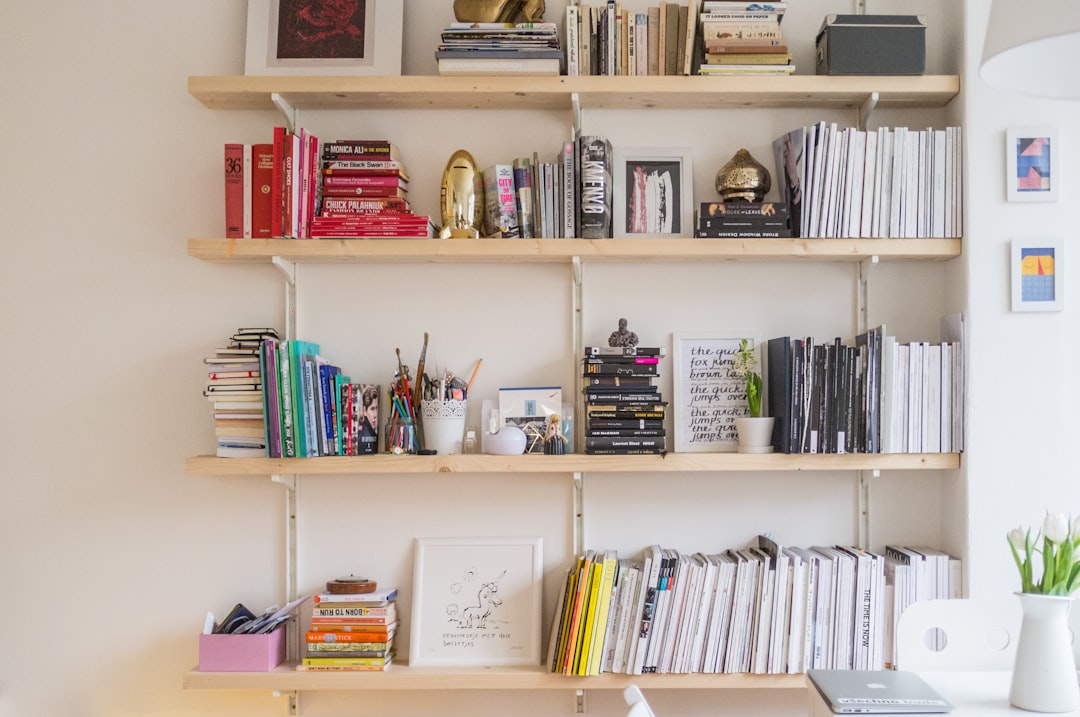
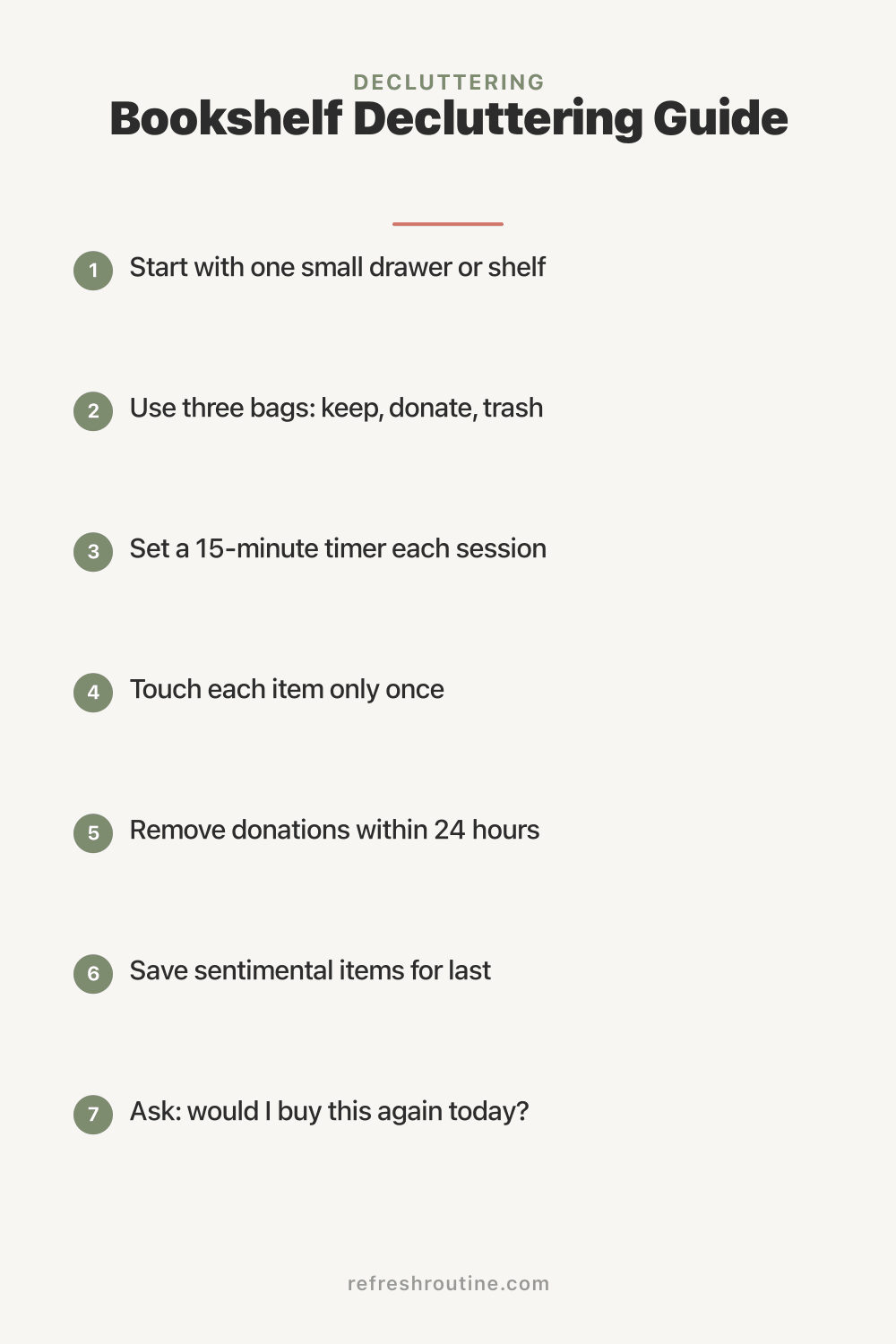
For years our bookshelf held every book I had ever owned, plus magazines, papers, photo frames at odd angles, and a layer of dust. It looked busy but felt unsatisfying. I rarely actually read from it.
The bookshelf transformation took one weekend and changed our living room. Here is the step-by-step process.
Why Bookshelf Organization Matters
A well-curated bookshelf:
- Encourages reading: Visible favorites get picked up more
- Reduces visual chaos: Beautiful bookshelves calm rooms
- Creates conversation: Visitors notice and engage
- Shows personality: Books reveal who you are
- Lasts: Properly organized bookshelves stay neat for years
A cluttered bookshelf does the opposite: hides favorites, adds visual chaos, and gathers dust on books you do not read.
According to a survey by Houzz, 65% of homeowners feel guilty about their bookshelf appearance. The fix is curation, not more shelves.
What Is the Best Way to Organize a Bookshelf?
The best way to organize a bookshelf combines decluttering (removing 30 to 50% of books typically), grouping (by genre, then color), styling (adding 2 to 4 decorative objects per shelf), and breathing room (60 to 70% fullness). The result is a bookshelf that looks intentional rather than cluttered, with books that you actively engage with.
The Bookshelf Transformation Process
Step 1: Empty Everything (30 min)
Remove every book, decoration, and dust bunny from the shelves. Pile books on the floor or a large table. Dust each empty shelf thoroughly.
This step alone reveals the volume.
Step 2: Sort Books (60 to 90 min)
Apply the declutter books method for each book:
- Keep: Read regularly, active reference, special editions, gift books with notes, current life relevance
- Donate: Read once and not loved, outdated, duplicate, lifestage-passed (parenting babies when kids are teenagers)
- Sell: Quality books with resale value (signed editions, first editions, technical books)
- Recycle: Damaged, moldy, missing pages
Most homes can release 30 to 50% of their books without missing anything.
Step 3: Plan the Layout (15 min)
Sketch or photograph your shelves. Plan:
- Group by genre: Fiction, non-fiction, reference, kids, photo, cookbook
- Color flow: Lightest at top, darkest at bottom (or rainbow within genres)
- Sizing: Tallest in middle of shelf, shorter on outside, or reverse for taller items
- Negative space: 2 to 4 styling objects, 30% empty space
Plan before placing.
Step 4: Style as You Place (90 min)
Place books and decorative items as you go:
Vertical books: Some shelves Horizontal stacks: Some shelves (creates visual variation) Decorative objects: Vases, framed photos, sculptures Plants: One per 2 to 3 shelves (adds life) Empty space: Intentional gaps
Step back every 10 minutes. Assess. Rearrange as needed.
Step 5: Final Adjustments (15 min)
After everything is placed:
- Step back and look at the whole shelf
- Adjust spacing
- Remove items that crowd
- Add items that fill gaps
- Polish or wipe books that need cleaning
What I Wish I Knew About Bookshelf Organization
After 3 major reorganizations, here is what helped most.
Negative space is the secret. I used to pack every shelf full. The empty 30% I now leave makes the rest look intentional.
Photos as decorations work better than books. Framed photos placed on bookshelves add personality more than book spines.
Plants make any bookshelf alive. One pothos or snake plant changes the entire vibe.
Vertical and horizontal mix. Pure vertical = stiff. Pure horizontal = piles. Mixing creates rhythm.
Color organization is gorgeous but impractical. Beautiful for Instagram, frustrating for daily use. I do partial color organization within genres.
Styling Strategies
The Rule of 3
In each visible section, have 3 items that work together: 2 vertical books, 1 decorative object. Or 1 stack of horizontal books, 2 standing books, 1 plant.
Triangle Composition
Arrange items in triangle shapes for visual flow. The eye follows triangles naturally.
Color Blocking
Within a genre section, group similar colors. White on one shelf, black on another. Easier than full rainbow.
Personal Items
Mix in:
- Family photos
- Small artwork
- Travel souvenirs
- Awards or meaningful objects
The personal touches show who you are.
Plants and Greenery
Live plants in matching pots add color and life. Most bookshelves benefit from 1 to 3 plants.
How Many Books Should You Keep?
Most readers function well with 50 to 200 books total. Heavy readers may have more; casual readers fewer. The key is curation: do the books on your shelves reflect your current interests and active reading? If 70% are aspirational or untouched, you have too many. Re-evaluate by asking: “Would I buy this today?”
Organizing by Different Methods
By Genre (Best for Finding)
- Fiction
- Non-fiction
- Reference
- Cookbooks
- Kids books
- Coffee table books
Pros: Easy to find. Functional library. Cons: Less visually striking.
By Color (Best for Beauty)
Rainbow flow: red, orange, yellow, green, blue, purple, then white to black.
Pros: Beautiful, Instagram-worthy. Cons: Hard to find specific books.
By Size (Best for Visual Variation)
Tall books in middle, shorter outside. Creates an archway look.
Pros: Visually appealing. Cons: Can look forced.
By Reading Status (Functional)
To-read, currently-reading, read.
Pros: Mirrors a goodreads list. Cons: Constantly changing, requires maintenance.
Combination (Most Common)
Genre as primary, color as secondary, with visual variations for interest.
For more on book decisions, see our declutter books guide.
Bookshelf Maintenance
Keep the organized shelf looking good with:
Monthly dusting: Quick wipe of books and surfaces
Quarterly review: Reassess for items that have crept in or out of fit
Annual reorganization: Major refresh with seasonal adjustments
One-in-one-out rule: New book in = old book out (donate or sell)
The biggest enemy of bookshelf organization is forgotten maintenance. Schedule it.
Special Bookshelf Situations
Floor-to-Ceiling Bookshelves
Use a ladder for top shelves. Group rarely-used books up high; daily reads at eye level. Use the bottom shelves for kids books or decorative storage.
Children’s Bookshelves
Different rules:
- Lower shelves for kid access
- Picture books face out
- Reduce volume regularly
- Easy to maintain organization
See our kids’ closet guide for similar principles.
Built-In Bookshelves
Less flexibility but more design opportunity:
- Paint behind books for backdrop color
- Add lighting
- Built-in styling spots
Apartment Bookshelves
Limited space requires aggressive curation:
- Keep only essentials
- Use as room divider
- Consider digital alternatives (e-reader)
Bookshelf Styling for Photos
If you want a Pinterest-worthy bookshelf:
Step 1: Reduce to truly favorite items Step 2: Group by color Step 3: Add 1 styling object per 10 books Step 4: Include plants and personal photos Step 5: Leave 30% empty space Step 6: Use diffused lighting for photos Step 7: Photograph at eye level
Style for photos rarely matches style for daily life. Pick which matters more for your space.
Common Bookshelf Organization Mistakes
After helping family members:
Mistake 1: Cramming every shelf full. Negative space matters.
Mistake 2: No styling objects. All books = monotonous.
Mistake 3: Forgetting to dust. Books gather dust faster than you think.
Mistake 4: Keeping every book ever owned. Library function suffers.
Mistake 5: Forced color organization that makes finding books impossible.
Special Books to Keep
Some books deserve permanent shelf space:
Re-read favorites: Books you have read multiple times Signed or first editions: Items of value Sentimental: Gifts from significant people Reference books: Active in your life (cookbooks, dictionaries, encyclopedias) Picture books for kids: Read regularly Coffee table books: Beautiful, displayed
Other books should pass through your hands or live digitally.
For more on book decisions, see our declutter books and minimalist home checklist guides.
Digital Alternatives
For book-lovers wanting less physical clutter:
E-readers: Kindle, Kobo, or app-based reading Library: Free access, no storage burden Audio books: No physical storage, listen anywhere Subscriptions: Audible, Libby (free with library), Scribd
Digital reading reduces book clutter while maintaining the love of reading.
Key Takeaway
A beautifully organized bookshelf comes from decluttering (release 30 to 50% of books), grouping (by genre then color), styling (2 to 4 decorative objects per shelf), and negative space (60 to 70% fullness with intentional gaps). The transformation takes one weekend and creates a bookshelf you love rather than tolerate. Most homes can dramatically improve bookshelf appearance without buying anything new. Aim for a bookshelf that reflects your current interests, displays meaningful objects, and lasts months to years without major reorganization. Annual maintenance keeps it functional. Start by emptying the shelves this Saturday. The transformation begins with the empty surface.
For more decluttering, see our declutter books and minimalist home checklist guides.

Frequently Asked Questions
How do you organize a bookshelf without it looking messy?
Organize a bookshelf with three levels of curation: removing books you do not read (declutter), grouping by genre or color (categorize), and adding 2 to 4 decorative objects per shelf (styling). Empty space matters; do not pack every shelf full. A 70% full shelf looks more intentional than 100% full.
Should bookshelves be organized by color or genre?
Organizing by color (rainbow flow) creates visual beauty but makes finding books harder. Organizing by genre or topic makes books findable but less visually striking. The best compromise: organize by genre within each shelf, then by color within each genre. This balances function and beauty.
How many books should fit on a shelf?
A standard shelf (24 to 36 inches wide) holds 15 to 25 books comfortably. Pack to 60 to 70% fullness for breathing room and styling space. Avoid jamming books to the edges. Empty space lets the eye rest and creates visual sophistication.