How to Declutter Books Without Guilt
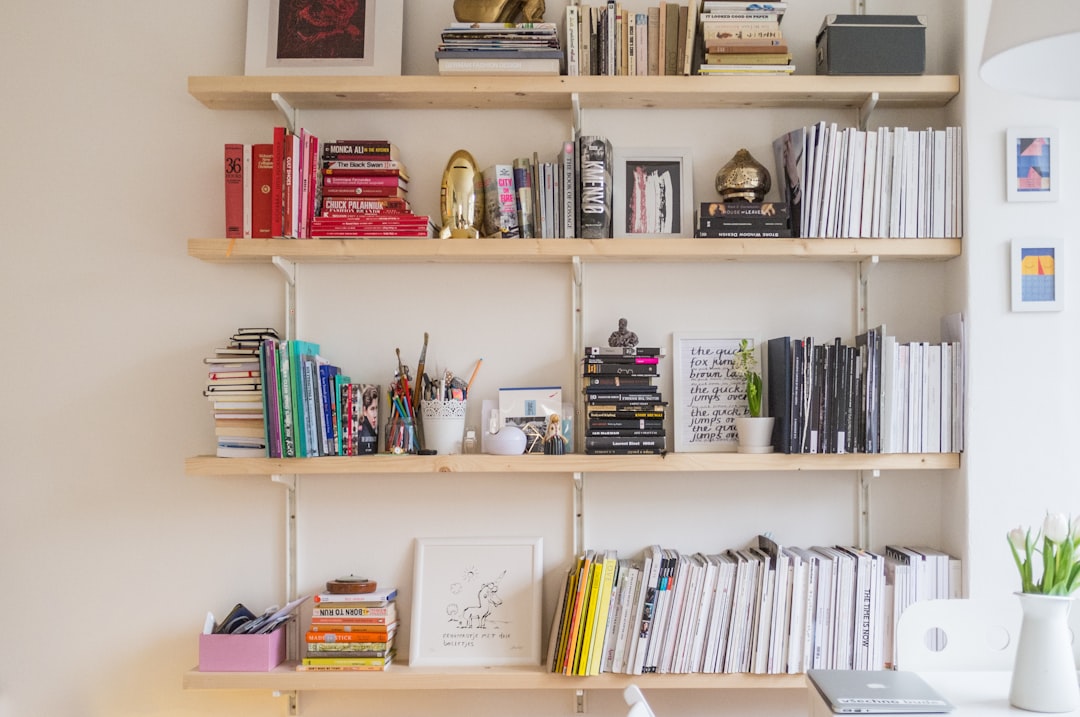
My personal library was 380 books. I had not read about 200 of them. The unread ones gave me guilt every time I walked past. The ones I had read but kept were “in case I want to re-read.” I had re-read about 4 of them in 10 years.
Books are uniquely hard to declutter because they represent learning, identity, and the people we want to be. Letting them go feels like letting go of those potential selves. Here is how I cut my library to 80 books I actually love and stopped feeling guilty about reading.
Why Books Feel So Hard to Declutter
Books carry weight beyond their physical mass. According to a survey by the Pew Research Center, 73% of adults feel guilty about unread books on their shelves, more than they feel about other unused household items.
The guilt comes from:
- Aspirational identity: Books represent who we wanted to become (academic, expert, wise)
- Money sunk costs: We paid for them and feel obligated to read them
- Knowledge availability: “I might need this information someday”
- Gift complications: Books received from loved ones carry double weight
- Memory anchors: Specific books mark periods in our lives
The fix is not to read everything you own. The fix is to release books that no longer serve your current life.
What Is the Best Way to Declutter Books?
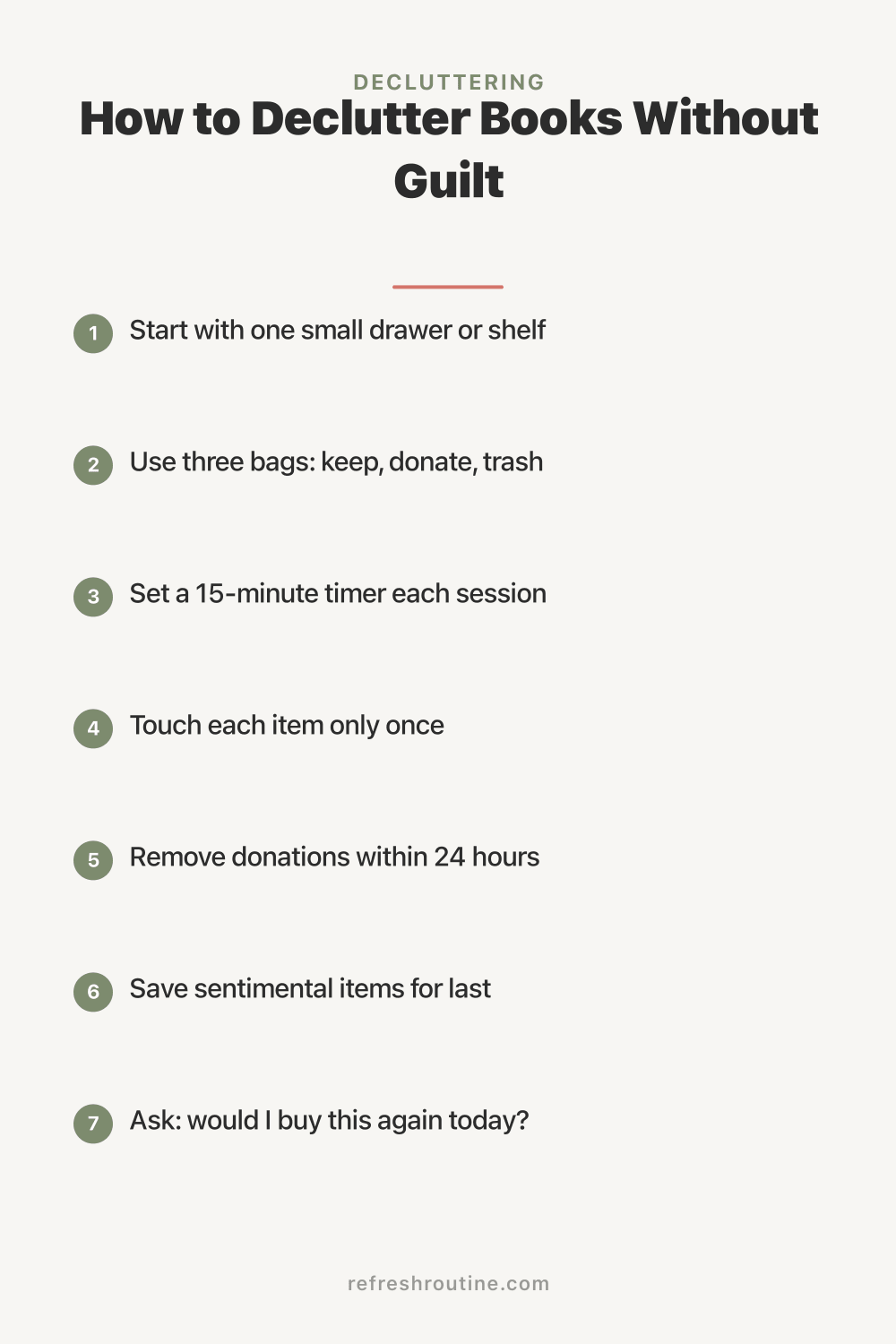
The best way to declutter books is to ask three questions of each book: Have I read it? Will I re-read it? Do I want to read it within 6 months? Keep books that pass at least one question. Donate the rest. The most painful releases are aspirational books we bought but never started. These often go to people who will actually read them.
The Book Decluttering Process
Step 1: Pull Every Book Off the Shelves (30 min)
Yes, every book. Pile them on the floor or a large table. The volume reveals what you actually own.
Step 2: Sort Into Three Quick Piles (60 min)
Pile 1 - Definite Keep: Books you re-read regularly, signed/rare editions, gift books with sentimental notes, active reference (cookbooks you use, professional books for current work)
Pile 2 - Definite Donate: Books you read once and disliked, outdated reference books, duplicates, books for life stages you have passed (parenting babies when kids are teenagers)
Pile 3 - Decision Required: Everything else
Step 3: Process the Decision Pile (60-90 min)
For each book in pile 3, ask:
Have I read it? If no, will I read it within 6 months? Be honest. Most “I will read it eventually” books sit unread for years.
Will I re-read it? If yes, keep. If you are unsure, donate. Re-reading a book is rare; most books pass through once.
Does it match my current life? Books for old jobs, old hobbies, old life stages no longer serve you.
Would I buy it today? If you saw this book in a bookstore now, would you pay for it? If no, donate.
Step 4: Return Keepers to Shelves (30 min)
Reorganize your kept books. By category, author, color, or whatever appeals to you. The goal is shelves that bring you joy when you look at them.
Step 5: Drop Off Donations Within 24 Hours (30 min)
Load donations into your car immediately. Drop them off within a day. Books that linger on the porch or in the trunk often migrate back inside.
What I Wish I Knew About Book Decluttering
After 4 major book purges, here is what helped.
Owning a book is not the same as reading it. I used to confuse the two. Owning a book about Roman history did not make me a Roman history expert. Reading 5 books I actively engaged with did more for my knowledge than owning 50 unread ones.
Library cards are decluttering tools. I now check out books from the library first. If I love it and will refer back, I buy. Otherwise, return and move on.
E-books are not clutter. If you struggle with physical book attachment, e-readers solve the problem. Same content, no shelf space.
Donating to libraries does not mean they shelve them. Libraries accept donations and either shelve, sell at library sales, or recycle. All are good outcomes.
Some books deserve to be released to readers who need them. A book about new motherhood that sat on my shelf for 5 years went to a young mom in a Buy Nothing group. She was thrilled. I felt better about its journey.
How Many Books Should You Own?
There is no right number, but most book-lovers function well with 50 to 200 books total. Heavy readers may own more. Casual readers fewer. The key is curation: do the books on your shelves reflect your current interests and active reading? If 70% of your books are aspirational or untouched, your collection is more storage than library.
Categories to Donate Freely
These categories typically have low long-term value:
- Old cookbooks: Recipes are online now
- Outdated reference: Travel guides over 5 years old, old computer books
- Self-help books you completed: Most do not require re-reading
- Magazines and journals: Recycle these freely
- Series you stopped reading: If you are 3 books in and stalled, you will not finish
- Books from previous careers: Unless you reference them regularly
- Beach reads after reading: One-time pleasure, no re-read value
Categories to Consider Keeping
These often deserve a spot on your shelf:
- Genuinely re-read favorites: 5 to 20 books most people return to repeatedly
- Active hobby reference: Gardening, cooking, knitting books you actually use
- Children’s books for actual children: Keep what gets read
- Signed editions or first editions: Items with rarity value
- Sentimental gifts: Books with meaningful inscriptions from loved ones
- Resource books for current work: Professional references in active use
Where to Donate Books
Libraries
Most public libraries accept donations. They sell at library sales or shelve depending on need. Tax-deductible.
Used Bookstores
Some buy books outright (Half Price Books). Others accept donations. Local independent stores often appreciate gently used books.
Schools
Local elementary schools and after-school programs need books for classroom libraries. Call ahead to confirm need.
Senior Centers and Nursing Homes
Large-print and audiobook donations especially welcome.
Free Little Libraries
The small neighborhood boxes are great for individual books. Many neighborhoods have several within walking distance.
Buy Nothing and Facebook Groups
Local groups where you can list books and let neighbors pick them up.
Online Donation
BetterWorldBooks offers free pickup for large donations and supports literacy programs.
Children’s Books Decluttering
Kids’ books accumulate fast. Strategies that work:
- Keep books currently age-appropriate plus a small future stash
- Donate outgrown books to younger neighbors or daycare
- Sentimental books (first reads, gift books) get one box maximum per kid
- Library checkouts replace permanent ownership for one-time reads
What to Do With Damaged Books
Some books cannot be donated:
Water-damaged or moldy books: Toss to prevent spreading Books with broken spines or missing pages: Toss Books with handwriting throughout: Personal items, not donatable Books with crayon marks: Toss unless you love them yourself
The Aspirational Book Trap
The hardest books to release are the ones you wanted to read but never did:
- The classics you bought for self-improvement
- The dense nonfiction you intended to “really dig into”
- The author you meant to discover
- The trend book everyone read
These are the most freeing to release. They were aspirational, not actual. Letting them go does not mean abandoning intellectual growth. It means you will pursue growth through books that fit your actual life.
If you genuinely want to read aspirational books, check them out from the library. If you finish, you can buy them then.
Maintaining a Curated Library
After the initial purge, maintain with these habits:
One in, one out: New book in means old book out Read or release rule: If you have not opened a book in 1 year, donate Library first: New interests start with library checkouts, not purchases Annual review: Each January, identify shelved books that need to leave
These habits prevent the slow accumulation that fills shelves with books you never read.
Key Takeaway
Decluttering books is harder than other categories because they carry identity, money, knowledge, and memory. The fix is to release the aspirational and outdated, keep what you actively read and reference, and accept that owning a book is not the same as reading it. Donate everything you have not opened in 2 years, books you read once and will not revisit, and books for life stages you have passed. Most readers can reduce their book collection by 50 to 70% without losing access to anything they will actually read. The shelves that remain feel like a real library: books you love, actively use, and would defend. That curated collection brings more joy than the cluttered one ever did.
For other emotional decluttering, see our sentimental items guide and minimalist home checklist.

Frequently Asked Questions
Is it bad to throw away books?
Donating books is much better than throwing them away. Most libraries accept book donations, as do thrift stores, Little Free Libraries, and used bookstores. Throwing books is only appropriate for damaged books (water, mold, broken bindings). Books in good condition always find new readers.
How do you decide which books to keep?
Keep books you actively re-read, books for active reference (cookbooks, professional, hobby), signed or rare editions, and gift books with sentimental notes from loved ones. Donate everything you have not opened in 2 years, books you read once and will not re-read, and books you bought but never started. Trust your behavior, not your aspirations.
Where can you donate old books?
Donate books to local libraries, thrift stores (Goodwill, Salvation Army), used bookstores (some buy, others donate), Little Free Libraries in your neighborhood, schools and after-school programs, nursing homes and senior centers, Buy Nothing groups, and BetterWorldBooks (free pickup for large donations). Most donations are tax-deductible.