How to Declutter Sentimental Items Without Regret
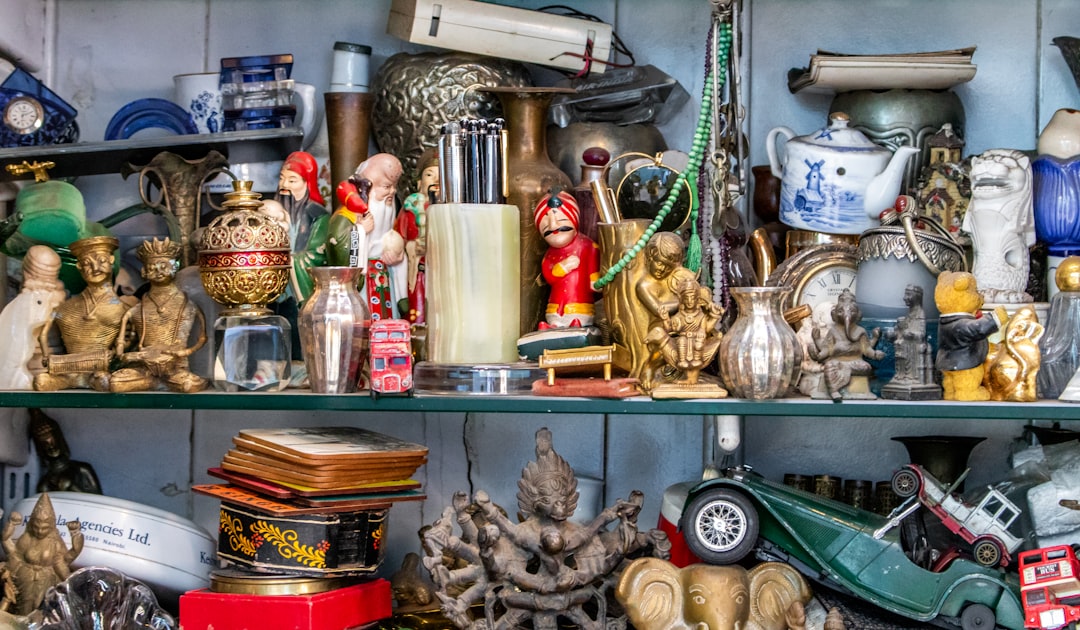
I sat on my closet floor last year with a cardboard box on my lap, staring at my daughter’s first pair of shoes. They were impossibly tiny, scuffed at the toes, and completely useless. I hadn’t looked at them in four years. But putting them in a donation bag felt like throwing away the memory of her learning to walk.
That’s the trap of sentimental clutter. The items themselves aren’t valuable. What’s valuable is the feeling attached to them. And letting go of the item feels like letting go of the memory. It doesn’t have to, though. I kept those tiny shoes, but I found a way to release dozens of other sentimental items without a single regret. Here’s how.
According to a study from Yale University, the same brain regions that process physical pain activate when people consider discarding items they feel emotionally attached to. That means the difficulty you feel is literally neurological. It’s real, not just sentimentality. Knowing that helped me give myself grace during the process.
Why Is It So Hard to Let Go of Sentimental Items?
Sentimental items trigger the brain’s loss aversion response, which makes the pain of losing something feel roughly twice as powerful as the pleasure of gaining something equivalent. Combined with the endowment effect, where we overvalue things simply because we own them, letting go of keepsakes can feel genuinely painful. This is a normal human response, not a character flaw.
Understanding the psychology helped me separate the emotion from the decision. I wasn’t being weak or dramatic for struggling with a box of old birthday cards. My brain was doing exactly what brains do.
The 5-Step System for Decluttering Sentimental Items
I developed this system after trying (and failing) to just “power through” my sentimental clutter. Brute force doesn’t work when emotions are involved. You need a process.
Step 1: Gather Everything in One Place
Pull all your sentimental items into a single location. This includes:
- Old photos and albums
- Children’s artwork and school projects
- Cards, letters, and notes
- Inherited items and heirlooms
- Travel souvenirs and event memorabilia
- Trophies, awards, and certificates
- Clothing with emotional significance
Seeing everything at once is eye-opening. I had sentimental items scattered across five different closets, the garage, and two bins in the attic. When I brought them all together, I had three large moving boxes full of keepsakes. The sheer volume made it clear that I couldn’t keep everything.
Step 2: Sort Into Categories
Group your sentimental items by type, not by person or time period.
- Photos and albums
- Children’s items (artwork, clothing, first shoes)
- Cards and letters
- Inherited items
- Personal achievements (trophies, diplomas)
- Travel and event souvenirs
Sorting by type helps you see patterns. I had 47 greeting cards from various birthdays and holidays. Forty-seven. Some had heartfelt messages inside. Most said “Happy Birthday! Love, [name].” Seeing them all together made it obvious which ones were worth keeping and which were generic.
Step 3: Apply the “Memory Test”
For each item, ask yourself these three questions:
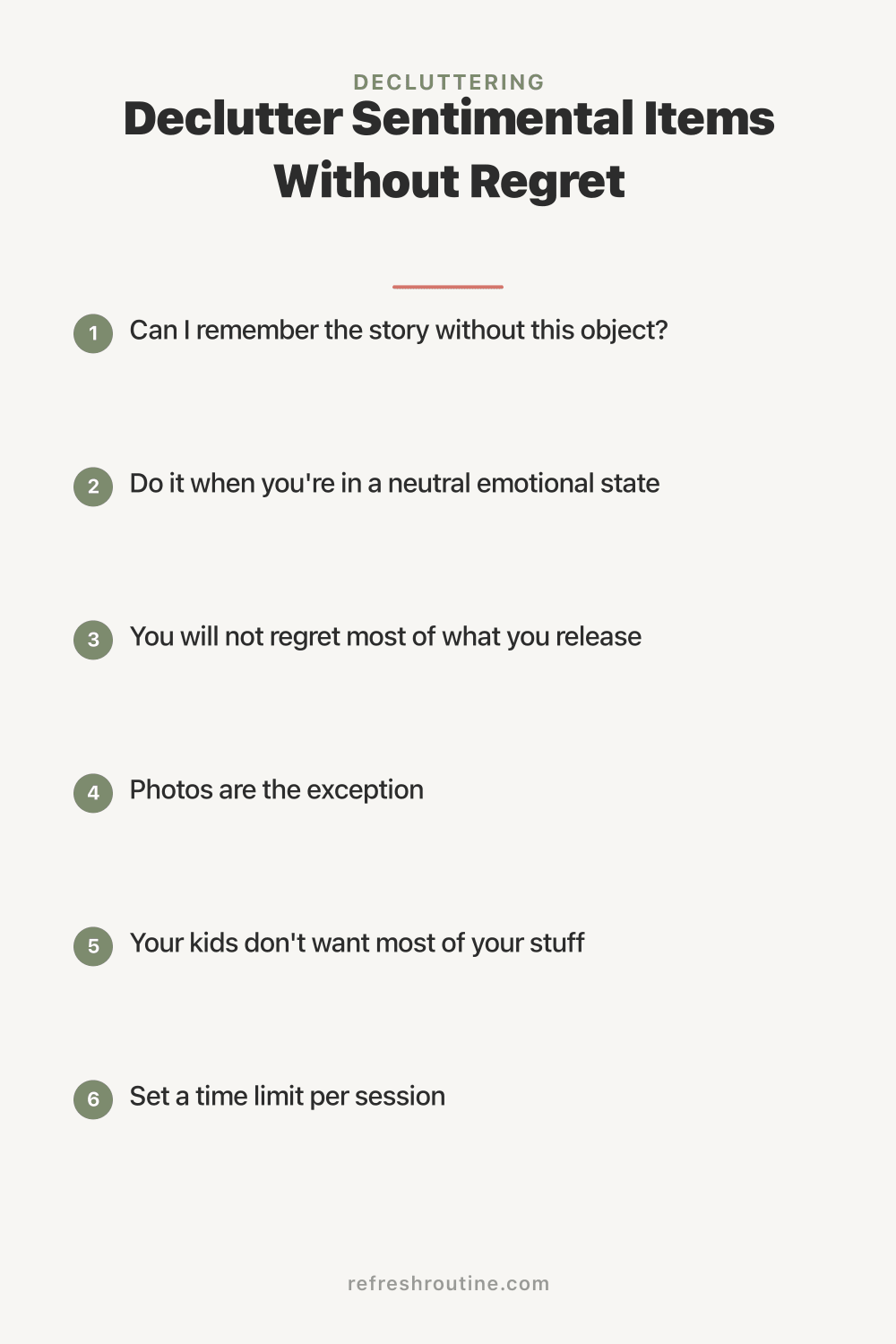
- Can I remember the story without this object? If the answer is yes, the memory is safe regardless of what you do with the item.
- Would I pull this out and look at it again in the next year? If you’ve had it for five years and never opened the box, you probably won’t start now.
- Does this item represent the best version of this memory? One perfect photo from a vacation captures the experience better than a bag of ticket stubs and hotel key cards.
My hardest moment came with my kids’ artwork. I had saved every single piece my daughter had brought home from preschool. Over 200 pieces. But when I spread them all out, about 15 were truly special. The rest were variations of the same crayon scribbles. I kept the 15, photographed a few others, and let the rest go.
Can You Digitize Sentimental Items?
Yes. Digitizing is one of the most effective strategies for releasing sentimental clutter without losing the memory. Photograph items, scan documents, or create digital albums that take up zero physical space. The average American home contains over 300,000 items (UCLA Center on Everyday Lives and Families), and digital alternatives can reduce sentimental storage by 80% or more while preserving every meaningful detail.
Here’s what I digitize:
- Children’s artwork: I photograph each piece against a plain white background. Some parents use apps like Artkive to turn their favorites into a printed photo book.
- Cards and letters: I photograph the ones with meaningful messages and recycle the rest.
- Travel souvenirs: A photo of the souvenir next to a favorite trip photo tells the whole story.
- Documents and certificates: Scan to PDF and store in a cloud folder.
I created a Google Photos album called “Memory Keeper” where all my digitized sentimental items live. I actually look at that album more often than I ever opened those boxes in the attic.
Step 4: Create a Memory Box (With Limits)
For items you absolutely want to keep in physical form, create one dedicated memory box per family member. The key word here is “one.”
- Choose a box with a fixed size. I use a 12x12x10 inch storage box per person. If it doesn’t fit, something needs to come out before something new goes in.
- Label it clearly with the person’s name and store it in an accessible location.
- Review it once a year. I go through my memory boxes every January. What felt essential last year sometimes feels less critical this year.
This approach forces prioritization. When my box is full and I want to add something new, I have to decide what matters most. That one constraint has been more helpful than any decluttering rule I’ve ever tried.
Step 5: Release with Intention
Don’t just throw sentimental items in a trash bag. That’s what makes people feel terrible about the process.
- Offer inherited items to other family members who might want them.
- Donate items that someone else can use, like vintage clothing or functional kitchen items.
- Thank the item before releasing it. I know it sounds strange, but the KonMari method includes this practice for a reason. Saying “thank you for the memories” out loud before putting something in the donation box brought me real closure.
- Photograph before releasing. This removes the fear that you’ll forget.
Specific Strategies for the Hardest Categories
Children’s Items
This was my biggest challenge. My kids are 7 and 4, and I had already accumulated enough keepsakes to fill a small storage unit. Here’s what I keep now:
- One outfit per milestone (coming-home outfit, first birthday outfit, first day of school outfit)
- 15 to 20 pieces of artwork per child per year, displayed on a rotating gallery wall and then stored in their memory box
- One “first” per child (first tooth fairy pillow, first lost tooth container, first pair of shoes)
Everything else gets photographed and released. A study from the National Association of Professional Organizers found that 82% of paper clutter in homes comes from items people intend to organize “someday.” Children’s artwork is one of the biggest contributors.
Inherited Items
Inherited items carry the heaviest guilt because they connect us to people we’ve lost. Here’s what I’ve learned:
- You are not dishonoring someone’s memory by releasing their things. Your grandmother would rather you live in a peaceful, organized home than store her entire china set in boxes you never open.
- Keep one meaningful representative item instead of a whole collection. I kept my grandmother’s favorite brooch and released the rest of her costume jewelry to family members and a vintage shop.
- The guilt fades faster than you expect. I agonized over donating my father-in-law’s old tools for weeks. A month later, I felt nothing but relief.
Cards and Letters
Sort every card and letter into two piles: “meaningful message” and “generic greeting.” The ones that say “Thinking of you, love always, Mom” with a paragraph of personal words go in the keep pile. The ones that say “Happy Birthday! xo, Aunt Jane” can be photographed and recycled.
From my experience, about 20% of saved cards contain truly meaningful messages. The rest are lovely gestures that served their purpose the day you received them.
What I Wish I Knew About Sentimental Decluttering
-
Do it when you’re in a neutral emotional state. I made the mistake of tackling my memory boxes the week after my grandmother passed away. Don’t do that. Wait until you can think clearly. If you’re not sure where to start decluttering, begin with non-sentimental items to build your decision-making confidence first.
-
You will not regret most of what you release. I’ve let go of hundreds of sentimental items over the past three years. I can think of exactly two that I wish I had kept. Two.
-
Photos are the exception. Keep physical photos, especially from before the digital era. They are irreplaceable. Everything else can be digitized, but original prints from the 1980s and 1990s deserve a safe home.
-
Your kids don’t want most of your stuff. This was a hard truth for me. I asked my mom what she wanted from my grandmother’s collection, and she said, “The recipe book and the ring.” That was it. One generation’s treasures are often the next generation’s burden.
-
Set a time limit per session. I cap my sentimental decluttering sessions at 45 minutes. Beyond that, emotional fatigue sets in and I start keeping everything out of exhaustion.
Key Takeaway
Decluttering sentimental items doesn’t mean erasing your memories. It means choosing the most meaningful objects to keep, digitizing the rest, and releasing yourself from the guilt of storing things you never look at. Use the memory test, create one memory box per person with a fixed size limit, and give yourself grace. The memories that matter most live in you, not in boxes in the attic.
Your Next Step
Start by gathering all your sentimental items into one place this weekend. You don’t have to make any decisions yet. Just see what you have. When you’re ready for a broader approach to clearing your home, our complete decluttering guide and room-by-room checklist will walk you through every space. And for handling the daily cleaning side of things once your home is decluttered, check out our daily cleaning routine.

Frequently Asked Questions
How do I stop feeling guilty about getting rid of sentimental items?
Remind yourself that the memory lives in you, not in the object. Take a photo of the item before letting it go. Keeping one representative piece from a collection honors the memory without the physical burden of storing everything.
What sentimental items are worth keeping?
Keep items you actively use, display, or revisit at least once a year. Heirlooms with family history, one-of-a-kind photos, and items tied to milestone moments are generally worth the space. Store them properly to prevent damage.
How do I declutter inherited items without offending family?
Offer items to other family members first. If nobody wants them, photograph the items and share the photos with family as a digital memory. You are not obligated to store things that don't fit your life simply because someone gave them to you.