How to Declutter Kids' Toys Without Tears
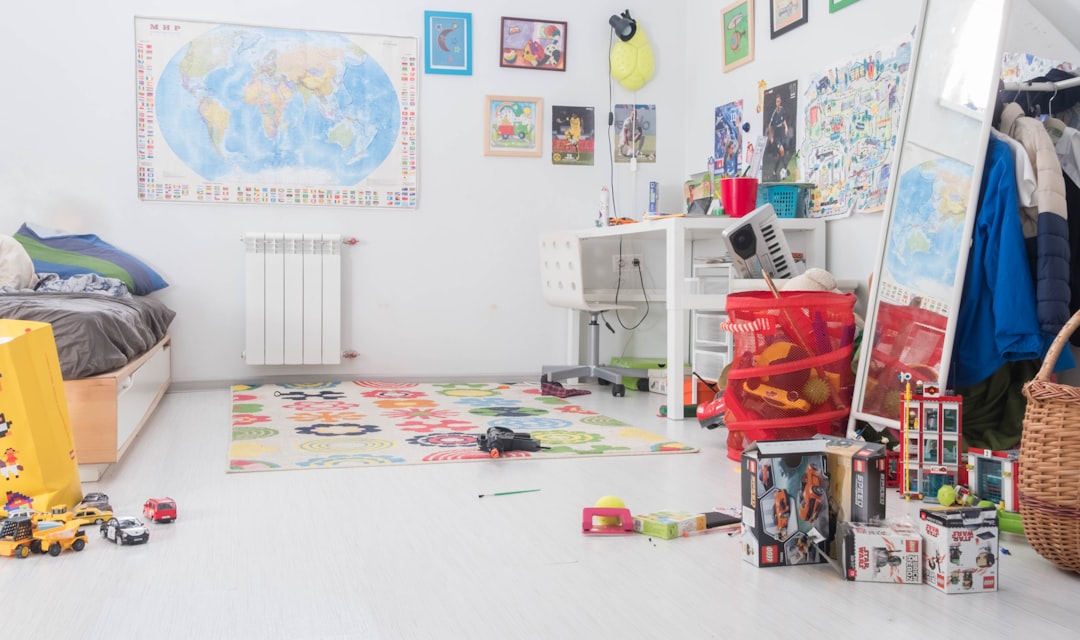
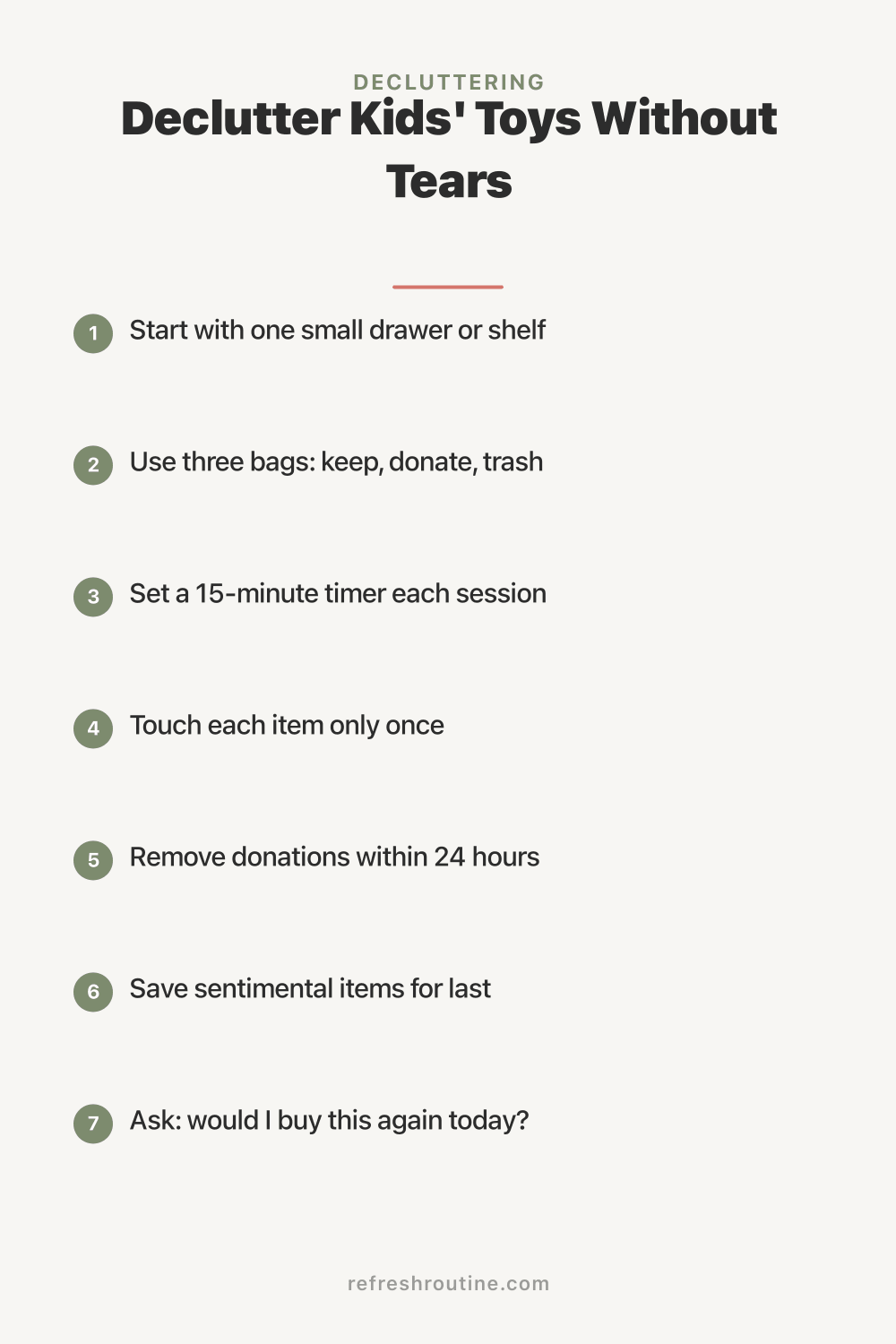
Three Christmases in, our playroom contained 412 toys. I counted because my daughter was sitting on the floor crying, saying she had “nothing to play with.” Standing on a pile of Legos and dolls and craft supplies, she felt overwhelmed by abundance.
That was the day I learned that more toys does not mean more play. Less toys, organized well, leads to deeper play and happier kids. Here is the system that finally worked.
Why Too Many Toys Is a Problem
According to a study from the University of Toledo, children with 4 toys in a play space showed 2x longer engagement and more creative play than children with 16 toys in the same space. The brain becomes overwhelmed by choice and defaults to surface-level interaction with each item.
Beyond cognitive overload, excess toys cause:
- Decision fatigue: Kids cannot decide what to play with
- Less appreciation: Items lose value when abundant
- More cleanup: Bigger messes = more parent stress
- Less creativity: Pre-made toys replace imaginative play
- Faster boredom: Novelty wears off when always available
The fix is not better organization. The fix is fewer toys.
What Is the Best Way to Declutter Toys?
The best way to declutter toys is to do an initial cull when kids are not home (broken items, missing pieces, age-inappropriate items), then involve kids in deciding which active toys to keep, donate, or rotate. Aim to reduce the available toys to 4 to 8 at any time, with the rest in storage rotation. Maintain with quarterly cleanouts.
The Toy Decluttering System
Step 1: First Pass Without Kids (1 hour)
Start when kids are at school, with grandparents, or napping. This pass is for items they will not miss.
Toss immediately:
- Broken toys
- Toys with missing critical pieces
- Promotional toys from kids meals
- Party favors
- Plastic single-use items
- Stuffed animals with damage
Set aside for donation:
- Toys clearly too young (board books when they read chapter books)
- Duplicates (you have 3 of the same dinosaur)
- Toys never played with
- Outgrown educational toys
- Loud, light-up toys you secretly hate
Step 2: Sort by Category (1 hour)
Group remaining toys by type:
- Building (Legos, blocks, magnatiles)
- Pretend (kitchen, dolls, action figures)
- Art (crayons, paint, paper)
- Books
- Vehicles
- Puzzles and games
- Outdoor
- Bath toys
- Other
Seeing volumes by category reveals the imbalance (probably 200 art supplies and 4 books).
Step 3: Set Up Rotation Storage
You will need:
- 4 large clear bins with lids
- Storage shelf out of kid sight (top of closet, basement)
- Labels for each bin
Divide toys roughly into 4 equal groups (Bin A, B, C, D). Each bin has a mix of categories (building, pretend, art, etc.) so any rotation cycle has variety.
Step 4: Set Up the Active Play Area
Keep only:
- Books (rotate as needed)
- 1 building set
- 1 pretend toy set
- 1 art supply caddy
- 1 puzzle or game
- Outdoor toys (stored separately)
Total: about 4 to 8 active toy categories at a time.
Step 5: Involve Kids in Final Decisions
For toys you are unsure about, involve your child:
“We have 14 baby dolls. Can you pick 3 favorites to keep here, and we can give the rest to babies who need toys?”
“You have 4 versions of this toy car. Which one do you love best?”
Frame donations positively: helping other kids who do not have toys. Most children handle this well. Some struggle. For struggling children, set aside the questioned items in a “we’ll decide later” box and try again in 30 days.
How Toy Rotation Works
Week 1-3: Bin A toys are accessible Week 4: Swap Bin A back to storage, bring out Bin B Week 5-7: Bin B toys are accessible Week 8: Swap Bin B back, bring out Bin C Continue cycling through all 4 bins
Children think the swapped toys are new and exciting. Engagement increases. You also notice which toys consistently get ignored - those are candidates for permanent donation.
What I Wish I Knew About Toy Decluttering
After four rounds of major toy decluttering with my own children, here is what helped.
Kids adapt faster than you expect. I worried about meltdowns. There were a few moments, but most kids forget about 80% of toys within 24 hours of removal. They are forming attachments to what they see, not all toys equally.
Quality over quantity is real here too. Six well-made toys generate more play than 60 cheap ones. The same applies to art supplies - one quality drawing set beats ten random pencil packs.
Rotation revives interest. Toys my kids ignored for weeks became favorites again after a rotation cycle. The neuroplasticity of childhood is amazing.
Set the limit BEFORE accepting new toys. I told family ahead of birthdays: “She would love books or art supplies, not stuffed animals - we have enough.” Most relatives appreciated the guidance.
Toy decluttering is parent work, mostly. Kids participate in final decisions about active toys. Parents make the structural decisions about volume, storage, and rotation systems. Do not put the executive function load on a 4-year-old.
How Do You Stop the Toy Accumulation?
Stop toy accumulation by setting clear expectations with family members about gifts (suggest experiences, lessons, books, or contributions to college funds instead of toys), implementing a one-in-one-out rule for new toys, and resisting impulse toy purchases. Most families can reduce toy inflow by 80% with these three changes. Holidays still happen, but they are intentional rather than overwhelming.
What to Donate vs Toss
Donate (in good condition)
- Toys in working condition with all pieces
- Books in good condition
- Stuffed animals (laundered)
- Building sets with most pieces
- Educational toys
- Sports equipment in good shape
Toss
- Broken toys
- Toys missing essential pieces
- Stained or damaged stuffed animals
- Plastic items that are degraded
- Toys recalled for safety
- Anything with food residue
Where to Donate
- Local family shelters and women’s shelters
- Foster care organizations
- Free preschools and community centers
- Pediatric hospital playrooms
- Buy Nothing groups in your neighborhood
- Goodwill, Salvation Army
Avoid donating to thrift stores in poor condition - they end up in landfills anyway. Be honest about toy quality.
Toy Storage That Works
After decluttering, organize what remains:
Open bins: Toddlers see what is available and put away independently. Best for blocks, large items.
Clear bins with labels: Older kids can read labels and find specific items.
Vertical storage: Tall shelves with multiple shelves use floor space efficiently.
Designated zones: Art zone, building zone, reading zone. Defined areas reduce mess.
Limit floor space: Kids fill the floor space they have. Smaller play space = less mess.
For specific room organization, see our playroom organization guide.
Age-Specific Toy Recommendations
Infants (0-12 months)
- 5 to 8 toys total
- High contrast images, soft textures, simple cause-effect items
- Most baby toys are unnecessary
Toddlers (1-3 years)
- 8 to 12 active toys
- Open-ended (blocks, dolls, vehicles)
- Limit electronic toys
Preschool (3-5 years)
- 10 to 15 active toys
- Dramatic play items (kitchen, dress-up)
- Beginning art supplies
Early Elementary (6-8 years)
- 12 to 20 active toys/games
- Building sets (Legos)
- Board games (start of long-term collection)
- Books increase significantly
Older Elementary (9-12 years)
- Active rotation matters less
- Hobbies emerge (specific interests)
- Toys shift to gear and equipment
Rotate based on what your child uses, not what they own.
Holiday Toy Strategy
Birthdays and holidays multiply toys quickly. Strategies that work:
Before the event: Pre-declutter to make room. Donate 5 to 10 toys before each major gift-giving holiday.
During the event: Be honest with relatives. “She has plenty of toys, but loves books.” “He outgrew action figures, but is into Legos.”
After the event: Within 1 week, audit and either keep or return/donate. Toys you do not use within a week probably are not winners.
Experience gifts: Suggest classes, memberships (zoo, museum), or activities instead of toys.
For holiday-specific decluttering, see our holiday decluttering guide.
When Toys Are Hidden Treasure
Some toys deserve to be kept even if rarely played with:
Heirloom toys: Quality items that may pass to next generation Sentimental items: First teddy bear, specific items with stories Creative supplies: Quality art supplies that get used in bursts
The test: would I be sad if this disappeared in a flood? If yes, keep. Otherwise, donate.
Key Takeaway
Decluttering kids’ toys is more about reducing volume than improving organization. Aim for 4 to 8 active toy categories at any time, with the rest in rotation storage. Do the initial heavy decluttering when kids are out (broken, missing pieces, obvious removals), then involve them in decisions about remaining active toys. Set up a 4-bin rotation system to keep things feeling fresh without buying more. Most playrooms can reduce inventory by 50% with no decrease in play quality. The cluttered playroom that overwhelms your child can become a calm space with thoughtful, fewer toys.
For more on involving kids in decluttering, see our decluttering mistakes post.

Frequently Asked Questions
How do you declutter toys without your kids getting upset?
Declutter toys when kids are not home for the obvious broken/missing-piece items. For active toys, involve kids in the decision (which toys does your friend need more, which ones are too young for you now). Frame donations as helping other kids. Most children handle this well when included with kindness.
How many toys does a child actually need?
Children play more deeply with fewer toys. Research suggests 4 to 8 active toys at one time leads to longer, more creative play than 20+ toys. Rotate toys monthly so children rediscover items rather than constantly seeing the same options. Most playrooms can reduce inventory by 50% without affecting play.
What is toy rotation?
Toy rotation means keeping only a portion of toys (4 to 8 items) accessible at a time while storing the rest. Every 2 to 4 weeks, swap what is accessible. Stored toys feel new again when brought out. The system reduces playroom chaos while making children appreciate what they have.