Decluttering Inherited Items: A Compassionate Guide
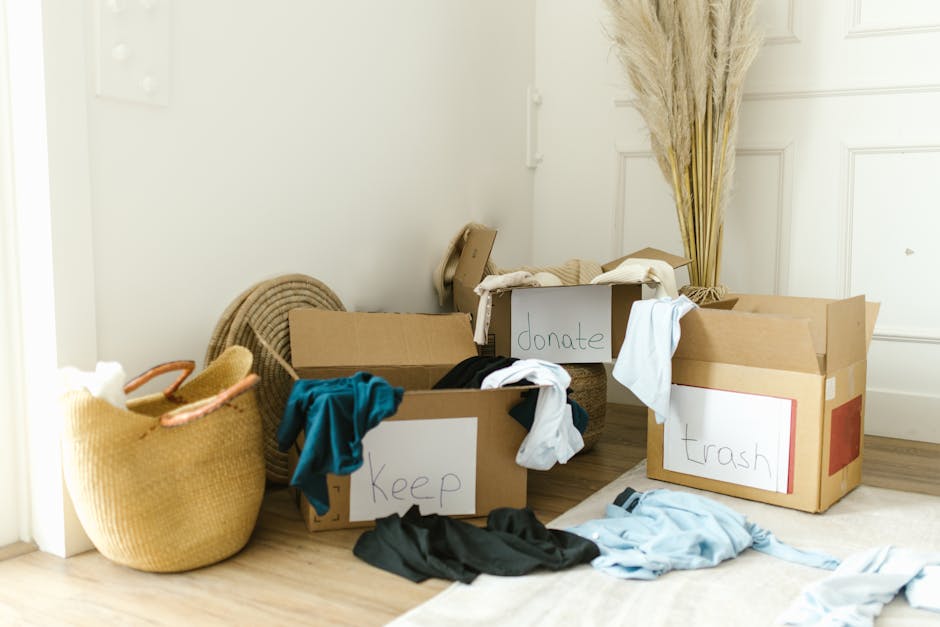
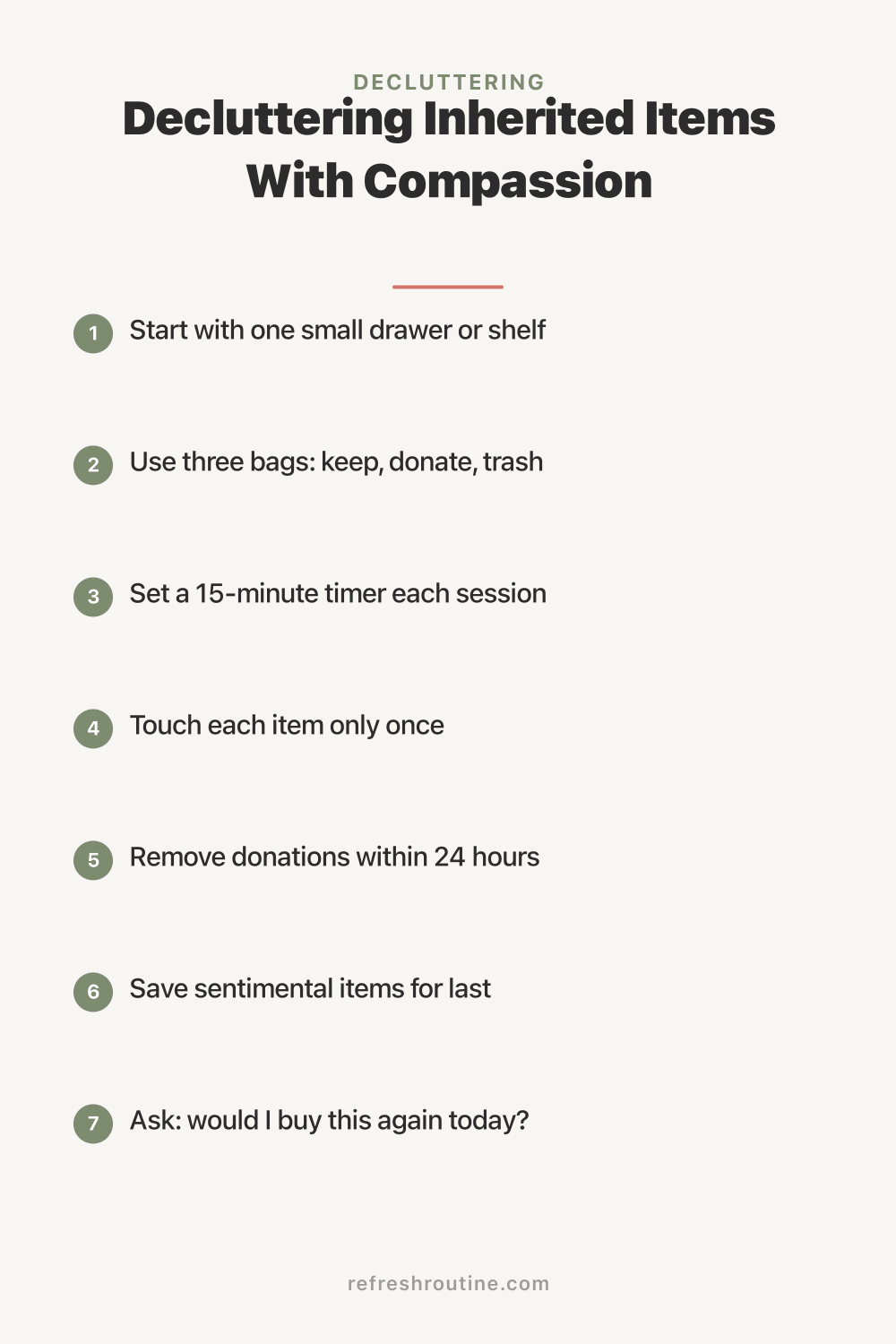
When my grandmother died, I inherited a box of her belongings. Some items I wanted: her cookbook with handwritten notes, a small painting she made, her sewing scissors. Most items I did not want: her costume jewelry, her ceramic figurines, her religious medals from a faith I do not practice. I kept everything for 4 years out of guilt.
Eventually I learned that keeping items I did not want did not honor her. It just burdened me. Here is how to declutter inherited items with compassion for both yourself and the people who came before.
Why Inherited Items Are So Hard to Release
Inherited items carry weight beyond their physical presence:
- The person is gone: Each item is a tangible link
- Cannot be replaced: Unlike other clutter, these are unique
- Family judgment: Other relatives may judge your choices
- Sentimental layers: Memories, identity, history all attached
- Cultural pressure: Many cultures see possessions as legacy
- Grief timing: Decisions during grief feel impossible
According to research from the Bereavement Care journal, people who inherit items often experience a “second grief” months or years later when they try to release the items, feeling they are losing the person again.
The grief is real. But keeping items you do not need is not healing it.
What Is the Best Approach to Inherited Items?
The best approach is patience and compassion: do not make decisions during acute grief, separate items into clear categories (definite keep, possibly keep, donate, distribute to family), allow extended time for decisions, photograph before releasing, and recognize that letting go does not mean forgetting. Most people benefit from waiting 6 to 12 months after a loss before major inherited decluttering.
The Compassionate Decluttering Process
Phase 1: Initial Triage (Within 1 Year)
Right after a death:
Take care of immediate logistics:
- Important documents (deeds, certificates, financial)
- Active medications (proper disposal)
- Items needed for immediate care (medications, supplements for survivors)
- Items requested by family for funeral or services
Set aside, do not decide on:
- Sentimental items
- Personal effects
- Photos and memorabilia
- Items of uncertain value
This phase is about avoiding decisions during raw grief, not about decluttering.
Phase 2: Light Sorting (6 to 12 Months)
Once initial grief has softened:
Sort into broad categories:
- Definitely keep (clear emotional or functional value)
- Definitely release (clear no meaning to anyone)
- Unsure (the hardest category)
- Distribute to family (specific items for specific people)
Move quickly through “definitely” categories. Save “unsure” for later.
Phase 3: Honest Evaluation (1+ Years)
The deeper work:
For each “unsure” item, ask:
- Do I use this in my current life?
- Does it fit my home and aesthetic?
- Does looking at it bring joy or weight?
- Would the deceased want me to keep this out of obligation?
- If I never owned this, would I miss it?
Most “unsure” items can be released once these questions are honest.
Phase 4: Maintenance (Ongoing)
After major decisions:
- Annual review of kept items
- Continue releasing what no longer serves
- Photograph items before final release
- Pass meaningful items to next generation while you can
What I Wish I Knew About Inherited Items
After inheriting from grandparents and aunts and helping my parents inherit from theirs, here is what helped most.
Photographing before letting go. Took photos of each item with the story. Photos live in a digital album. Items released without losing the connection.
Conversations with family helped. Asking siblings and cousins what they wanted was harder than expected but rewarding. Items often went to people who wanted them more.
Sentimental does not equal kept. A photo album of my grandmother is sentimental. So are her 100 ceramic figurines. I kept the album, photographed the figurines, donated them. Both decisions felt right.
The deceased would want this. I told myself this often. Most grandparents I have spoken to during their lives wanted simplicity for their children. Holding onto items you do not love is not what they wanted.
Time was the healer. Items I could not release at 6 months felt easier at 18 months. The grief work happens in the background.
Distributing to Family
Before you decide on items, ask:
Make a list: Note items of potential family interest Reach out kindly: “I am sorting through Grandma’s things. Would any of you like…” Be specific: Offer specific items rather than open invitations Give without expectation: Some items will go; some will not Respect refusals: Not wanting something does not mean disrespecting
This step often surprises people. The cousin who never seemed to care about Grandma’s quilts may actually want one. The brother who seemed close may want nothing.
How Do You Decide What Inherited Items to Keep?
Apply the keep criteria: items used in your current life, items with strong meaning AND home fit, items telling important stories, and items with monetary or heritage value. Items meeting only emotional criteria without practical fit become burdens. Most homes can keep 5 to 20% of inherited items and release the rest. The 30-day test: live with items in their location, then revisit. Items that have not been engaged are usually safe to release.
Common Categories of Inherited Items
Photos
Approach: Sort into “named people” and “unknown people.” Toss unknown. Scan keepers. Distribute physical to family. Keep meaningful selection.
Time: Allow 1 to 3 months for complete photo sorting.
Letters and Cards
Approach: Read meaningful letters. Save those that tell stories. Toss cards from people you do not know. Keep only what would interest grandchildren.
Time: 1 to 2 weeks for sorting.
Jewelry
Approach: Quality pieces: keep, sell, or distribute. Costume jewelry: keep favorites, donate or distribute. Specific items asked for by family: distribute.
Time: 1 weekend.
Clothing and Personal Items
Approach: Keep 1 to 2 sentimental pieces (a coat, scarf). Release the rest. Donate to shelters that need clothing.
Time: 1 weekend.
Heirloom Furniture
Approach: Will it fit your home and lifestyle? Can family members use it? Can it be sold? Is it valuable?
Time: 1 to 6 months depending on size of items.
Household Items
Approach: Keep items you will use (dishes you like, working appliances). Donate the rest.
Time: 1 to 2 weekends.
Documents and Records
Approach: Keep important documents (genealogy, financial records, wills). Toss daily ledgers, expired insurance, old bills.
Time: 1 to 3 months.
For more on sentimental items specifically, see our sentimental items guide.
Honoring Loved Ones Without Keeping Stuff
The relationship lives beyond the objects:
Memory book: Compile photos, letters, stories in one accessible place
Recipe collection: Their handwritten recipes typed or scanned for family
Photo wall: Display selected favorites in your home
Annual remembrance: Specific day to remember them
Charitable giving in their name: Donate to causes they cared about
Stories: Share with younger family members; the memories live in retelling
Genealogy work: Research family history; honors heritage without physical stuff
These honor the person more meaningfully than a basement of boxes.
When Items Have Monetary Value
For valuable inherited items:
Appraisal: Have items professionally appraised Estate sale: Hire estate sale company for large quantities Auction: Specific items at auction houses Specific buyers: Antique stores, specialty collectors Insurance: Insure valuable items you keep Tax: Note value for estate tax purposes
Money from sales can:
- Fund a memorial bench, plaque, or scholarship
- Be donated in their name
- Help with estate-related expenses
- Fund family experiences
The money preserves the legacy if used intentionally.
Family Conflicts Over Inheritance
Sometimes family members disagree:
Communicate openly: Discuss before making decisions Use written documentation: Note who gets what to prevent misunderstanding Use a neutral mediator: For high-stakes disagreements Respect emotional connections: Some items mean more to specific people Compromise where possible: Photos can be reproduced; specific physical items cannot Set boundaries: You are not obligated to keep items just because someone else thinks you should
For more on managing family expectations, see our decluttering before moving guide (similar dynamics apply).
Photographing Before Release
Before releasing any inherited item:
Photo of the item: Multiple angles Photo with the original owner: Find pictures of them using/wearing it Story description: Write the story (who used it, what for, what it meant) Date and context: When it was created, how it came to be inherited
Store these in a “Family Heritage” digital folder. The story lives forever; the object can be released.
Specific Cultural Considerations
Different cultures have different expectations:
Some cultures: Family items must be kept and passed forward (especially religious) Other cultures: Items released are part of natural cycle of life Modern minimalist movements: Often clash with traditional inheritance norms Mixed-culture families: Complex when norms differ
Navigate based on your values, faith, and family dynamics. Some items must be kept; others can be released.
Common Inherited Item Mistakes
After helping family through inheritance:
Mistake 1: Making decisions during acute grief. Wait 6 to 12 months.
Mistake 2: Keeping everything. Each year of guilt adds to the burden.
Mistake 3: Refusing to discuss with family. Open conversation prevents conflict.
Mistake 4: Believing items honor the person. The relationship honored them.
Mistake 5: Not photographing before releasing. The story can live in photos.
For more sentimental work, see our sentimental items guide and Swedish death cleaning (the practice prevents some of this for the next generation).
When Professional Help Makes Sense
Consider professional help for:
Large estates: Professional organizers specialize in this Hoarding situations: Particularly with hoarders Family conflict: Mediator can help Emotional difficulty: Grief counselor in addition to organizer Valuable items: Appraiser and estate sale company
Costs $300 to $5,000+ depending on scope. Often worth it for difficult situations.
Maintaining a Healthy Relationship with Possessions
After processing inherited items:
Apply lessons forward: Avoid creating burdens for your own family Document your wishes: Make your inheritance preferences clear Practice Swedish death cleaning yourself: Gentle ongoing release Have conversations: Talk to family about what they want when you are gone
This makes the next generation easier.
Key Takeaway
Decluttering inherited items is grief work disguised as logistics. The relationship was with the person, not the things; releasing items you do not love does not diminish that relationship. Wait 6 to 12 months after a loss before major inherited decluttering. Sort patiently into clear categories. Photograph everything before releasing. Distribute meaningful items to family members who want them. Most people can keep 5 to 20% of inherited items and release the rest. The honor comes through stories, memories, and the life you live now, not through possessions you do not use. The process takes time, and that is the point: the time itself is part of the healing.
For more, see our sentimental items guide, Swedish death cleaning, and decluttering for downsizing posts.

Frequently Asked Questions
Is it okay to get rid of inherited items?
Yes, it is absolutely okay to get rid of inherited items. The relationship was with the person, not the things. Most people keep inherited items out of obligation rather than meaning. Releasing items you do not use or love honors your own life better than honoring the past. Family love does not require possession.
How do you decide what inherited items to keep?
Decide what to keep using these criteria: items you actively use in your current life (functional), items with strong sentimental meaning AND fit in your current home (treasured), items that tell important family stories (heritage). Items meeting only emotional criteria become burden over time. The 30-day test: live with items, then revisit.
What do you do with inherited items you do not want?
Distribute inherited items by giving to other family members who want them (ask), selling valuable items (estate sale or specific buyers), donating to causes connected to the deceased (charity in their name), repurposing items into new forms (jewelry from a watch, quilt from clothing), and photographing before releasing. The act of intentional distribution honors the person.