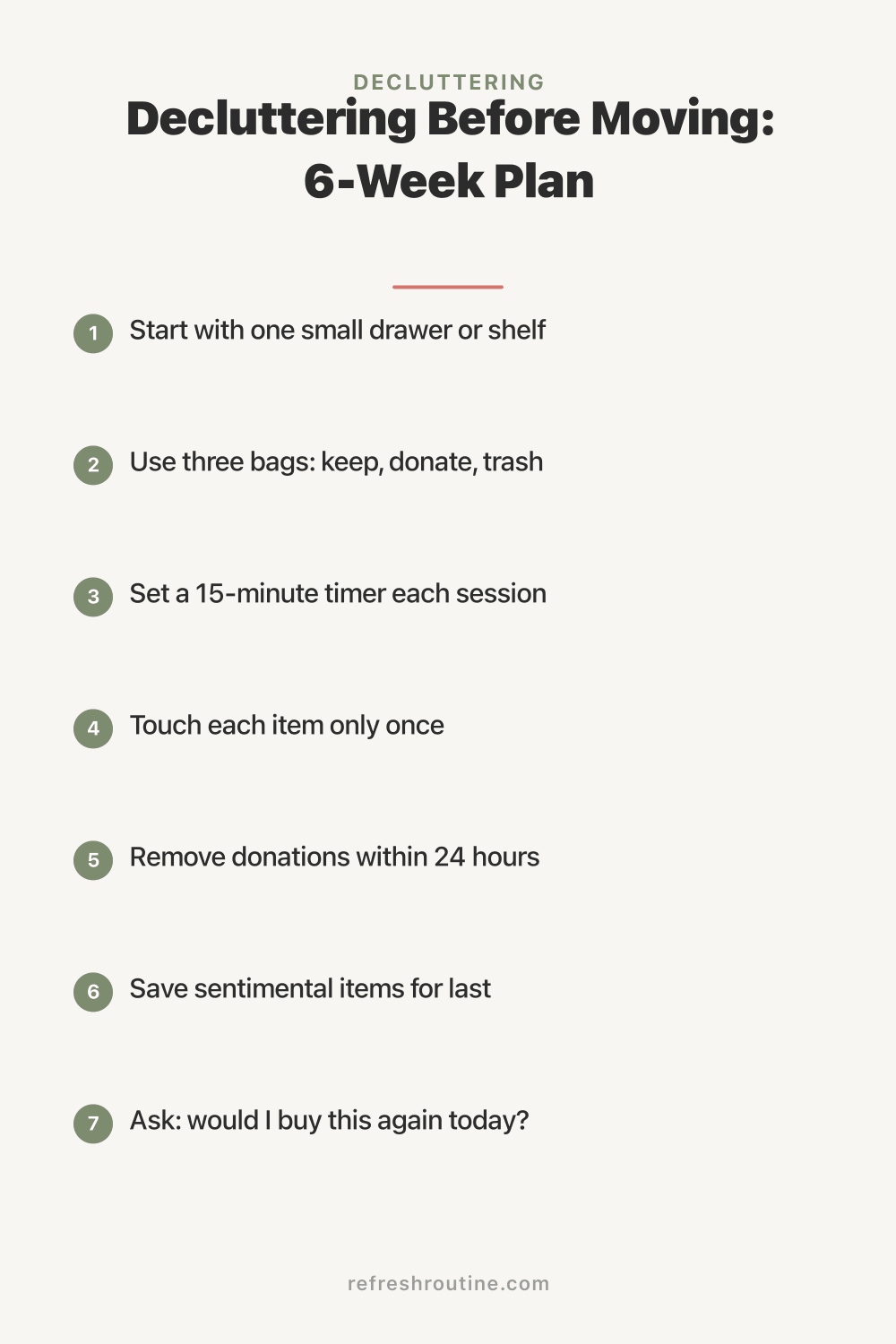
Decluttering Before Moving: A 6-Week Plan
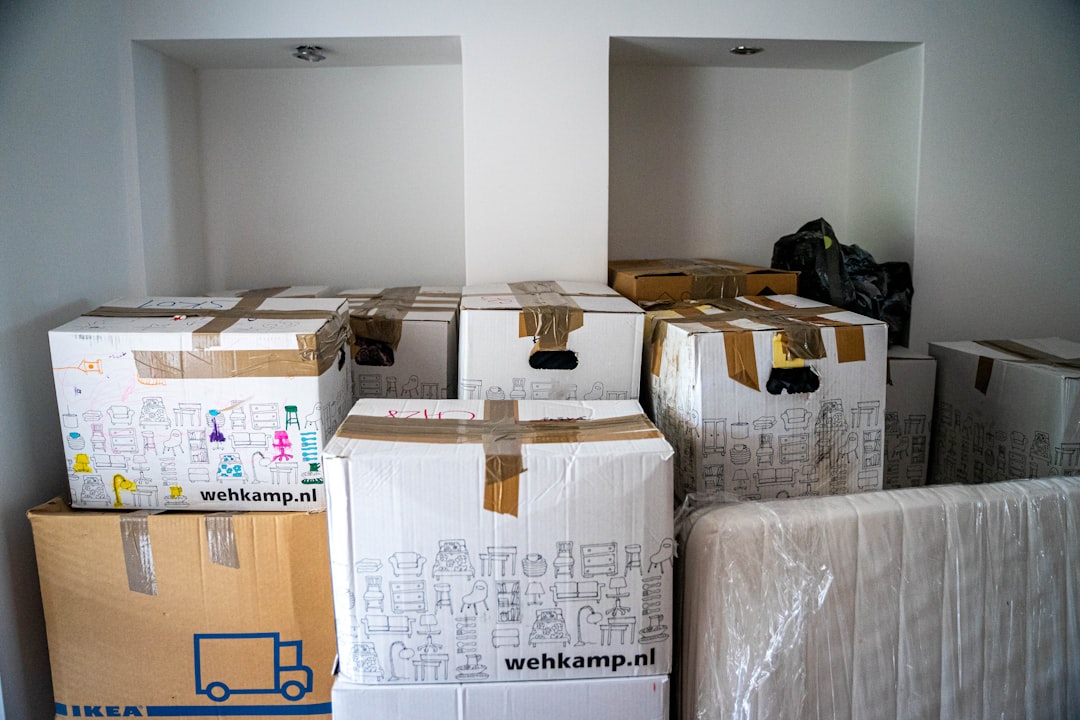
When we moved across the country last year, we paid by weight. The estimator looked at our 3-bedroom house and quoted $4,200. After 6 weeks of decluttering, our actual bill was $2,800. The difference paid for our first month of vacation furniture.
Decluttering before a move is not optional. Every item you bring costs money, time, and storage in your new home. Here is the 6-week plan that saves money and stress.
Why Move-Decluttering Matters
The American Moving and Storage Association reports that the average local move costs $1,250, and long-distance moves average $4,890. Both prices are calculated primarily by weight and volume. Less stuff equals less cost. Always.
Beyond cost, moving with less stuff means:
- Faster packing
- Faster unpacking
- Less risk of damage in transit
- More clarity in your new home
- Less storage rental needed
- Reduced overwhelm during the transition
How Much Should You Declutter Before Moving?
Aim to reduce your belongings by 20 to 40% before a move. This typically means 10 to 30 boxes worth of items leaving (donated, sold, or trashed). Some downsizing moves require 50% or more reduction. Use the move as the catalyst for honest decisions: items not worth carrying to a new home are not worth keeping.
The 6-Week Decluttering Plan
Week 6: Garage, Basement, and Storage
Start with the spaces most cluttered with items you have not used in years. These usually have the lowest emotional weight and the highest volume.
Tasks:
- Empty every storage bin
- Check expiration dates on chemicals and paint
- Sell or donate sports equipment for sports no one plays
- Get rid of broken tools and gadgets
- Recycle old electronics
- Hold a garage sale or list items online
Goal: 5 to 10 boxes leave the house this week.
For garage-specific strategies, see our garage decluttering guide.
Week 5: Kitchen and Pantry
The kitchen has the highest density of expired and rarely-used items in most homes.
Tasks:
- Empty pantry of expired food
- Get rid of duplicate appliances
- Donate kitchen gadgets you rarely use
- Toss chipped dishes and mismatched silverware
- Use up frozen food (move with less than 1 week of food)
- Sort spices (most are expired)
Goal: 3 to 5 boxes leave the house this week.
Week 4: Closets and Clothing
Clothing is the easiest category to over-pack because it is fast to shove into bags.
Tasks:
- Try on questionable clothes (force the decision)
- Donate anything that does not fit
- Toss stained, pilled, or damaged items
- Sell designer items on consignment or online
- Reduce shoes to 5 to 10 pairs you actually wear
- Donate excess accessories, belts, and bags
Goal: 4 to 8 large bags donated this week.
For specific strategies, see our capsule wardrobe guide.
Week 3: Living Areas and Decor
Living rooms accumulate decor that no longer matches your style or that you have stopped seeing.
Tasks:
- Audit decor honestly (does this still bring joy?)
- Donate furniture that does not fit the new space
- Get rid of duplicate electronics and cables
- Toss broken or outdated tech
- Sort book collections (donate, sell, or digitize)
- Reduce throw pillows and decorative items
Goal: 3 to 5 boxes leave the house this week.
Week 2: Bathrooms and Personal Care
Most bathroom items cannot be transported anyway. Use up or donate aggressively.
Tasks:
- Toss expired makeup and skincare
- Get rid of hotel toiletries
- Donate unopened products you do not love
- Use up almost-empty products in your last 2 weeks
- Sort medications (return expired ones to pharmacy)
- Reduce towel count to 2 per person plus 1 hand towel each
Goal: 2 to 3 bags leave the house this week.
Week 1: Papers, Photos, and Sentimental
Save this week for the hardest, most emotional sorting.
Tasks:
- Shred old papers (taxes over 7 years, expired insurance)
- Scan important documents to cloud storage
- Sort photos (toss duplicates, scan favorites)
- Decide on sentimental items (keep, photograph, or release)
- Reduce kid art to 1 folder per kid per year
- Process inherited items (keep, gift to family, donate)
Goal: 1 to 2 boxes leave the house this week.
For help with sentimental items, see our sentimental items decluttering post.
What I Wish I Knew Before Moving
After three major moves, here is what helped most.
Sell early, donate late. Selling takes time (listings, photos, pickup arrangements). Start selling 6 to 8 weeks out. Donations can happen up to the last few days because dropoff is fast.
Movers do not transport hazardous materials. Paint, propane, cleaning chemicals, batteries, and pool chemicals cannot ride in moving trucks. Plan to use them up, give them away, or dispose of them properly before move day.
Consumables you do not eat get tossed. Spices, opened pantry items, partially used cosmetics, and half-empty cleaning supplies are not worth the move. Either use them up or donate to a food pantry.
The new house dictates the inventory. If you are moving to a smaller space, declutter to fit that space specifically. Measure your new rooms. If your sofa will not fit, sell it before the move.
Hire a junk hauler for the final pass. Two days before moving, hire a junk hauling service for everything that did not sell or donate in time. $200 to $400 saves hours and frustration on move day.
What Should You Move and What Should You Sell?
Move items you actively use, items in good condition that fit your new space, items with sentimental value you have decided to keep, and items worth more to you than the moving cost per cubic foot. Sell or donate items used rarely, items that do not fit the new space, items easily replaced for less than moving cost, and anything you have been meaning to deal with for over a year.
Common Moving Decluttering Mistakes
After helping family and friends move, these are the patterns that cost them money and stress.
Starting too late. Decluttering in week 1 of a move creates panic decisions, which often end up as “just bring it.” Start at 6 weeks minimum.
Packing without sorting. Throwing items into boxes without deciding to keep them moves clutter into a new home where you will pay rent to store it.
Keeping “just in case” items. The new house has different storage. “Just in case” items become attic clutter in 6 months.
Not measuring the new space. Buying or keeping furniture without measuring leads to expensive returns or curbside dumping.
Sentimental items first. Save emotional decisions for last. By then, you have built decluttering momentum.
For more on what not to do, see our decluttering mistakes post.
Move-Out Day Tips
In addition to decluttering, prepare for move day with these tips:
- Keep an essentials box: Toiletries, change of clothes, chargers, snacks, basic kitchen items
- Label by room of destination: Not by room of origin
- Photograph electronics before disconnecting: Helps with reconnecting later
- Pack one suitcase per person: Like you are going on a week-long trip
- First night box: Bedding, towels, soap, paper plates, phone chargers
Selling vs Donating
Selling items takes time. Calculate whether it is worth it:
Worth selling (typically over $100 value):
- Furniture in good condition
- Electronics under 5 years old
- Designer clothing and accessories
- Quality jewelry
- Power tools
- Bikes and sporting equipment
Donate instead (under $50 value):
- Most clothing
- Kitchen items
- Books and media
- Decor and household items
- Children’s items
Time to sell averages 1 to 3 weeks per item. For 50+ items, this is hundreds of hours. Donating saves time even at the cost of some money.
Move-Out Cleaning
After the truck leaves, you still need to clean. Decluttering as you pack makes this easier:
- Empty rooms reveal areas to clean
- Less packing materials to manage
- Faster final walkthrough
- More likely to get your deposit back (if renting)
For a complete move-out cleaning checklist, see our move-out cleaning guide.
Key Takeaway
Decluttering before moving is a 6-week project, not a last-week scramble. Start with garage and storage at week 6, work through kitchen, closets, living areas, bathrooms, and finally papers and sentimentals. Each week you remove items reduces moving cost, packing time, and arrival overwhelm. Most homes can reduce inventory by 20 to 40% with this plan. The money saved on moving often pays for new items at the destination, and the clarity of arriving with only what you love is its own reward.
For decluttering systems, see our 4-box method and where to start decluttering guides.

Frequently Asked Questions
How far in advance should you declutter before moving?
Start decluttering 6 to 8 weeks before your move date. This gives you time to sort thoughtfully, sell valuable items, donate slowly, and avoid the last-week panic that leads to packing everything indiscriminately. The earlier you start, the more money you save on moving and the less you bring.
What should you not move to a new house?
Do not move expired food, opened toiletries, broken items, duplicates, clothes you have not worn in a year, hazardous materials (paint, propane, cleaning chemicals - movers will not take them), items you forgot you owned, or anything that does not fit your new space. Most movers cannot transport hazardous materials anyway.
How do you decide what to keep when moving?
Decide what to keep by asking three questions: Do I currently use it? Will it fit in my new space? Is it worth the cost to move it (per cubic foot)? If the answer to any is no, sell, donate, or trash it. Items used less than yearly and worth under $50 are typically not worth moving.