Garage Storage Systems: Shelves, Pegboards, and Overhead Racks

I spent three weekends staring at my garage before I actually did anything about it. Bins were stacked on the floor, holiday decorations blocked the lawnmower, and my kids’ bikes leaned against a pile of camping gear. The problem wasn’t that I had too much stuff. The problem was that I had zero storage systems in place.
Choosing the right garage storage systems can feel overwhelming because there are so many options. Shelves, pegboards, overhead racks, slatwall panels, cabinets. In this roundup, I’m breaking down the most popular systems, comparing costs, installation difficulty, and real-world performance. I’ve tested all of these in my own two-car garage over the past year.
According to the National Association of Home Builders, 82% of homebuyers consider garage storage a desirable feature. That tells you something about how universal this struggle is.
What Is the Best Garage Storage System for Beginners?
The best garage storage system for beginners is freestanding wire shelving. It requires no wall mounting, assembles in under 30 minutes, and costs between $40 and $80 per unit. Wire shelves hold 250 to 350 pounds per shelf and can be repositioned anytime. For most families, two or three units along a wall instantly transform a cluttered garage into organized zones.
I started with wire shelving because I was renting at the time and couldn’t drill into walls. Even after buying our house, those shelves stayed because they just work.
Garage Shelving: Your Foundation Layer
Shelving is the backbone of any garage storage system. There are three main types worth considering, and each serves a different purpose.
Freestanding Wire Shelving
- Cost: $40 to $80 per unit
- Weight capacity: 250 to 350 pounds per shelf
- Installation time: 20 to 30 minutes, no tools required
- Best for: Bins, paint cans, cleaning supplies, general storage
Wire shelves are my go-to recommendation for anyone just starting out. They’re adjustable, ventilated (no dust buildup), and incredibly sturdy. I keep three units along my back wall for labeled bins. The adjustable shelf heights mean I can fit tall items like shop vacuums on the bottom and shorter bins up top.
Pro tip: Place shelving units at least 2 inches from the wall. This gap allows air circulation and prevents moisture from getting trapped behind bins.
Wall-Mounted Steel Shelving
- Cost: $60 to $150 per unit
- Weight capacity: 400 to 800 pounds per shelf
- Installation time: 45 to 90 minutes, requires drill and stud finder
- Best for: Heavy items, power tools, large containers
Wall-mounted shelves free up floor space, which is critical if you’re parking cars in the garage. I installed two 48-inch steel shelves above my workbench, and they hold everything from my circular saw to bins of hardware. The key is hitting studs. I learned the hard way that drywall anchors are not sufficient for heavy loads.
According to the Consumer Product Safety Commission, improperly mounted shelving causes thousands of injuries annually. Always anchor into studs or use appropriate masonry fasteners for concrete walls.
Built-In Garage Cabinets
- Cost: $200 to $1,500 per unit
- Weight capacity: Varies by design
- Installation time: 2 to 4 hours
- Best for: Chemicals, valuables, items you want hidden
Cabinets look great and keep things dust-free, but they’re the most expensive option. I have one lockable cabinet for chemicals and sharp tools that I keep away from my kids. If your budget allows, a combination of open shelving and one or two cabinets gives you the best of both worlds.
Garage Pegboard Systems: The Tool Organizer
Pegboards are my favorite garage storage upgrade, and I genuinely wish I had installed one sooner. A single 4x8 pegboard panel costs about $20 to $30, and the hooks and accessories run another $20 to $40.
Why Pegboards Work So Well
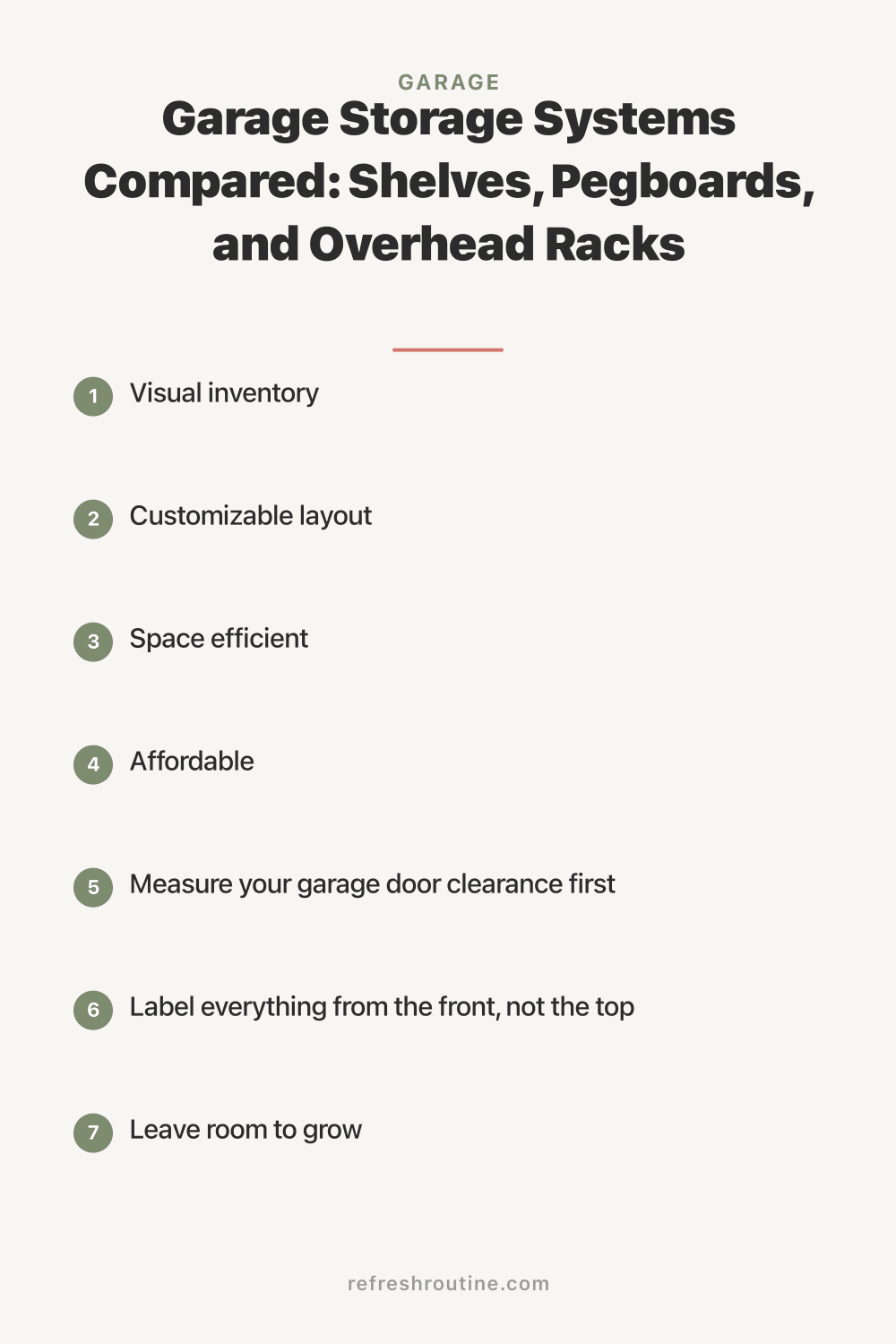
- Visual inventory. You can see every tool at a glance. No more digging through drawers.
- Customizable layout. Hooks, bins, and shelves rearrange in seconds.
- Space efficient. A 4x8 panel holds 50 or more tools in just 32 square feet of wall space.
- Affordable. Total setup cost stays under $60 for most installations.
I mounted my pegboard above my workbench, and it holds about 40 hand tools, a tape measure collection that I’m slightly embarrassed about, and several small bins for screws and nails. The trick is to leave about 3/4 inch of space between the pegboard and the wall so the hooks can insert properly. I used furring strips behind the panel to create that gap.
Pegboard vs. Slatwall
Slatwall panels are the premium alternative to pegboards. They look cleaner and hold more weight, but they cost $8 to $15 per square foot compared to pegboard’s $1 to $2 per square foot. For most home garages, pegboard is more than sufficient. Slatwall makes more sense if you’re building a dedicated workshop space or want that finished, professional look.
If you’re interested in setting up a complete tool area, our guide to workshop and tool organization ideas covers layout planning and storage strategies in detail.
Overhead Garage Storage: Unlocking the Ceiling
The average two-car garage has about 400 square feet of ceiling space that goes completely unused. Overhead racks turn that wasted space into prime storage territory. This was a game-changer for me.
Types of Overhead Systems
Platform racks mount directly to ceiling joists and create a flat surface for bins and boxes.
- Cost: $100 to $300 per unit
- Weight capacity: 250 to 600 pounds
- Best for: Seasonal items, holiday decorations, luggage
Motorized lifts use a pulley system to raise and lower items to the ceiling.
- Cost: $150 to $400 per system
- Weight capacity: 50 to 250 pounds
- Best for: Bikes, kayaks, bulky individual items
I installed a 4x8 overhead platform rack in my garage, and it holds six large storage bins of holiday decorations and seasonal sports equipment. The total cost was $180, and installation took about two hours with a friend’s help. The bins are labeled on the front edge so I can identify them from below.
Time estimate: 1.5 to 3 hours for installation with a helper.
Safety Considerations for Overhead Storage
- Always mount into ceiling joists, never just drywall
- Use lag bolts, not wood screws
- Keep heavy items centered on the platform, not at the edges
- Install at a height that clears your garage door track (typically 42 inches from the ceiling minimum)
- Check the system’s weight rating and stay at least 20% below the maximum
According to the National Safety Council, falls and falling objects are among the top causes of home injuries. Proper installation of overhead systems is not optional. It’s essential.
How Much Does a Complete Garage Storage System Cost?
A functional garage storage system for a two-car garage costs between $200 and $800 for a DIY setup using a combination of shelves, pegboards, and one overhead rack. Professional installation systems range from $1,500 to $5,000. The DIY route saves 60% to 70% on average. Most homeowners can complete a full garage transformation in one weekend with basic tools.
My total investment for my garage was about $450. That covered three wire shelving units, one pegboard setup, one overhead rack, and about 20 storage bins. For a guide on keeping costs low, check out our post on how to organize a garage on a budget.
Choosing the Right System for Your Space
Not every garage needs the same setup. Here’s how I think about matching systems to situations.
Small One-Car Garage (200 sq ft)
- Priority: Maximize vertical space
- Best combination: Wall-mounted shelving plus one pegboard panel
- Avoid: Freestanding units that eat floor space
Standard Two-Car Garage (400 sq ft)
- Priority: Zone-based organization
- Best combination: Freestanding shelving, pegboard, and one overhead rack
- Budget: $300 to $600
Large Three-Car Garage (600+ sq ft)
- Priority: Workshop area plus storage
- Best combination: Full wall systems, multiple pegboards, overhead storage, and cabinets
- Budget: $800 to $2,000
I’ve found that the biggest mistake people make is trying to install everything at once. Start with shelving to get items off the floor, then add a pegboard for tools, then tackle overhead storage last. That phased approach is easier on your wallet and your weekends.
Does Garage Organization Increase Home Value?
Yes. According to the National Association of Realtors, a well-organized garage can increase perceived home value by 1% to 2%. For a $400,000 home, that’s $4,000 to $8,000 in added value. More importantly, organized garages help homes sell faster. Real estate agents consistently report that a clean, functional garage is one of the top features buyers notice during showings. The investment in storage systems pays for itself many times over.
This is something I think about as a long-term homeowner. Every dollar I spend on garage storage systems is both a quality-of-life improvement now and an investment in my home’s resale value.
What I Wish I Knew Before Installing Garage Storage
-
Measure your garage door clearance first. I almost installed overhead storage right in the path of my garage door track. Measure the highest point your door reaches and add at least 4 inches of clearance.
-
Label everything from the front, not the top. You’ll be looking at bins from below or straight on, not from above. I re-labeled all my bins after realizing I couldn’t read the top labels.
-
Leave room to grow. I filled my shelving immediately and had to add more six months later. Plan for 20% more capacity than you think you need.
-
Invest in uniform bin sizes. Mismatched bins waste shelf space. I standardized on one brand and two sizes, and my shelving suddenly held 30% more.
-
Don’t skip the floor. Even with wall and ceiling storage, consider a garage floor mat or epoxy coating. It makes sweeping easier and protects against stains.
Key Takeaway
The best garage storage systems combine multiple approaches. Use shelving for bins and supplies, pegboards for tools, and overhead racks for seasonal items. Start with one system, master the organization, then expand. A complete DIY setup costs between $200 and $800 and can be installed over a single weekend. The key is matching the right system to your garage size and storage needs.
Start Your Garage Transformation
Ready to get started? Visit our garage organization hub for a complete overview of strategies and projects. If you’re working with a tight budget, our budget garage organization guide has creative solutions under $50. And once your garage is sorted, tackle the rest of your home with our room-by-room decluttering checklist to keep the momentum going.

Frequently Asked Questions
What is the most affordable garage storage system?
Freestanding wire shelving is the most affordable option, starting around $40 to $60 per unit. A basic pegboard setup costs about $20 to $30 for a 4x8 panel. Both can be installed without professional help, keeping total costs under $100 for a starter system.
How much weight can overhead garage storage hold?
Most overhead garage storage racks hold between 250 and 600 pounds when properly installed into ceiling joists. Premium systems rated for 600 pounds can safely store heavy bins of seasonal items. Always verify your ceiling joist spacing and use lag bolts for secure mounting.
Can you combine different garage storage systems?
Yes, combining systems is the most effective approach. Use overhead racks for seasonal items, wall shelves for frequently accessed gear, and pegboards for tools. This layered strategy maximizes vertical space and keeps everyday items within reach.