Work From Home Morning Routine That Sets Up Your Day
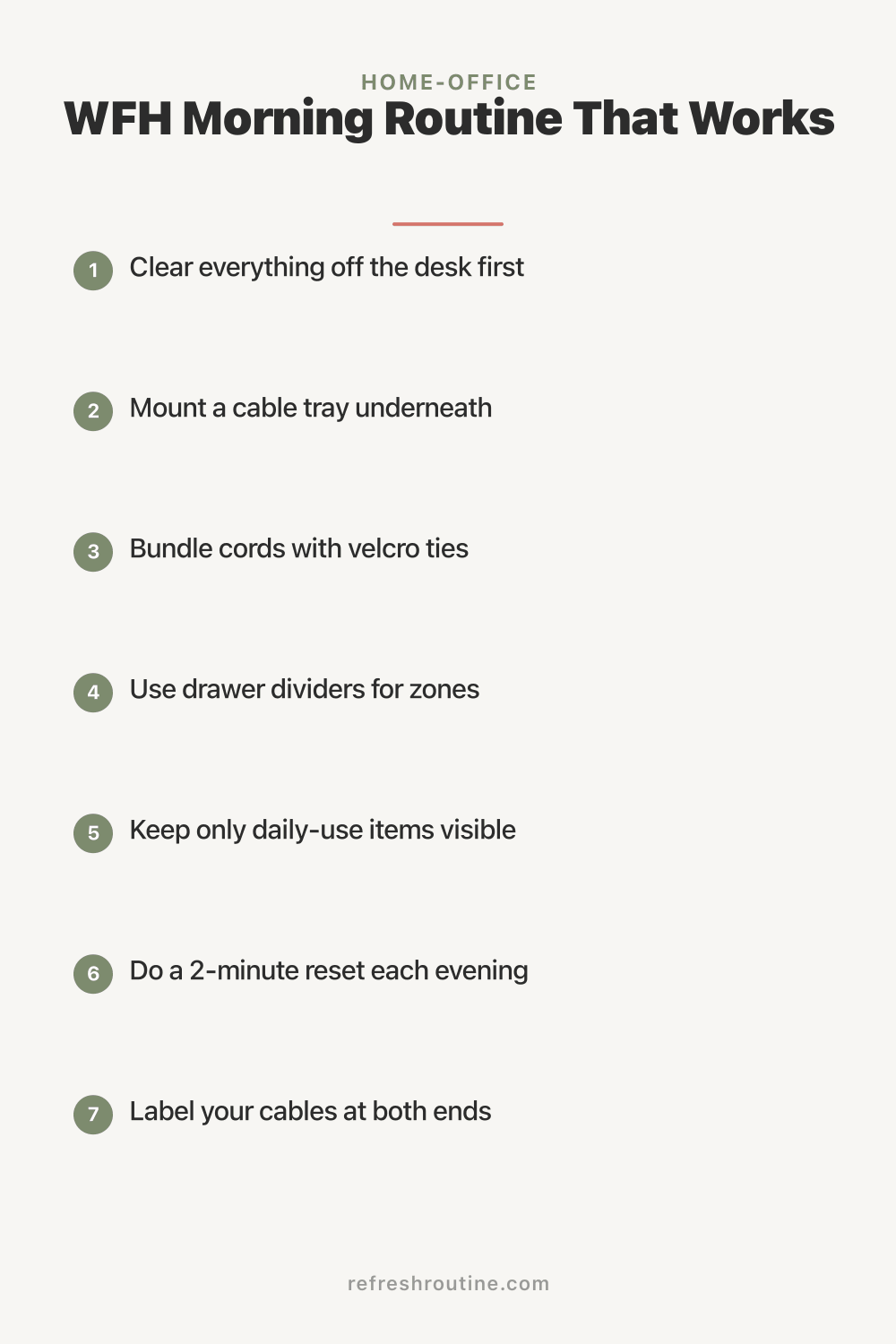
For the first year of working from home, I rolled out of bed at 8:55 AM, sat at my computer in pajamas at 9:00, and worked until I forgot to eat lunch. By 3 PM I was foggy, exhausted, and unable to focus. I told myself I was being productive. I was not.
The morning routine I built since has changed everything. Here is exactly what works, what I tried that did not work, and how to design your own.
Why WFH Morning Routines Matter More
In an office, the commute creates a natural transition between home and work. Your brain has time to shift modes. The office building, the elevator, the desk - all signal “work starts now.”
Working from home eliminates these transitions. Without intentional design, your bedroom becomes your office becomes your dining room becomes your gym. The brain never fully shifts modes, leading to:
- Brain fog: Lack of mental clarity between work and rest
- Lower productivity: No clear “start” signal
- Boundary erosion: Work bleeds into personal time
- Burnout: No real rest because you never really started
- Reduced motivation: No external structure to create momentum
A morning routine creates the transition the commute used to provide.
What Is the Best WFH Morning Routine?
The best WFH morning routine includes 4 elements: wake-up with light (open curtains, sunshine if possible), physical movement (walk, exercise, stretch for 15+ minutes), real breakfast (not just coffee), and clear transition to work (get dressed, move to workspace). Total time: 60 to 90 minutes. The routine signals to your brain that you have transitioned from rest to work, which is what the commute used to do.
My Current Morning Routine (Adapted After 5 Years)
6:00 AM - Wake Up
Alarm off. No phone for 30 minutes. Open curtains. The morning light starts the wake-up process naturally.
6:15 AM - Coffee Plus Reading
15 minutes of coffee or tea. No screens. Real book or newspaper. This is wake-up time, not productivity time.
6:30 AM - Movement
20 to 30 minutes of physical activity. Some days yoga. Some days walking the neighborhood. Some days light cardio. The intensity does not matter; the consistency does.
7:00 AM - Shower and Get Dressed
Real clothes (jeans, button-down, or similar). Not athletic wear or pajamas. The clothes signal “work mode.”
7:30 AM - Breakfast
Real breakfast at a table. Not at my desk. Eggs, oatmeal, or fruit and yogurt. Eating away from work preserves the boundary.
8:00 AM - Plan the Day
15 minutes reviewing calendar and writing down 3 priority tasks. Often this happens at the kitchen table with a notebook, not at the computer.
8:15 AM - Start Work
Sit at desk. Open computer. Begin first priority task immediately. The morning routine has prepared brain for focus.
Total time: 2 hours 15 minutes from wake-up to work. Some days I compress to 1 hour 15 minutes if needed.
Variations for Different Lifestyles
Early Riser (5 AM Start)
- 5:00 - Wake up
- 5:30 - Movement (longer workout possible)
- 6:30 - Shower and dress
- 6:45 - Breakfast
- 7:15 - Planning
- 7:30 - Start work
Standard Hours (8 AM Start)
- 6:30 - Wake up
- 6:45 - Coffee and reading
- 7:00 - Movement
- 7:30 - Shower and dress
- 7:45 - Breakfast
- 8:00 - Start work
Late Riser (10 AM Start)
- 8:00 - Wake up
- 8:15 - Coffee
- 8:45 - Movement
- 9:30 - Shower
- 9:45 - Breakfast
- 10:00 - Start work
Working Parent (Variable)
Build routine around kid responsibilities:
- 5:30 - Personal routine before kids wake
- 6:30 - Kids morning routine
- 8:30 - Kids drop-off or school start
- 9:00 - Start work after returning home
For parents, working out before kids wake is often the only reliable time.
What I Wish I Knew About WFH Mornings
After 5 years of refining my routine, here is what helped most.
Pajamas are the enemy. I worked in pajamas for months. Felt like I never really started or stopped. Real clothes changed everything.
Coffee at the desk creates bad patterns. Drinking coffee while reading email starts the day with reactive thinking. Coffee away from desk = proactive thinking.
Exercise consistency beats intensity. I tried 60-minute workouts and quit within 3 weeks. A daily 20-minute walk has lasted 4 years. The consistency makes the difference.
Phone first thing destroys focus. Looking at phone before being awake puts me in reactive mode for hours. Phone now waits until breakfast.
The routine takes 30 days to stick. First two weeks felt forced. After 30 days, it became automatic.
How Long Should a WFH Morning Routine Take?
A WFH morning routine should take 60 to 90 minutes between waking up and starting work. Less than 60 minutes is usually insufficient to create the mental transition. More than 90 minutes risks losing the productive morning energy. The exact activities matter less than the consistent presence of a defined transition between home and work modes.
Common WFH Morning Mistakes
After helping family and friends refine their routines:
Mistake 1: Working before getting dressed. Establishes wrong precedent. The clothes are the signal.
Mistake 2: Checking email before fully awake. Email starts the reactive brain pattern that destroys focus for hours.
Mistake 3: Skipping breakfast or eating at the desk. Both undermine the boundary between rest and work.
Mistake 4: Trying to do too much. Long morning routines fail. Start simple.
Mistake 5: Inconsistent schedule. Different times each day prevent the routine from becoming automatic.
For more structured workday tips, see our time blocking guide.
Building the Routine
Week 1: Establish Wake Time
Pick a consistent wake time and commit for 7 days. Just wake up at the same time. Do not try to add other elements yet.
Week 2: Add Movement
Add 15 to 30 minutes of movement before work. Walking, yoga, light exercise. Any movement counts.
Week 3: Add the Clothes Rule
Real clothes before starting work. Not the gym clothes you wore for movement; real shirt and pants.
Week 4: Add the Phone Rule
No phone for the first 30 to 60 minutes after waking. The exception is critical messages from family.
Weeks 5+: Refine and Customize
Adjust based on what works for your life. Add reading, journaling, meditation, breakfast routines as desired.
The slow build prevents the all-at-once routine failure most people experience.
What to Skip from Generic Productivity Advice
Many “ideal WFH morning routine” articles include practices that do not work for most people:
Cold showers: Hard to maintain; benefits less proven than claimed 4 AM wake-ups: Only sustainable for true early birds, not everyone Bulletproof coffee or fancy biohacks: Marginal returns for high cost Meditation apps daily: Helpful for some, gimmick for others Journaling 3 pages daily: Too much for most people; 5 minutes works fine Cold plunge therapy: Trend, not necessity
Build a routine that fits your actual life, not what looks impressive on Instagram.
The Anti-Routine: What to Skip
Some things should NOT be in your morning routine:
- Email or Slack before fully awake
- Phone in bed
- Social media scrolling
- News (negative news especially)
- Work before the transition is complete
- Yelling at kids while distracted by phone
These activities sabotage the day’s later focus and energy.
How to Stay Consistent
Habits stick when paired with existing routines:
Stack the routine: Coffee → reading. Reading → movement. Movement → shower.
Same location: Coffee at the same chair. Movement at the same place.
Same supplies: Notebook for planning. Pen at the desk. Coffee in same mug.
Track on paper: Simple checklist. Mark each day completed.
Forgive missed days: One miss is fine. Three is a pattern that needs investigation.
When Life Disrupts the Routine
Travel, illness, family events disrupt routines. Strategies:
Modify, do not abandon: Shorter version of routine if needed Resume immediately: Day after disruption, return to full routine Identify the trigger: What threw off the day? Fix that specifically Avoid perfectionism: Done is better than perfect
After 6 months of consistent practice, the routine survives most disruptions because it has become identity, not effort.
Evening Routine That Supports Morning
Mornings depend on evenings:
No screens 60 minutes before bed: Phone, TV, computer Same bedtime daily: Within 30 minutes window Cool dark room: 65 to 68°F for ideal sleep Same wake time daily: Even weekends (within 1 hour)
Most morning routine failures are evening routine failures in disguise.
Routine for Tough Days
On low-energy days, drop to minimum viable routine:
- Get dressed (real clothes)
- 5-minute walk outside
- 5-minute breakfast away from desk
- Open notebook, write 1 priority task
- Start work
15 minutes total. Maintains the boundary even when energy is low.
For more on managing energy when motivation is gone, see our decluttering when overwhelmed guide (the principles transfer).
Key Takeaway
A WFH morning routine recreates the transition that the commute used to provide between home and work. The four essential elements: wake-up with light (not phone), physical movement (15+ minutes), real breakfast (not at desk), and intentional dress (not pajamas). Total time: 60 to 90 minutes. Build the routine slowly over 4 weeks rather than all at once. Skip cold plunges and 4 AM trends unless they fit your actual life. Pair activities with existing routines for stickiness. After 30 days, the routine becomes automatic, the workday becomes more focused, and the boundary between work and rest restores. Most importantly, the routine creates the structure that makes WFH sustainable long-term rather than the burnout-and-recover pattern most remote workers experience.
For more on remote work, see our WFH routine guide and time blocking method.

Frequently Asked Questions
What is the best morning routine for working from home?
The best WFH morning routine separates 'wake up' from 'start work' with a clear transition: get dressed (not in pajamas), have coffee or tea away from your computer, move your body for 10 to 20 minutes (walk, stretch, exercise), eat breakfast, then arrive at your workspace ready. The transition matters more than the specific activities.
Should you exercise before work when working from home?
Yes, morning exercise improves WFH productivity. Research consistently shows 20 to 30 minutes of movement before work increases focus, reduces stress, and improves mood for 4 to 6 hours. The intensity matters less than the consistency. A daily 20-minute walk outperforms occasional 60-minute workouts.
How do you stay motivated working from home?
Stay motivated working from home through structure (consistent schedule, defined workspace, work clothes), social connection (regular video calls, virtual coworking, planned in-person meetups), and small daily wins (3 priority tasks each morning). Motivation follows action; the routine creates motivation, not the other way around.
What time should you start work when working from home?
Start work at the same time each day, ideally 30 to 60 minutes after waking up. The transition time prevents the 'roll out of bed into work' mode that destroys WFH boundaries. Most productive remote workers start between 8 AM and 9 AM after a morning routine.