Meal Prep Storage Ideas That Save Hours Every Week
Three years ago I started meal prepping. I bought 20 mismatched containers, cooked all Sunday afternoon, and crammed everything into the fridge in a tower of tetris. By Wednesday, half of it was inedible. By Friday, I had quit meal prep entirely.
The problem was not the cooking. The problem was the storage. Here are the meal prep storage strategies that finally made the system sustainable.
Why Meal Prep Often Fails
Meal prep enthusiasts on social media make it look easy: 30 perfect containers, color-coordinated lids, beautiful labels. The reality is harder. Most home meal preppers quit within 3 months.
The failure points:
- Mismatched containers that do not stack
- Soggy food from improper storage
- Forgotten containers in the back of the fridge
- Smell mixing in shared spaces
- Decision fatigue when nothing looks appetizing by Thursday
Most of these are storage problems, not cooking problems. Solve the storage and meal prep becomes sustainable.
What Is the Best Storage Setup for Meal Prep?
The best meal prep storage setup uses matching glass containers in 2 to 3 sizes (1 cup, 2 cup, 4 cup), stored in dedicated fridge zones (one shelf for prepped meals, one for components), labeled with date and contents, and rotated front-to-back to avoid forgetting. This system prevents the chaos that ends most meal prep routines.
10 Meal Prep Storage Strategies
1. Match Container Sets
Mismatched containers are the #1 meal prep killer. They do not stack, do not maximize space, and create visual chaos.
Buy:
- 1 set of glass containers in 1-cup size (6 to 10 containers)
- 1 set in 2-cup size (6 to 10 containers)
- 1 set in 4-cup size (3 to 5 containers)
- 1 set of small dressing/sauce containers
Total cost: $80 to $120 for everything you need
2. Glass Over Plastic
Glass containers cost more but:
- Microwave safely without leaching
- Resist stains and odors
- Last 5+ years vs 1 to 2 for plastic
- Look cleaner over time
Plastic containers fail in months. Glass containers pay back the investment by year 2.
3. Dedicated Fridge Zones
Designate specific zones in your fridge:
- Top shelf: This week’s prepped meals (eat oldest first)
- Second shelf: Components (cooked grains, proteins, sauces)
- Third shelf: Fresh vegetables and fruit
- Drawer: Greens and herbs
- Bottom shelf: Raw meats (food safety)
The zones prevent meal prep from getting buried behind other groceries.
For more refrigerator strategies, see our refrigerator organization guide.
4. Label Every Container
Every meal prep container gets:
- Date prepped
- Contents
- Reheat instructions if non-obvious
Use a Sharpie on freezer tape or reusable labels. The 30 seconds of labeling saves 10 minutes of guessing later in the week.
5. Stack Vertically When Possible
Bento-style containers with built-in dividers stack beautifully. Round containers waste space. Square or rectangular containers maximize fridge real estate.
6. Store Wet and Dry Separately
Soggy salads are the #1 meal prep complaint. The fix is separation:
- Dressings in small individual containers
- Wet ingredients (tomatoes, cucumbers) in one container
- Dry ingredients (lettuce, grains, croutons) in another
- Assemble at lunch time
7. Use Freezer-Safe Containers for Long-Term Meals
For meals that will not be eaten within 4 days, freeze immediately:
- Pyrex glass containers are freezer-safe
- Souper cubes (silicone with lids) for portioned soups and sauces
- Heavy-duty freezer bags for flat-packed meals
- Label clearly with content and date
8. Color-Code by Day or Meal
For families with multiple people:
- Different colored lids per family member
- Or different colors per day (Monday = blue, Tuesday = green)
- Or different colors per meal type (lunch = clear, dinner = colored)
Reduces the “which container is mine” chaos.
9. Pre-Portion at Prep Time
Portion individual servings during meal prep, not at lunch time:
- 1 prepped bowl per container = grab and go
- Single-serve dressings already inside (sealed container)
- Snacks pre-portioned in small bags
The morning rush is not the time to portion food. Do it Sunday.
10. Inventory Visibly
Magnetic dry-erase board on the fridge listing what is prepped and what day it was made. Cross off items as eaten. Prevents forgotten food and saves the guess-and-sniff routine.
What I Wish I Knew About Meal Prep Storage
After 3 years of refining the system, here is what made it sustainable.
Two-day rule. I prep Sunday for Mon-Wed and prep Wednesday evening for Thu-Sat. This keeps food fresh and prevents the “Friday meal that has been in the fridge for 6 days” problem.
Less variety wins. I used to make 5 different lunches. Now I make 2 to 3 components and mix them differently. Less prep, less storage, less waste.
Freezer is your friend. I freeze half of every prep batch. Saturday’s chicken becomes Tuesday’s emergency dinner in 3 weeks.
Container ergonomics matter. Containers that are hard to open get skipped. Test before buying a full set.
Stainless steel is underrated. For dry items like prepped granola or trail mix, stainless steel containers stay fresh longer than glass or plastic.
How Do You Stop Wasting Prepped Food?
Stop wasting prepped food by labeling with cook dates, using a first-in-first-out rotation, keeping inventory visible on a fridge whiteboard, and freezing extras before day 4. Most meal prep waste comes from forgotten food, not from over-preparation. Visibility and rotation fix 80% of the waste.
Setting Up a Meal Prep System
Initial Setup (One Weekend)
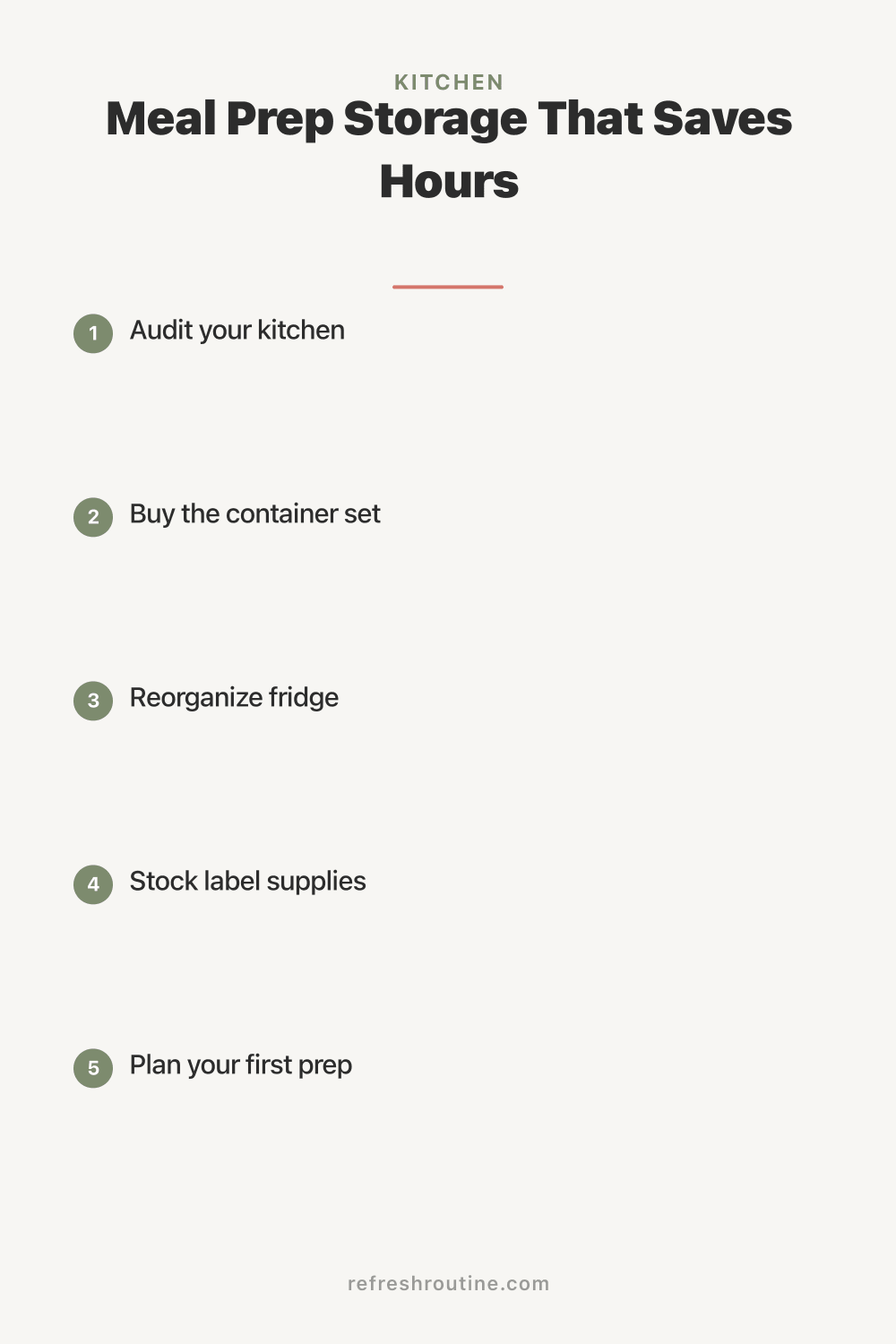
- Audit your kitchen: Get rid of mismatched containers
- Buy the container set: One brand, multiple sizes
- Reorganize fridge: Set up zones with shelf labels
- Stock label supplies: Sharpie, freezer tape or reusable labels
- Plan your first prep: 2 to 3 components, 4 to 5 meals
Weekly Routine
Saturday:
- Meal plan for the week
- Grocery shop
Sunday (2 hours):
- Cook 2 to 3 batches of components
- Portion into containers
- Label and store
Wednesday Evening (45 min):
- Quick re-prep for Thursday to Saturday
- Restock components
This rhythm sustains itself. Sunday prep + Wednesday refresh = no food waste, no decision fatigue mid-week.
Container Maintenance
Glass containers need basic care:
- Hand wash lids (dishwasher degrades silicone seals)
- Run glass through the dishwasher freely
- Replace lids when they no longer seal
- Inspect for cracks after drops
A quality glass set lasts 5+ years with reasonable care.
Freezer Meal Storage
For longer-term meal prep:
Flat-pack method: Freeze soups and sauces flat in heavy-duty bags. Stack like books.
Portion-control: Souper cubes for individual servings. Pop out and reheat.
Casserole dishes: Prep in disposable foil pans for easy freezer-to-oven transfer.
Labels with dates: Freezer items get forgotten faster than fridge items.
For pantry strategies, see our pantry organization guide.
Specific Meal Prep Ideas
Grain Bowls
Components prepped Sunday:
- 1 large pot of grain (rice, quinoa, farro)
- 2 trays of roasted vegetables
- 1 protein (chicken, beans, tofu)
- Dressings in small containers
Daily assembly: Mix and match for variety
Mason Jar Salads
Layer in order:
- Dressing at the bottom
- Hardy vegetables next (cucumbers, peppers)
- Grains or proteins middle
- Greens at the top
Lasts 5 days. Shake before eating.
Soup and Stew Batches
Make a large pot Sunday. Portion into single-serve containers. Half goes to fridge, half to freezer. Lasts 4 days fridge / 3 months frozen.
Breakfast Egg Bites
Bake in muffin tins. Pop out, freeze, reheat in microwave for 60 seconds. Lasts 1 week fridge / 2 months frozen.
Key Takeaway
Meal prep fails most often because of storage problems, not cooking problems. The fix is investing in matching glass containers in 2 to 3 sizes, designating fridge zones, labeling every container with dates and contents, and rotating front to back. Add the Wednesday refresh routine to prevent end-of-week food fatigue. Most people see meal prep become sustainable within 4 weeks of switching to this system. The Sunday prep takes 2 hours, the Wednesday refresh takes 45 minutes, and the daily decision fatigue disappears. Glass containers, dedicated zones, and labels are the three pillars. Get those right and meal prep becomes a habit instead of a chore.
For more kitchen systems, see our pantry organization and refrigerator organization guides.

Frequently Asked Questions
What are the best meal prep containers?
The best meal prep containers are glass with locking lids (microwave-safe, durable, stain-resistant). Bento-style containers work for portion control. Buy 2 sets in matching sizes that stack uniformly. Avoid mixing brands; mismatched containers create storage chaos. Quality containers cost $40 to $80 for a full set and last 5+ years.
How long do meal prepped meals last?
Refrigerated meal prep lasts 3 to 5 days for most foods. Cooked grains and proteins last 4 days. Cooked vegetables 3 to 4 days. Dressings and sauces stored separately last 5 to 7 days. Freezer storage extends most meals to 2 to 3 months. Label every container with the cook date.
What is the easiest meal to prep ahead?
The easiest meal prep beginners is grain bowls: cook a large batch of grain (rice, quinoa, farro), roast 2 trays of vegetables, prepare 1 protein (chicken, beans, tofu), and store components separately. Assemble bowls fresh each day with the prepped components. This method prevents soggy salads and provides variety.