Under-Bathroom-Sink Organization Made Easy
When I finally pulled everything out from under my bathroom sink last spring, I found three bottles of the same dry shampoo, a hair mask that expired in 2023, and a curling iron I thought I had lost during our last move. The space under the bathroom vanity has a way of becoming a dumping ground. Things go in, and they don’t come back out until you’re looking for something specific and have to excavate through layers.
Under bathroom sink organization doesn’t require expensive custom inserts or a complete vanity replacement. With a few affordable tools and about 45 minutes, you can turn that chaotic cabinet into a system that actually makes your morning routine smoother. I’ve reorganized this space three times over the years, and the method I’m sharing here is the one that finally stuck.
According to the American Cleaning Institute, most personal care products have a shelf life of 12 to 24 months after opening. That means the products buried in the back of your vanity are likely past their prime, and clearing them out is the first step toward a functional cabinet.
How Much Can You Fit Under a Standard Bathroom Sink?
A standard bathroom vanity cabinet measures 18 to 24 inches wide and 16 to 20 inches deep. After accounting for plumbing, you typically have 60% to 70% of that space available for storage. Most people use less than half of the available area because they stack items flat on the cabinet floor. By adding vertical organizers like shelf risers and tension rods, you can effectively double the usable space. I gained an extra 3 square feet of storage in my own vanity using this approach.
Step 1: Empty Everything and Sort
Pull every single item out of the cabinet. Yes, everything. Lay it all out on the bathroom floor or counter where you can see it. This part is eye-opening. I always find products I forgot I owned.
Sort into four groups:
- Keep: Products you use at least once a week
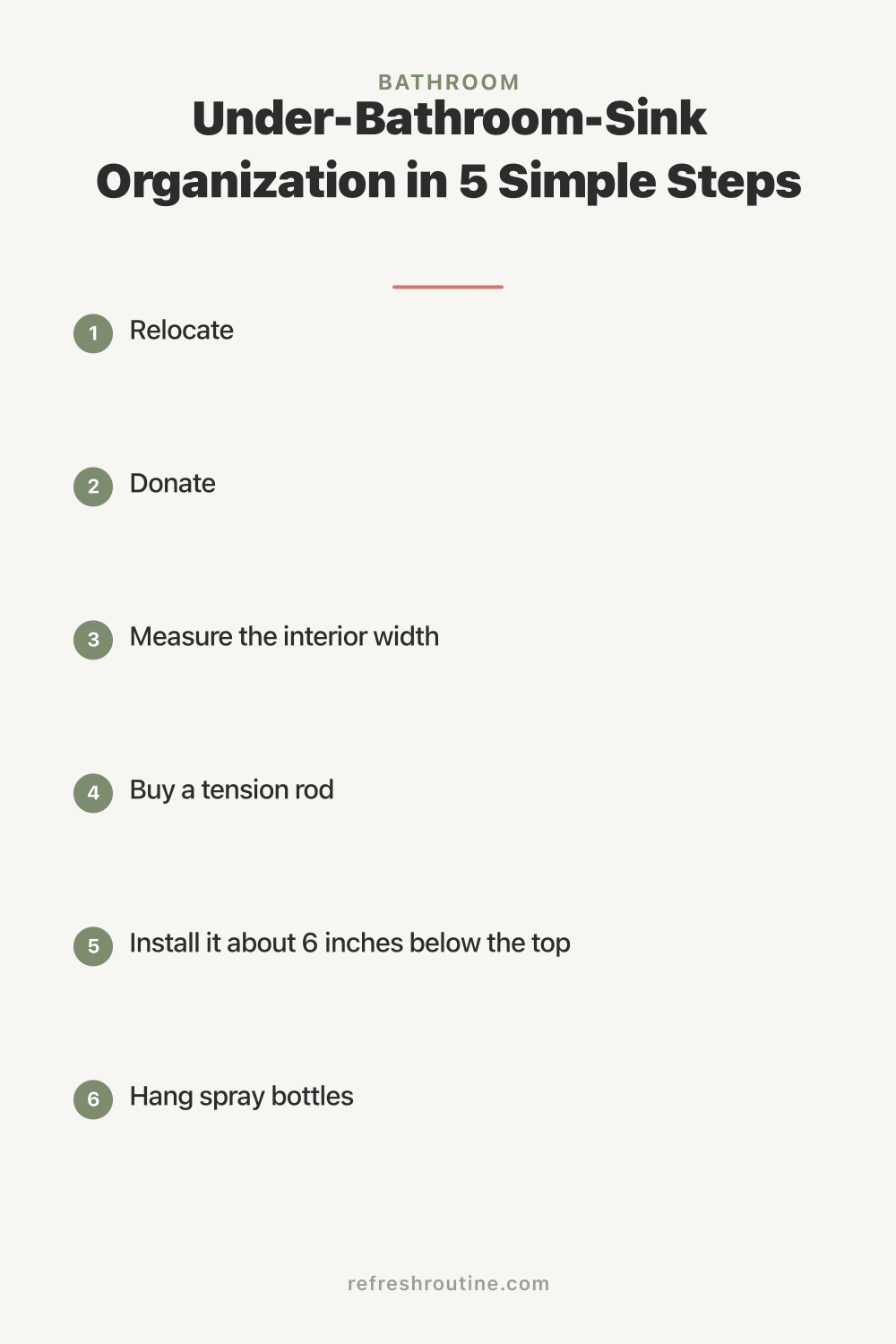
- Relocate: Items that belong somewhere else (cleaning supplies for the kitchen, makeup that goes in a bag or drawer)
- Toss: Expired products, empty bottles, dried-out anything
- Donate: Unopened products you won’t use (shelters and community centers often accept sealed toiletries)
Be honest during this step. I kept a volumizing spray for two years because I paid $18 for it, even though it made my hair feel like straw. If you don’t use it, it’s taking up space that something useful could fill.
Time estimate: 15 minutes for a full sort.
Step 2: Clean and Protect the Cabinet Floor
Before putting anything back, wipe down the entire interior. Bathroom vanity cabinets collect dust, hair, and product drips that turn into sticky residue over time.
Once it’s clean:
- Add a waterproof liner or shelf paper to the cabinet floor. This protects against leaks and makes future cleanups much easier. Just peel up the liner, wipe, and replace.
- Check pipe connections for slow drips. Run the faucet for a minute and feel around the connections with a dry paper towel. If you spot moisture, tighten the connections or call a plumber.
- Place a small drip tray directly under the P-trap. This catches any condensation or minor drips before they damage the cabinet.
I skipped this step the first time I organized under my sink. Within six months, I had a warped cabinet floor and a faint mildew smell. The liner took three minutes to install and would have prevented all of it.
Step 3: Install a Tension Rod for Spray Bottles
This is the trick that changed my vanity organization completely. A spring-loaded tension rod installed horizontally across the inside of the cabinet creates a hanging bar for spray bottles.
How to set it up:
- Measure the interior width of your cabinet
- Buy a tension rod slightly longer than that measurement (they compress to fit)
- Install it about 6 inches below the top of the cabinet opening
- Hang spray bottles by their trigger handles
This lifts bottles off the cabinet floor, freeing up that entire surface for bins and other items. I hang my bathroom cleaner, mirror spray, and a small spray bottle of our natural cleaning solutions on the rod. Three bottles that used to take up floor space now float above everything else.
Cost: $5 to $8 for a basic tension rod.
Step 4: Add Bins and Shelf Risers
Now that spray bottles are off the floor, organize the remaining items into zones using clear bins and shelf risers.
Recommended Zones for Under the Bathroom Sink
- Zone 1: Daily use. Cotton balls, Q-tips, floss, and other items you reach for every day. Place this bin at the front of the cabinet where it’s easiest to grab.
- Zone 2: Backup supplies. Extra toothpaste, soap refills, shampoo bottles waiting to be rotated in. Place these toward the back since you won’t need them daily.
- Zone 3: Hair tools and products. If you store hot tools under the sink, use a heat-resistant pouch or silicone holder. Group hair products in a separate bin.
- Zone 4: Cleaning supplies. Bathroom-specific cleaners, scrub brushes, and sponges. If your spray bottles are already on the tension rod, this zone holds everything else.
A shelf riser placed in one section of the cabinet creates a second level. Short items go under the riser, taller items go on top. I use mine to stack cotton ball containers underneath while keeping lotion bottles visible above.
According to the Environmental Protection Agency, many personal care and cleaning products release volatile organic compounds that can affect indoor air quality. Keeping products sealed and organized (rather than leaving open bottles rolling around) helps reduce unnecessary exposure.
Step 5: Create a Maintenance Routine
The best vanity organization system in the world will fall apart without maintenance. I made this mistake twice before I built a simple check-in habit.
My under-sink maintenance routine:
- Weekly: Return anything that migrated out of its bin. Takes 30 seconds.
- Monthly: Toss empty bottles, check for expired products, wipe down the liner.
- Every 3 months: Full cleanout similar to Step 1, but faster since the system is already in place.
I set a monthly phone reminder that says “under sink check.” It sounds excessive, but it takes five minutes and keeps the space from slowly reverting to chaos. Our daily cleaning routine guide has more tips on building quick maintenance habits that actually stick.
Can You Organize Under the Sink Without Buying Anything?
Yes. Repurposing items from around your house works surprisingly well for basic under bathroom sink organization. Use small cardboard boxes wrapped in contact paper as bins. Repurpose a kitchen utensil holder for brushes and combs. Use a mug or jar for cotton swabs. A cleaned-out shoe box becomes a perfectly sized bin for backup supplies. The principle stays the same: categorize items, contain them, and assign each category a specific location. Purchased organizers look more polished, but free alternatives work just as well functionally.
Common Mistakes That Make Under-Sink Cabinets Messy
I’ve made most of these mistakes myself, and I’ve watched friends make them too. Knowing what goes wrong helps you avoid it from the start.
- Storing too many backup products. Keep one backup of essentials, not five. Buying in bulk only saves money if you have somewhere reasonable to store everything. If you’re cramming extras under the sink, they’ll push your system out of alignment.
- Ignoring the plumbing. Don’t pack items tightly against pipes. Leave a small gap around all plumbing connections so you can spot leaks early and so a plumber can access the pipes without dismantling your entire organization system.
- Using bins that are too big. One giant bin under the sink becomes a mini junk drawer. Use three or four smaller bins instead. Each one gets a category, and the boundaries keep everything contained.
- Forgetting about the cabinet door. The inside of the vanity door is usable space. An adhesive hook on the door can hold a hand towel, a small mirror, or a mesh pouch with hair ties and clips.
What I Wish I Knew About Under-Sink Organization
- Measure the pipe clearance before ordering bins. I bought a beautiful set of matching bins online, and two of them didn’t fit because the P-trap curved into their space. Measure around the pipes, not just the cabinet width and depth.
- Stackable is better than sliding. Pull-out drawers sound great but often jam in vanity cabinets because the floor isn’t perfectly level. Simple stackable bins are more reliable and easier to replace.
- Label the bins. It sounds like overkill for a space only you use, but labels help everyone in my family put things back in the right spot. My kids can read “hair stuff” and know where the detangler goes.
- Check for moisture monthly. A slow leak under the sink can ruin stored products and create mold before you notice. I make it part of my monthly check to run my hand along the pipes and feel for dampness.
Key Takeaway
Under bathroom sink organization comes down to five steps: empty, clean, install a tension rod, add bins with clear categories, and maintain the system monthly. The space under your vanity is small but highly functional when you use it vertically and keep every item in a designated zone. Start with the cleanout. The rest falls into place faster than you’d expect.
What to Organize Next
Once your vanity cabinet is sorted, the momentum makes it easy to keep going. Head to our bathroom organization hub for a full guide to every zone, or tackle your medicine cabinet organization next since it’s another small space that tends to collect expired products. If you’re ready to branch out beyond the bathroom, our room-by-room decluttering checklist walks you through the whole house one area at a time.

Frequently Asked Questions
What is the best way to organize under a bathroom vanity?
Empty everything, clean the cabinet floor, add a waterproof liner, then install a tension rod for spray bottles and stackable bins for categorized items. Use a lazy Susan for hard-to-reach corners. The key is giving every item a specific zone so nothing drifts out of place.
How often should you clean out under the bathroom sink?
Do a quick check monthly to toss empty bottles and wipe down surfaces. A full cleanout every three to four months keeps products from expiring unnoticed. Set a recurring phone reminder so it actually happens. Monthly maintenance takes about five minutes.
How do you prevent mold under the bathroom sink?
Use a waterproof liner or drip tray on the cabinet floor. Check pipe connections for slow drips monthly. Keep the cabinet door open for 10 minutes after showers to let humidity escape. Avoid storing damp sponges or wet cloths inside the closed cabinet.