100 Things to Declutter Today (Free Printable List)
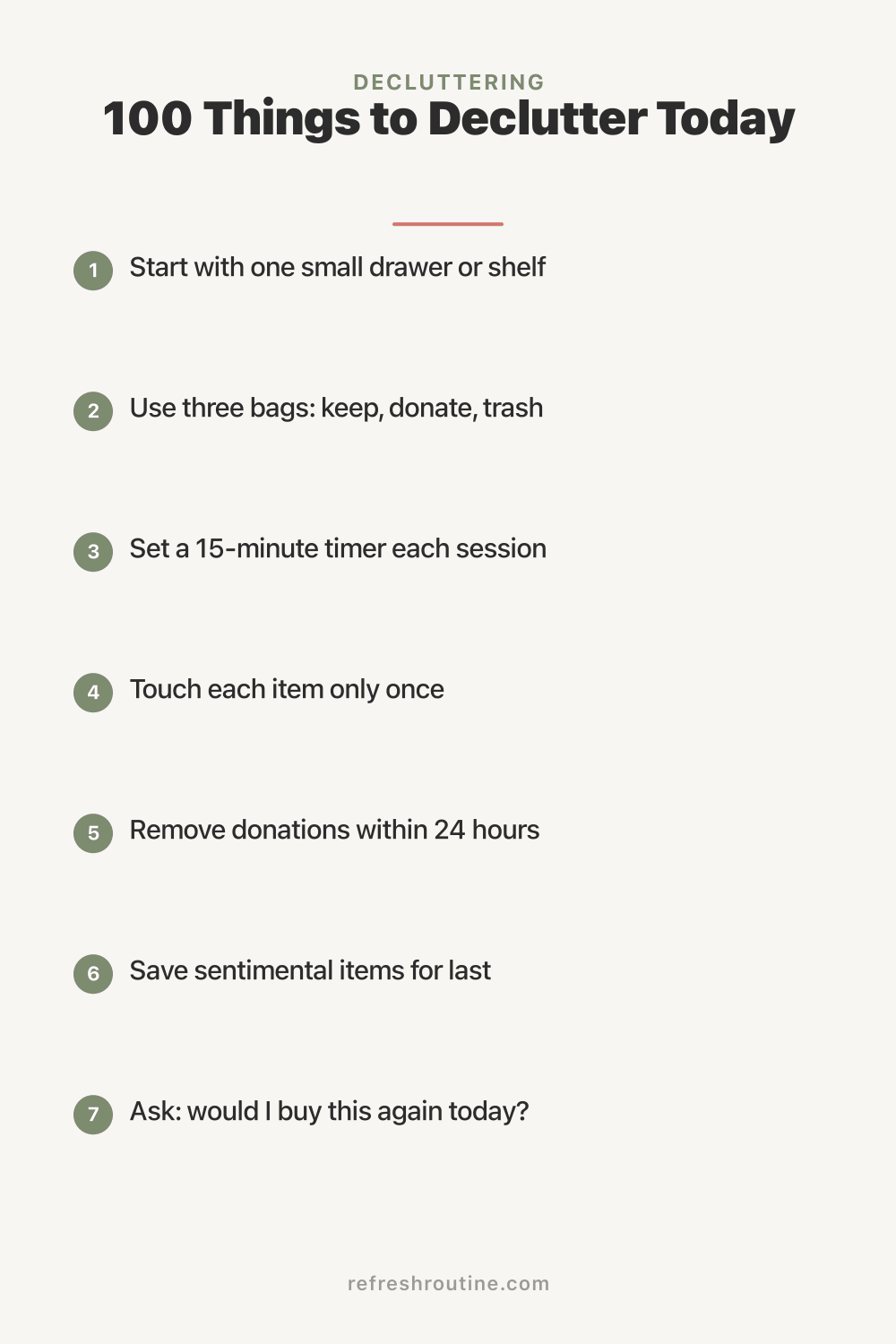
The hardest part of decluttering is starting. Staring at a cluttered room, my brain freezes. I do not know where to begin, so I do nothing.
The fix that finally worked for me was a list. Not a vague “declutter the house” goal, but 100 specific items I could touch, decide on, and remove. With a concrete list, decluttering becomes a checklist instead of an overwhelming project.
Here are 100 things you can declutter today, organized by room. Print the list, work through it at your own pace, and watch your home transform.
Why Lists Make Decluttering Easier
According to research on decision fatigue, the average person makes 35,000 decisions per day. By evening, willpower is depleted and we default to “deal with it later.” Decluttering requires dozens of micro-decisions, which is why it feels exhausting.
A pre-made list removes the hardest part: deciding what to look at next. You just check the next item off the list, examine that single thing, and decide. The American Psychological Association calls this “decision offloading,” and it consistently helps people complete tasks they normally avoid.
I started using lists after my third failed declutter attempt. Now I can tackle a room in 30 minutes that used to take all weekend.
What Are 100 Easy Things to Declutter?
The easiest 100 things to declutter are duplicates, expired items, broken things, items you forgot you owned, gifts you never liked, clothes that no longer fit, hobby supplies for hobbies you quit, and obvious trash. Focus on items that require no emotional decision-making. Save sentimental items for a separate session.
100 Things to Declutter Right Now
Kitchen (20 items)
- Expired spices (anything over 2 years old)
- Mismatched Tupperware lids
- Plastic takeout containers
- Expired condiments in the fridge door
- Cookbooks you have not opened in 5 years
- Duplicate kitchen gadgets (you do not need 4 spatulas)
- Broken or cracked dishes
- Chipped mugs
- Plastic cups from kid meals or events
- Wine glasses you never use
- Coffee mugs (keep only your favorites)
- Expired food in the pantry
- Single-use gadgets (banana slicer, avocado tool)
- Dish towels that are stained or thin
- Tablecloths and placemats you do not use
- Cookbooks you can find online
- Mismatched silverware
- Old grocery bags hoarded under the sink
- Plastic water bottles (keep 1 or 2 favorites)
- Vases from old flower deliveries
Bedroom and Bathroom (20 items)
- Clothes that have not been worn in 12 months
- Bras with broken underwire
- Stretched-out underwear and socks
- Shoes you have not worn in a year
- Wire hangers from the dry cleaner
- Expired skincare products
- Almost-empty bottles you have replaced
- Hotel toiletries you collected
- Old makeup (over 1 year for liquid, 2 for powder)
- Broken jewelry you keep “to fix”
- Hair accessories that snap or break easily
- Old toothbrushes
- Expired sunscreen
- Medications past expiration
- Old prescriptions you never finished
- Bath products that smell off
- Towels with frayed edges or stains
- Pajamas with holes
- Receipt pile in your dresser
- Old phones and accessories
Living Room and Office (20 items)
- Magazines older than 6 months
- Catalogs and junk mail
- Pens that do not work
- Notebooks with only a few pages used
- Old greeting cards (keep meaningful ones, toss the rest)
- Movies and DVDs you can stream now
- CDs (most music is digital)
- Old electronics and cables you do not recognize
- Phone chargers for phones you no longer own
- Remotes for items you no longer have
- Receipts and warranties for items you no longer own
- Manuals you can find online
- Books you will not re-read
- Decorative items you no longer like
- Picture frames without photos
- Burned-out candles (use the jars or toss)
- Lamps that need a specific bulb you cannot find
- Throw pillows you do not like
- Old phone books or directories
- Business cards from people you do not remember
Garage, Basement, and Storage (20 items)
- Tools you have duplicates of
- Boxes from items you no longer own
- Empty plastic bins (keep useful sizes only)
- Paint cans that are dried out
- Old paint colors you will not use again
- Garden tools that are rusted or broken
- Sports equipment for sports no one plays
- Bikes that no one rides
- Holiday decorations you have not used in years
- Wedding favors and event mementos
- Old textbooks
- Children’s outgrown toys (donate)
- Outgrown clothes (donate or sell)
- Baby gear if your kids are past that age
- School papers from previous years
- Birthday and event party supplies
- Yearbooks (or scan and toss)
- Old computer monitors and electronics
- Cassette tapes and VHS
- Storage containers without lids
Sentimental and Mental Clutter (20 items)
- Cards from people you no longer keep in touch with
- Letters from old relationships
- Photos of people you cannot identify
- Duplicates of photos
- Photo prints already saved digitally
- Trophies and awards (keep only meaningful ones)
- Concert t-shirts from concerts you barely remember
- Souvenir items from trips
- Old wedding paperwork (keep marriage certificate only)
- Baby teeth, hair clippings, and similar
- Old planners and journals (keep meaningful entries, scan, toss)
- Sketches and drafts of completed projects
- Old work materials from previous jobs
- Graduation tassels and gowns
- Costumes from past Halloweens
- Wedding programs from weddings you attended
- Funeral programs (keep only immediate family)
- Old appointment cards
- Email subscriptions you do not read (digital declutter)
- Apps on your phone you have not opened in 30 days
How Long Does It Take to Declutter 100 Items?
Decluttering 100 items takes 2 to 4 hours total when broken into focused sessions. Plan for 30 minutes per room and 10 to 15 minutes for the sentimental and mental clutter section. Tackling 25 items in one sitting prevents burnout while still creating visible progress.
What I Wish I Knew Before I Started
After running this list through three different homes, here is what I learned.
Start with trash and expired items. The first 20 items on this list are usually obvious throw-aways. Doing those first builds momentum without any emotional weight.
Set a timer for each section. I do 30 minutes per room. When the timer goes off, I stop and rest. This prevents the all-day declutter that ends in burnout.
Use three bags or boxes only. Keep, donate, toss. Do not create a “maybe” pile. Maybe piles never resolve.
Take photos of sentimental items. I take a picture of the kid’s art or souvenir, then donate or toss the physical item. The memory is in the photo, not the object.
Donations leave today. I load the donate bag into my car immediately. If it sits, it comes back into the house.
What Should You Do With Decluttered Items?
Sort decluttered items into four piles: donate to a local charity or thrift store, sell valuable items on Facebook Marketplace or Poshmark, recycle electronics and paper, and trash anything broken or expired. Drop donations within 24 hours so they do not migrate back inside. List sellable items within 1 week or donate them.
When Should You Declutter Again?
Schedule a 100-item declutter twice a year, ideally in spring (April or May) and fall (September or October). Between sessions, do a small 15-minute declutter weekly to maintain the system. The first deep declutter takes the longest; subsequent ones get faster as you maintain habits and stop accumulating clutter.
Common Mistakes to Avoid
After helping family members declutter, these are the patterns I see derail people:
- Saving “maybe” items: These never get re-decluttered. Decide today.
- Letting sentiment freeze you: Take a photo and let go.
- Buying organizers before decluttering: Organize less stuff, not the wrong stuff.
- Forgetting digital clutter: Photos, emails, and apps need decluttering too.
- Sharing on family group chats first: They will say keep it. Decide alone.
For specific room strategies, see our room-by-room decluttering checklist and where to start decluttering guide.
Building a Declutter Habit
The 100-item list works as a kickstart, but lasting change comes from daily habits. Add these mini routines:
- Daily: One in, one out (anything new means something leaves)
- Weekly: 15-minute Sunday reset of one room
- Monthly: Empty and reset one drawer or cabinet
- Quarterly: Re-run a 25-item declutter sweep
- Annually: Run the full 100-item list
This compounded approach keeps clutter from accumulating. I have used this rhythm for 3 years and the house has never returned to its pre-declutter state.
Decluttering Tips for Families
If you live with kids or a partner, communicate before starting:
- Touch only your own things first
- Ask before touching family items
- Show progress photos to motivate household participation
- Let kids choose what to donate from their own toys
- Reward family members who participate
Forced declutters create resistance. Modeling the behavior and inviting (not demanding) participation works better. For more on involving kids, see our decluttering mistakes post.
Key Takeaway
Decluttering 100 things sounds intimidating until you break it down: 20 from the kitchen, 20 from the bedroom and bathroom, 20 from the living areas, 20 from storage spaces, and 20 from sentimental and mental clutter. Each item gets a 30-second decision. The whole list takes 2 to 4 hours spread over a weekend or a few weekday evenings. Print the list, work top to bottom, and trust the process. Your home will feel measurably lighter by Sunday night.
For a longer challenge, try our 30-day decluttering challenge or learn the KonMari method for a different approach.

Frequently Asked Questions
What is the easiest thing to declutter first?
The easiest thing to declutter first is trash and expired items. Spend 10 minutes throwing away expired food, broken items, expired makeup and medications, and obvious garbage. This gives a quick visual win and momentum to keep going.
How many items should you declutter at once?
Start with 25 items in 30 minutes. This is small enough to finish in one sitting but big enough to see real change. Once 25 feels easy, move up to 50 or 100 over a weekend. Avoid trying to do an entire house in one day.
What should you never throw away when decluttering?
Never throw away important documents (birth certificates, passports, deeds, tax returns under 7 years old), irreplaceable photos, currently used medications, items that belong to other people, or anything you might regret within a week. When in doubt, put items in a 30-day maybe box.