30-Day Declutter Challenge: Daily Tasks That Actually Work
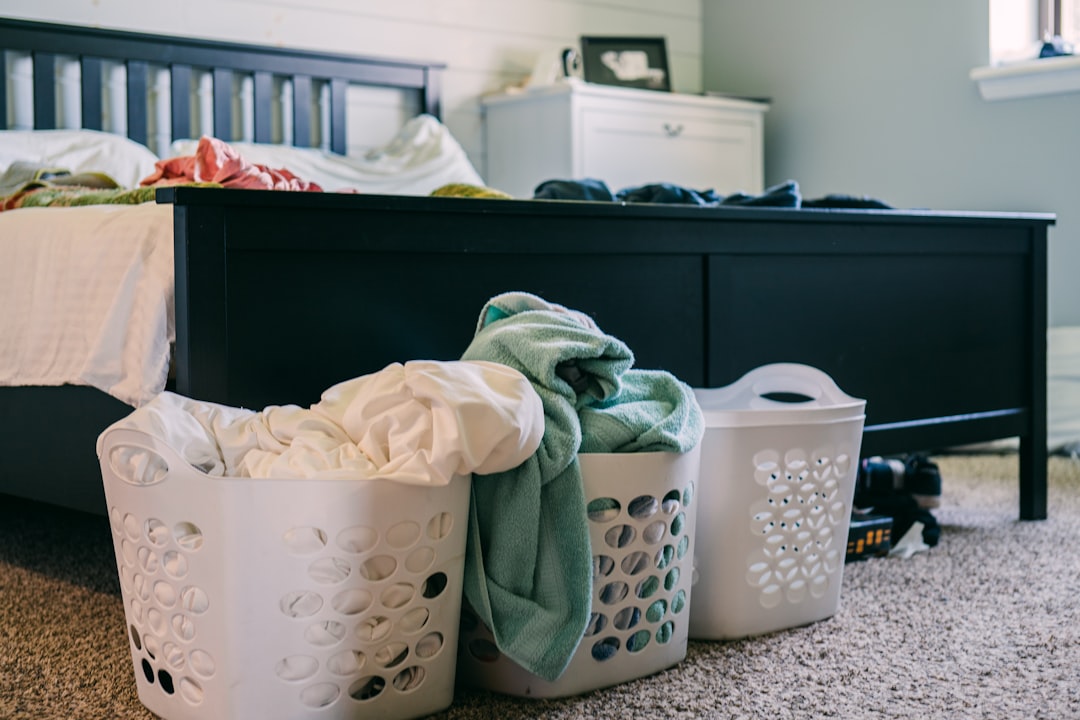
Last spring, I told myself I was going to spend an entire weekend decluttering my house from top to bottom. By noon on Saturday, I had emptied two closets onto the floor and was sitting in the middle of the mess eating cereal straight from the box. That was when I realized the marathon approach was never going to work for me.
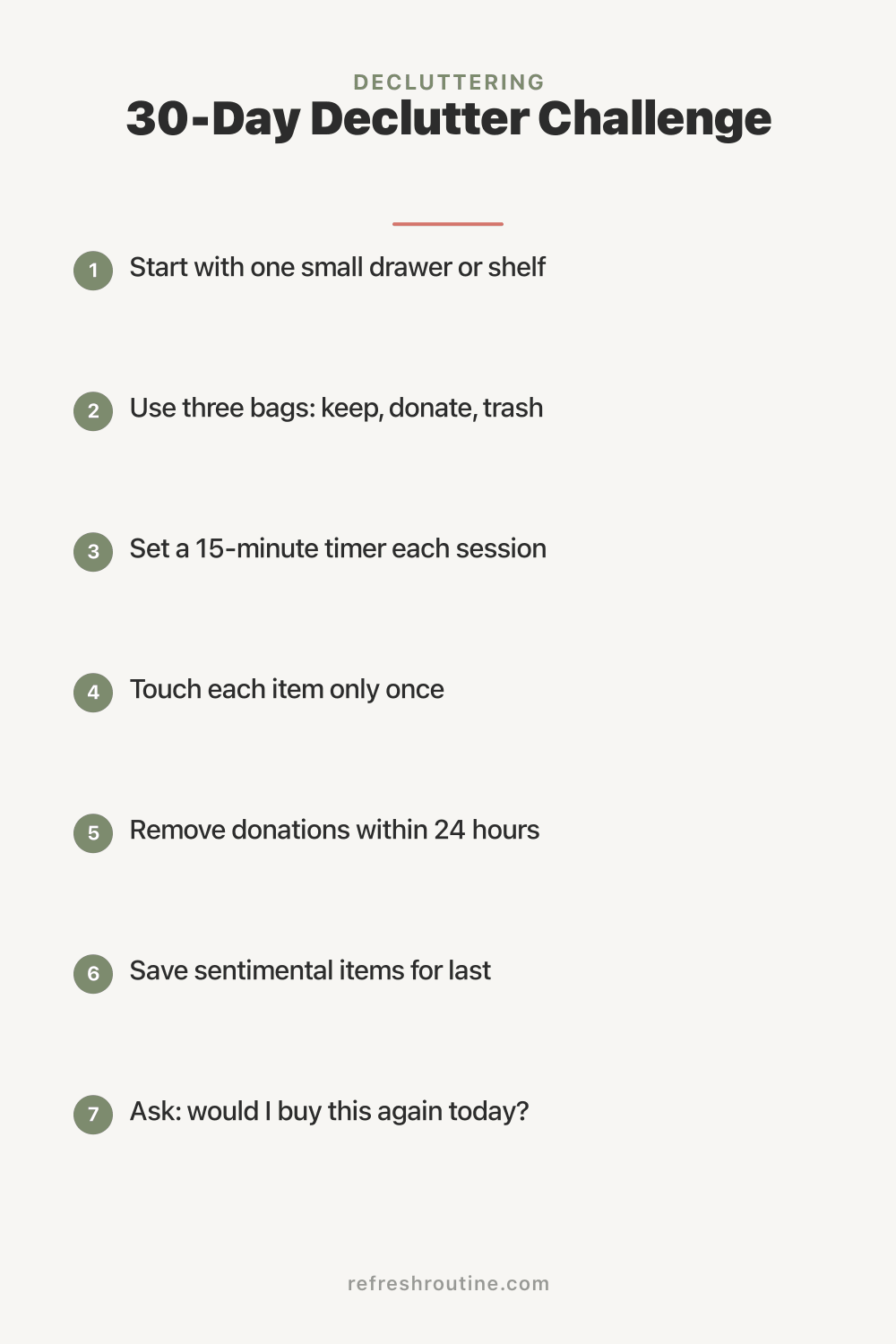
So I tried something different. I committed to one small task per day for 30 days. Just 15 minutes. No huge piles, no weekend-long sessions, no burnout. And by day 30, my home looked completely different. This 30-day declutter challenge is the exact plan I followed, and it worked better than anything else I’ve tried in eight years of organizing.
According to research from Princeton University, visual clutter reduces your ability to focus and increases stress. The average American home contains over 300,000 items (UCLA Center on Everyday Lives and Families), which means there is plenty to work through. But you don’t need to tackle it all at once.
Does a 30-Day Declutter Challenge Actually Work?
Yes. A 30-day declutter challenge works because it removes the biggest barrier to decluttering, which is overwhelm. By breaking the project into 15-minute daily tasks, you avoid decision fatigue and build consistent habits. After 30 days at one area per day, most people clear 300 to 500 items from their homes without ever feeling burned out.
The structure is what makes it effective. When someone tells you to “just declutter your house,” your brain freezes. But when the task is “clean out the junk drawer,” your brain knows exactly what to do. I saw this principle constantly in my project management career. Big projects fail without milestones. Small, daily wins keep the momentum alive.
Week 1: Quick Wins to Build Momentum (Days 1 to 7)
The first week is all about easy tasks that give you fast, visible results. These build the confidence you need to keep going.
Day 1: The junk drawer. Pull everything out, toss broken pens and dead batteries, and put back only items you actually use. This took me 12 minutes.
Day 2: Bathroom counter. Remove everything from the counter. Wipe it down. Only put back items you use daily. Stash the rest under the sink or in a cabinet.
Day 3: Expired medications. Check every medicine cabinet and first aid kit. The FDA recommends disposing of expired medications promptly, as they may lose effectiveness.
Day 4: Water bottles and travel mugs. Match lids to bottles. Recycle anything cracked, stained, or orphaned. I went from 14 water bottles down to 5 and have never missed the rest.
Day 5: Nightstand. Clear everything off. Keep only a lamp, phone charger, and one book or current read. The visual calm at bedtime is worth it.
Day 6: Coat closet or entryway. Remove out-of-season coats and shoes that don’t fit. Donate anything your family hasn’t worn in a year.
Day 7: Fridge cleanout. Toss expired condiments, mystery leftovers, and anything past its prime. The USDA estimates the average American family wastes approximately $1,500 in food per year, and a cluttered fridge is a major contributor.
If you’re not sure where to start decluttering, this first week alone will give you a strong foundation.
Week 2: Kitchen and Bathroom Deep Dive (Days 8 to 14)
Now that you have some momentum, it’s time to dig a little deeper into the two rooms that collect the most clutter.
Day 8: Under the kitchen sink. Pull everything out. Toss dried-up sponges, empty bottles, and products you never use. I found four bottles of glass cleaner under my sink. Four.
Day 9: Spice rack or spice drawer. Most dried spices lose potency after 1 to 3 years. Smell each one. If it smells like nothing, it’s time to go.
Day 10: Food storage containers. Dump every container and lid onto the floor. Match them up. Recycle anything without a partner. I cut my collection in half in ten minutes.
Day 11: Coffee mugs and glasses. Keep your favorites. Donate the rest. My rule is one mug per family member plus two extras for guests. That’s it.
Day 12: Bathroom drawers. One drawer at a time. Toss expired beauty products, dried-up nail polish, and hair accessories you haven’t touched in months.
Day 13: Cleaning supplies. Consolidate duplicates and toss anything you bought once and never used again. For tips on streamlining your cleaning routine, check out our daily cleaning routine guide.
Day 14: Pantry purge. Check dates on everything. Group similar items together. If you’ve had a can of water chestnuts since 2023, it’s time to say goodbye. Our pantry organization guide has the full system I use.
How Many Items Should I Declutter in 30 Days?
Most people remove between 300 and 500 items during a 30-day declutter challenge. That number sounds large, but it adds up quickly when you count individual expired spices, old magazines, mismatched socks, and duplicate kitchen tools. Even removing 10 items per day totals 300 items by day 30, which is enough to transform the feel of your home.
Don’t focus on hitting a specific number, though. Some days you’ll remove 3 things and other days you’ll fill an entire donation bag. The consistency matters more than the count.
Week 3: Bedrooms and Living Areas (Days 15 to 21)
Day 15: Dresser top. Clear everything off the dresser surface. Put items away properly or donate them. A clear dresser instantly makes a bedroom feel calmer.
Day 16: One dresser drawer. Pick the messiest drawer. Remove everything, refold what you keep, and donate what you don’t wear. I discovered three shirts with tags still on them in my dresser, which told me everything I needed to know about my shopping habits.
Day 17: Bookshelf edit. Pull out books you’ve read and won’t reread, plus any you started but know you’ll never finish. Donate them to your local library.
Day 18: Magazine and paper pile. Recycle old magazines, catalogs, and junk mail. Shred anything with personal information. The average household receives 41 pounds of junk mail per year (EPA), so this pile builds up fast.
Day 19: Living room surfaces. Coffee table, side tables, entertainment center. Clear them all and only return items that actually belong there.
Day 20: Kids’ toy bin. (If applicable.) Remove broken toys, toys missing pieces, and anything your kids have outgrown. I do this while my kids are at school. It’s much easier without tiny negotiators present.
Day 21: Linen closet. Pull everything out. Donate worn towels and mismatched sheet sets. My rule: two full sheet sets per bed, one set of guest towels, and that’s it.
Week 4: Storage and Finishing Touches (Days 22 to 30)
This is where it gets satisfying. You’ve built strong habits, and now you’re tackling the areas that have been nagging you the longest.
Day 22: Closet floor. Remove everything from the floor of your closet. Put shoes on a rack or shelf. Return only what you actually wear. For more closet strategies, see our small closet organization ideas.
Day 23: Desk and home office. Clear the desk surface completely. Sort papers into action, file, or shred piles. Our desk organization guide walks you through the full process.
Day 24: Digital declutter. Unsubscribe from 10 email lists. Delete unused apps from your phone. Clear your desktop of old files.
Day 25: Car declutter. Clean out the glove compartment, door pockets, trunk, and under the seats. I once found a petrified french fry from what I can only assume was 2022.
Day 26: Garage or storage area. Pick one shelf, one bin, or one corner. Don’t try to do the whole garage. Just one section.
Day 27: Sentimental items box. Choose one box of keepsakes to go through. Keep the pieces that truly matter and photograph the rest before letting them go.
Day 28: Laundry room. Toss stained rags, single socks without partners, and products you don’t use. Consolidate what’s left.
Day 29: Revisit your problem spot. Go back to whatever area tends to collect clutter the fastest and reset it. For me, it’s always the kitchen counter.
Day 30: Final walkthrough. Walk through your entire home with a bag. Grab anything that slipped through the cracks. Celebrate what you’ve accomplished.
Pro Tips I Learned the Hard Way
-
Set a daily alarm. I set mine for 9:15 AM, right after school drop-off. Without a consistent time, days slip away fast.
-
Don’t buy organizing products during the challenge. You don’t know what you need until you know what you’re keeping. I wasted $60 on bins during my first attempt before I’d even finished sorting.
-
Take before and after photos. On tough days, scrolling back through progress photos kept me motivated when I couldn’t see the change in person.
-
Handle donations weekly, not at the end. I drive my donation bags to the thrift store every Sunday. If they sit in your garage for a month, they become invisible clutter again.
-
Tell someone you’re doing it. Accountability makes a huge difference. I texted my sister a photo of each day’s completed task, and her reactions kept me going through the hard middle weeks.
Key Takeaway
A 30-day declutter challenge works because it replaces overwhelm with structure. One task per day, 15 minutes or less, builds momentum without burning you out. You don’t need a free weekend or a perfect plan. You just need to start with Day 1 and keep going. By the end of the month, you’ll have removed hundreds of items and built daily habits that keep clutter from coming back.
Ready to Start Your Challenge?
Pick your start date and commit to Day 1. If you want a broader strategy for tackling your whole home, start with our complete decluttering guide or grab our room-by-room checklist for a printable version you can stick on your fridge. You’ve got this.

Frequently Asked Questions
How long should I spend decluttering each day?
Aim for 15 minutes per day during a 30 day declutter challenge. Short sessions prevent burnout and decision fatigue. Most daily tasks on this list can be finished in 10 to 20 minutes, making them easy to fit into any schedule.
Can I do the 30-day challenge in a different order?
Yes, you can rearrange the daily tasks to fit your priorities. The order here starts with easy wins to build momentum, but the most important thing is completing one task per day consistently.
What if I miss a day during the declutter challenge?
Pick up where you left off. Missing a day does not mean you failed. This challenge is about progress, not perfection. Double up the next day if you want, or simply add an extra day at the end.