The 4-Box Method for Decluttering: Step by Step
The first time I tried decluttering my closet, I made 7 piles on the bed. Keep, maybe, donate, sell, repair, sentimental, and a mystery pile I forgot to label. Two hours later I had created more chaos than I started with.
The 4-box method exists because most of us overcomplicate decluttering. Four boxes. One decision per item. Done before you can overthink it. Here is exactly how it works.
What Is the 4-Box Method?
The 4-box method is a decluttering system using four labeled containers: Keep, Donate, Trash, and Relocate. Every item in the room goes into one of the four boxes. Items in the Relocate box belong elsewhere in your home. Items in Donate go to charity. Trash gets tossed. Keep items stay in the room, often re-organized as you put them back.
The simplicity is the point. By limiting choices to four, you eliminate the decision paralysis that derails most declutter sessions.
Why 4 Boxes Beat Other Systems
Other decluttering methods (KonMari, minimalism, FlyLady) work for specific personality types. The 4-box method works for everyone because it removes the emotional component.
According to research on decision fatigue, the brain handles binary or limited choices much faster than open-ended ones. “Keep or donate” takes 3 seconds. “What does this item mean to me and my future identity” takes 30 minutes per object.
The 4-box method takes advantage of how the brain actually works.
Step-by-Step: How to Use the 4-Box Method
Step 1: Gather Four Containers
Use whatever you have. Cardboard boxes, laundry baskets, kitchen trash bags, plastic bins. Label them clearly:
- KEEP
- DONATE
- TRASH
- RELOCATE
The labels matter. Without labels, items migrate to the wrong boxes.
Step 2: Choose One Small Space
Do not start with a whole room. Start with one drawer, one shelf, or one corner. Smaller spaces let you finish in one session, which builds momentum.
If you start with a whole closet and only get halfway, you have created more chaos. If you start with one drawer and finish, you have a win.
Step 3: Empty the Space Completely
Take everything out. Yes, everything. Put it on the bed, the floor, or a table where you can see all items at once.
This step matters because it forces you to confront everything you own in that space. Hidden items in the back of drawers stay hidden if you do not empty.
Step 4: Sort Item by Item
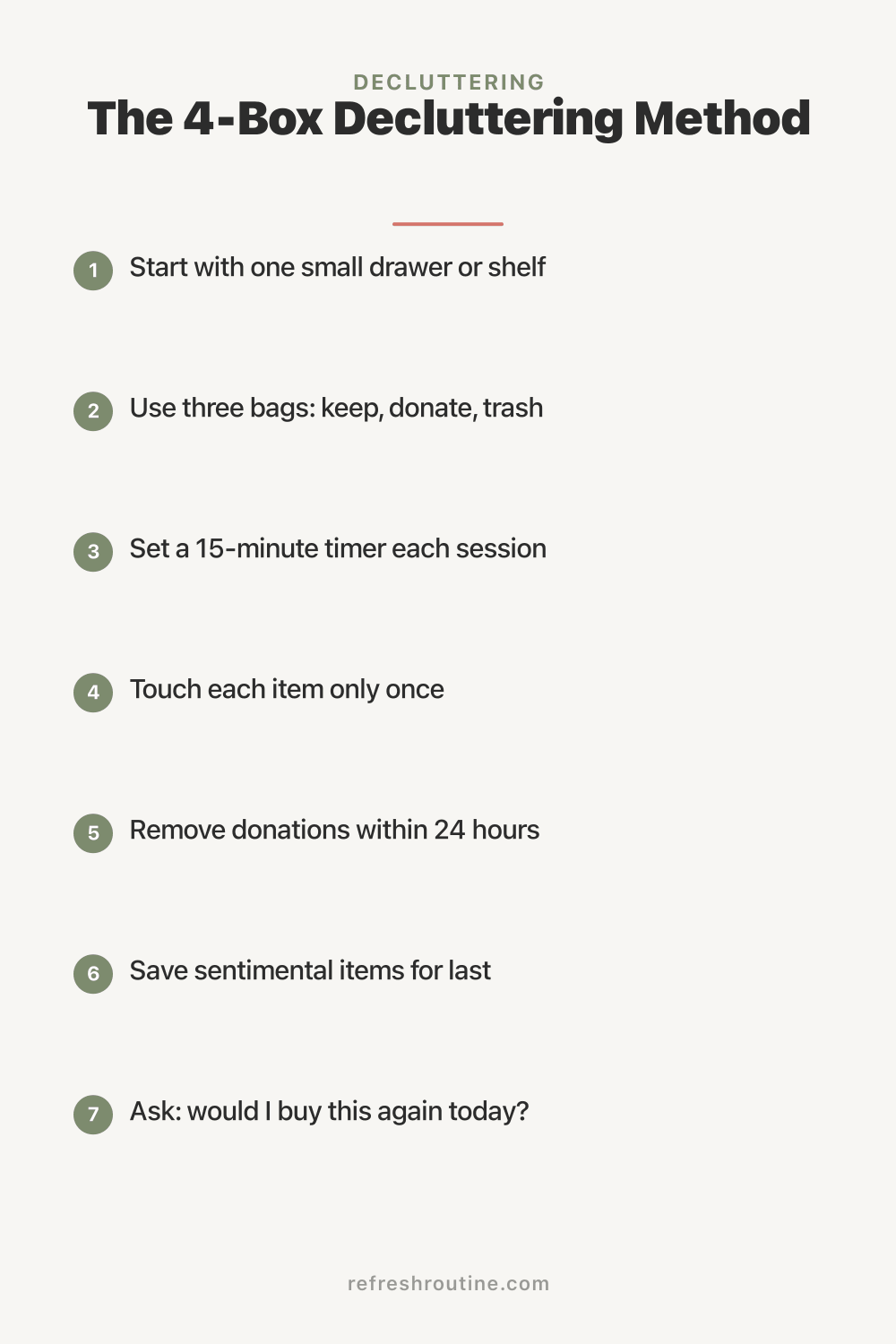
Pick up one item. Make a 3-second decision. Place it in one of the 4 boxes.
The rules:
- Touch each item only once
- Decide within 3 seconds (if it takes longer, default to Donate)
- Do not put items back in the space until the box is empty
- No 5th box (no “maybe,” no “sell later”)
Step 5: Process Each Box Immediately
TRASH: Take to outdoor trash or recycling bin within an hour DONATE: Load into your car within 24 hours, drop off within 48 RELOCATE: Carry the box through the house, putting each item in its proper home KEEP: Re-organize as you put items back in the cleared space
This step is where most declutter sessions fail. If the donate box stays in the corner for a week, items migrate back into the home. Processing immediately is non-negotiable.
What I Wish I Knew About the 4-Box Method
After using this system in 4 different homes, here is what I learned.
The relocate box prevents distraction. When you find a kitchen tool in the bedroom, you cannot go put it away immediately or you will get distracted. The relocate box keeps you focused on the current room.
Donate boxes need a destination. Before you start, know exactly which charity gets the donations. Otherwise, the box sits and grows stale. I use Goodwill because it accepts almost everything.
Trash bags fill faster than expected. I always underestimate trash volume. Start with at least 2 big trash bags ready.
The keep pile is the hardest. The 4 boxes work great for sorting away. The real work happens when you put the keep items back. Take the time to re-organize.
Take photos before you start. Before photos motivate you mid-session when you feel stuck. After photos prove you made progress.
What Goes in Each Box?
KEEP
Items you actively use, items you genuinely love, items required (legal documents, current medications, paperwork under 7 years for taxes).
Test: When did I last use this? If over a year ago and not seasonal, it probably goes in Donate.
DONATE
Items in good condition you no longer use. Clothes that fit but you do not wear. Books you have read or will not read. Duplicates. Gifts you never liked. Hobby supplies for hobbies you quit.
Test: Would I buy this today at full price? If no, donate.
TRASH
Broken items, expired items, single-use items, anything stained or damaged beyond repair, items missing critical parts.
Test: Can it be used safely? If no, trash.
RELOCATE
Items that belong elsewhere in your home. Found in the wrong room, will find its proper home after this session.
Test: Does this belong in this room? If no, relocate.
When Does the 4-Box Method Not Work?
The 4-box method struggles with:
Heavy sentimental decisions. A box of grandma’s letters needs a different approach. The 4-box method is for the daily clutter, not for grief work.
Multiple-person spaces. A shared closet or playroom needs all owners to participate. Do not declutter someone else’s items without permission.
Major life transitions. Decluttering before a move or after a death has emotional layers that the 4-box method does not address. Use it as the first pass, but expect to revisit items.
For sentimental items, see our sentimental items decluttering guide.
How Do You Decide Between Donate and Sell?
Decide between donate and sell based on item value and your available time. Items worth under $50 typically go to donate (selling takes hours for low return). Items over $100 in good condition can sell on Facebook Marketplace or Poshmark. Set a 1-week selling window. If an item does not sell within 1 week, donate it. The time you save is worth more than the money.
The 4-Box Method by Room
Bedroom (60-90 minutes)
Start with dressers and closet. Most items end up in donate or keep. Bedrooms have less trash than other rooms but more emotional weight (clothes connect to identity).
Kitchen (90-120 minutes)
The biggest trash and donate volume. Expired food, expired spices, broken gadgets, duplicates. Less sentimental weight makes kitchens easier emotionally but more physically tiring.
Bathroom (30 minutes)
Fast. Mostly trash (expired products, old makeup). Some donate (unused hair tools, duplicate toiletries). Quick win for momentum.
Office (60 minutes)
Heavy paper work. Most items go in trash, shred, or recycle (you may need a 5th box for shred). Keep the relocate box for items that drifted in from other rooms.
Garage (4 to 8 hours)
The hardest space. Expect heavy use of all 4 boxes. Plan for a full weekend. Take breaks. For specific strategies, see our garage decluttering guide.
Common 4-Box Method Mistakes
After helping family members use this system, these are the errors I see:
- Creating a maybe pile: Defeats the entire system. Force decisions.
- Skipping the relocate processing: The relocate box becomes a moving clutter pile.
- Donating without dropping off: Donate boxes that linger become re-clutter.
- Touching items twice: Slows the process by 4x.
- Sorting one type at a time: The 4-box method works on volume, not category.
For more pitfalls, see our decluttering mistakes post.
Key Takeaway
The 4-box method (Keep, Donate, Trash, Relocate) is the simplest decluttering system because it removes choice. Every item gets one of 4 destinations within 3 seconds. The constraint eliminates decision fatigue and the visible boxes show progress in real time. Use it room by room with small spaces first. Process every box immediately (especially donate, which must leave the house within 24 hours). One weekend with this system can transform an entire home if you commit to the rules. The simplicity is the strength.
For a more methodical approach, see the KonMari method guide. For where to begin, our where to start decluttering post helps you plan.

Frequently Asked Questions
What is the 4-box method of decluttering?
The 4-box method uses four labeled boxes (Keep, Donate, Trash, Relocate) to sort every item in a space. You touch each item once, make a quick decision, and place it in the appropriate box. The method removes overthinking and makes progress visible.
What goes in the relocate box?
The relocate box holds items that belong elsewhere in your home. A book found in the kitchen, a sock under the couch, a tool from the garage. These items stay in the box until you finish the room, then you carry the relocate box around the house and put items in their proper homes.
How long does the 4-box method take?
The 4-box method takes 30 to 90 minutes per room depending on clutter level. A bathroom takes about 30 minutes. A bedroom with closet takes 60 to 90 minutes. A whole-house declutter using this method takes a weekend with 2 to 3 sessions per day.