Small Home Office Organization Ideas
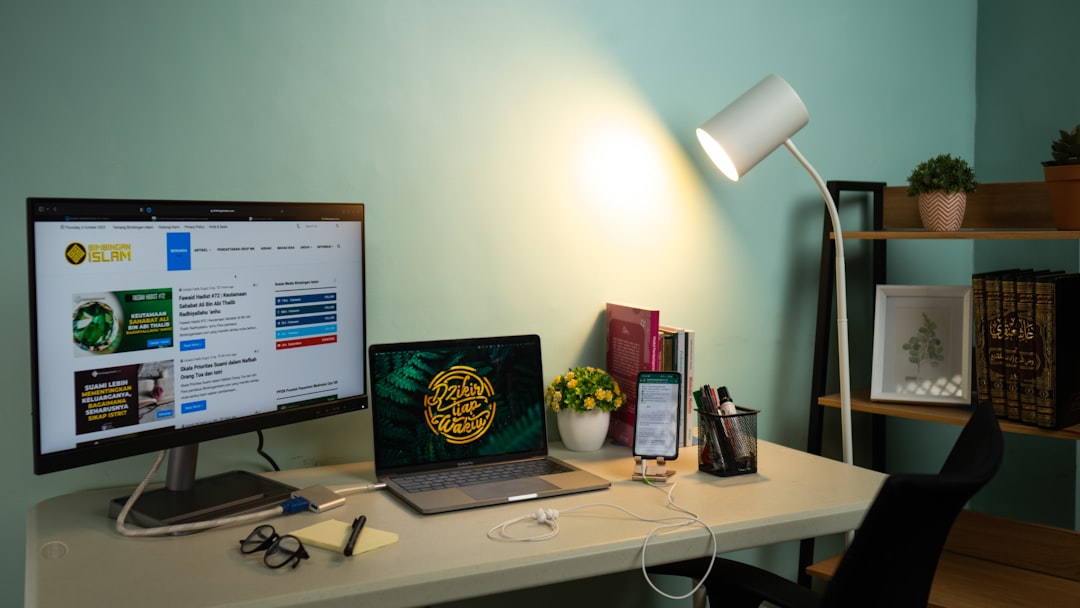
My first home office was a card table wedged between the living room couch and a bookshelf. I had about 16 square feet of usable space, one power outlet, and two kids who treated my “office” as a craft station after school hours. It was a mess. But I made it work, and honestly, the constraints forced me to get creative in ways I never would have with a full room.
If you’re working with a small home office space, you don’t need a Pinterest-perfect setup. You need systems that keep your essentials accessible and your surfaces clear. According to a survey by Buffer, 98% of workers want to work remotely at least some of the time. That means millions of us are carving workspaces out of bedrooms, closets, and kitchen corners. Here are the small home office ideas that actually worked for me.
Can You Have a Productive Home Office in a Small Space?
Yes. Workspace size has minimal impact on productivity when the space is well organized. A Princeton University study found that visual clutter, not room size, is what reduces focus and information processing. A tiny office with clear surfaces and organized storage outperforms a large, messy room every time. The key is maximizing vertical space and minimizing what sits on your desk surface.
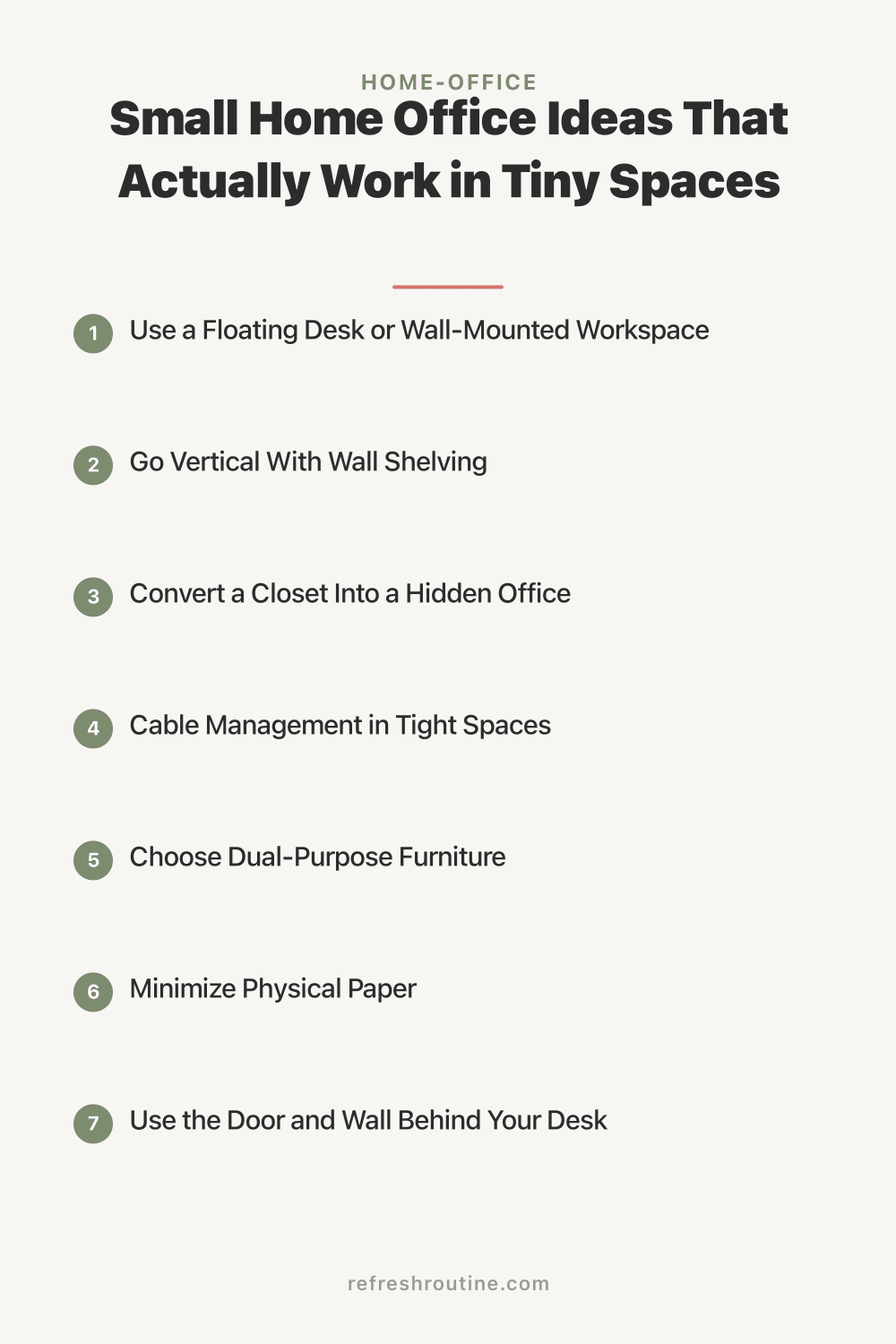
1. Use a Floating Desk or Wall-Mounted Workspace
A floating desk is the single best investment for a compact home office. It mounts directly to the wall, eliminating bulky legs and freeing up all the floor space underneath. Most floating desks cost between $50 and $150 and can support 50 to 80 pounds.
I installed a 36-inch floating desk in the corner of my bedroom. The installation took 45 minutes with a stud finder and a drill. Below the desk, I placed a small rolling file cart that tucks completely underneath when not in use. The open floor space makes the room feel much larger than it did with a traditional desk, and I can actually vacuum under my workspace now.
Fold-down desks are another great option if you need the wall space back when you’re not working. They mount to the wall and fold flat against it, essentially disappearing when your workday ends. This is especially useful if your office doubles as a guest room.
2. Go Vertical With Wall Shelving
When floor space is limited, walls become your storage system. I added three floating shelves above my desk, each 24 inches long, and they hold everything that used to clutter my desktop: reference books, a small plant, my scanner, and a few decorative items.
Here’s the vertical storage approach that works best:
- Top shelf (least used): Reference books, archived binders, decorative items
- Middle shelf (weekly access): Printer paper, notebooks, supply box
- Bottom shelf (daily access): Current project files, planner, frequently used supplies
This layered approach mirrors how I organize my desk drawers and my pantry zones. Items you reach for most often go closest to arm level. Everything else moves up and out of the way.
Wall-mounted pegboards are another vertical storage solution I love. A 2x3 foot pegboard holds shelves, hooks, bins, and clips that you can rearrange whenever your needs change. Cost: about $20 for the pegboard plus $10 to $15 for accessories.
3. Convert a Closet Into a Hidden Office
This is the small home office idea I wish I had discovered sooner. A standard closet is typically 24 inches deep and 36 to 48 inches wide, which is plenty of space for a compact workstation. Remove the closet doors (or replace them with curtains), install a desk-height shelf across the width, and add an outlet strip if there isn’t one already.
My closet office setup:
- Removed the bifold closet doors and stored them in the garage
- Installed a 42-inch butcher block shelf at 30 inches high (standard desk height)
- Added two small floating shelves above for supplies
- Mounted a power strip to the inside wall
- Placed a compact desk lamp on the shelf
The beauty of a closet office is that you can close it off at the end of the day. Pull a curtain across, and your entire workspace disappears. This was a game changer for me because I was working in the bedroom and my desk was the last thing I saw before falling asleep. The visual boundary between work and rest matters more than I expected.
4. Cable Management in Tight Spaces
Cables in a small home office are more visible because there’s less furniture to hide them behind. A cable management tray mounted under your desk ($12 to $18) is essential. It holds your power strip and excess cable length completely out of sight.
For small spaces specifically, I recommend:
- One power strip, not two. A single 6-outlet surge protector handles most setups
- Velcro cable ties to bundle cables running the same direction
- Adhesive cable clips along the back wall to route cables neatly
- A wireless keyboard and mouse to eliminate two cables entirely
I spent $22 total on cable management and it made my tiny workspace look twice as organized. When every inch is visible, messy cables are the first thing your eye notices.
How Much Space Do You Really Need for a Home Office?
About 25 to 30 square feet is sufficient for a productive home office. That is roughly a 5x6 foot area, which fits a compact desk, a chair, and minimal storage. The average American home has 2,301 square feet according to the U.S. Census Bureau, so even a small apartment typically has a corner or closet that can work. Focus on organizing the space you have rather than wishing for more square footage.
5. Choose Dual-Purpose Furniture
Every piece of furniture in a small office should serve at least two functions. Here are the combinations that work:
- Ottoman with storage: Serves as a guest seat and holds supplies inside
- Desk with built-in shelves: Combines workspace and storage vertically
- Filing cabinet as printer stand: Raises the printer to a usable height while storing files below
- Bookshelf with a pull-out desk: A full shelf unit that includes a drop-down work surface
I replaced my standalone printer table with a two-drawer filing cabinet. The printer sits on top, files go inside, and I freed up about four square feet of floor space. Small wins like this add up fast in a compact home office.
6. Minimize Physical Paper
Paper is the enemy of small spaces. Every sheet takes up physical room that you don’t have. I switched to a nearly paperless system and it freed up an entire shelf.
My approach to going paperless in a small office:
- Scan incoming documents with my phone immediately
- Save to organized cloud folders (bills, medical, school, taxes)
- Shred the physical copy right away
- Only keep originals of documents that legally require them (birth certificates, titles, signed contracts)
Going paperless reduced my physical storage needs by about 60%. If you want a complete system for transitioning away from paper, I wrote a full guide on how to organize paper files and go paperless that walks through each step.
7. Use the Door and Wall Behind Your Desk
The back of your office door and the wall space beside your desk are prime real estate in a small room. I use an over-the-door organizer ($15 to $20) with clear pockets to hold supplies, cords, sticky notes, and stamps.
Other wall-mounted solutions:
- Magnetic strips for holding scissors, paper clips, and small metal tools
- A wall-mounted mail sorter for incoming papers before processing
- Cork strips (not a full corkboard) for pinning reminders without taking up too much wall space
- A wall calendar instead of a desk calendar to save surface space
These small additions keep your desktop clear without requiring any floor space. I was surprised how much I could store on a single wall when I started thinking vertically.
8. Lighting That Doesn’t Take Up Desk Space
Good lighting is non-negotiable for productivity, but a desk lamp eats up valuable surface area. Here are alternatives:
- Clip-on desk lamp: Attaches to a shelf or monitor, zero desk footprint
- Monitor light bar: Sits on top of your monitor, illuminates the desk evenly
- Wall-mounted swing arm lamp: Mounts to the wall, swings over the desk when needed
I switched from a traditional desk lamp to a monitor light bar ($25) and gained back about 6 inches of desk space. It sounds small, but in a tiny office, 6 inches is significant. The light bar also eliminates screen glare, which my old desk lamp was causing.
9. Create Zones Even in Tiny Spaces
Even a 30-inch desk can have zones. I divide my small workspace into three mental areas:
- Left zone: Inbox tray for papers that need attention
- Center zone: Laptop or monitor only (the active work area)
- Right zone: Pen cup and notepad for quick notes
This is the same zone principle I use in my home office setup and it works at any scale. The key is that each zone has one purpose, and nothing migrates between zones during the day. At the end of the day, each zone gets reset. If you struggle with routine building, our guide on where to start decluttering covers how to build small habits that stick.
What I Wish I Knew About Small Home Office Organization
These are the lessons that took me months of trial and error to figure out in my compact home office.
Measure before you buy anything. I purchased a desk organizer that was two inches too wide for my floating shelf. It sat in the return pile for a week before I finally drove it back. Now I measure the exact space first, then shop. Every inch matters in a small office.
Wireless everything is worth the premium. A wireless mouse, keyboard, and headset eliminated three cables from my desk. In a small space, fewer cables means dramatically less visual clutter. The $60 I spent on wireless peripherals made more of a visual difference than any organizer I bought.
Don’t try to replicate a full-size office. I wasted money on a printer stand, a filing cabinet, and a desk hutch that were all scaled for a regular office. None of them fit properly. Small spaces need small-scale solutions. A phone scanner replaces a flatbed scanner. Cloud storage replaces filing cabinets. A clip-on lamp replaces a desk lamp.
The closet office is underrated. If you have a spare closet, convert it before buying any furniture for a corner setup. The built-in walls on three sides create natural separation from the rest of the room, and you can close it off completely at night. I wish I had started here instead of the card table in the living room.
Key Takeaway
Small home office ideas work best when you prioritize vertical storage, minimize desk surface clutter, and choose dual-purpose furniture. Start with a floating desk or closet conversion to maximize floor space. Go vertical with wall shelving for supplies and storage. Eliminate paper by going digital, and invest in cable management to keep the visible space clean. A productive home office doesn’t require a dedicated room. It requires smart organization within whatever space you have.
For more workspace strategies, explore our complete home office organization guide or check out our desk organization system for detailed cable management and supply storage tips.

Frequently Asked Questions
How do I set up a home office in a small space?
Choose an unused corner, closet, or wall section. Install a floating desk or fold-down wall desk to save floor space. Add vertical shelving above the desk for storage. Use a compact desk organizer and go paperless to minimize what needs physical space on your work surface.
What is the best desk for a small home office?
A floating wall desk or fold-down desk works best in small spaces because it eliminates bulky legs and frees floor space underneath. Corner desks also maximize unused areas. Look for desks with built-in shelving or drawers to combine workspace and storage in one piece.
How can I make a small home office look bigger?
Use light wall colors, minimize items on the desk surface, and add vertical storage instead of horizontal furniture. A wall-mounted monitor frees desk space. Keep cables hidden with a cable tray. Mirrors opposite windows also create the illusion of more space and bring in extra light.