Weekly Cleaning Schedule: Free Printable Checklist

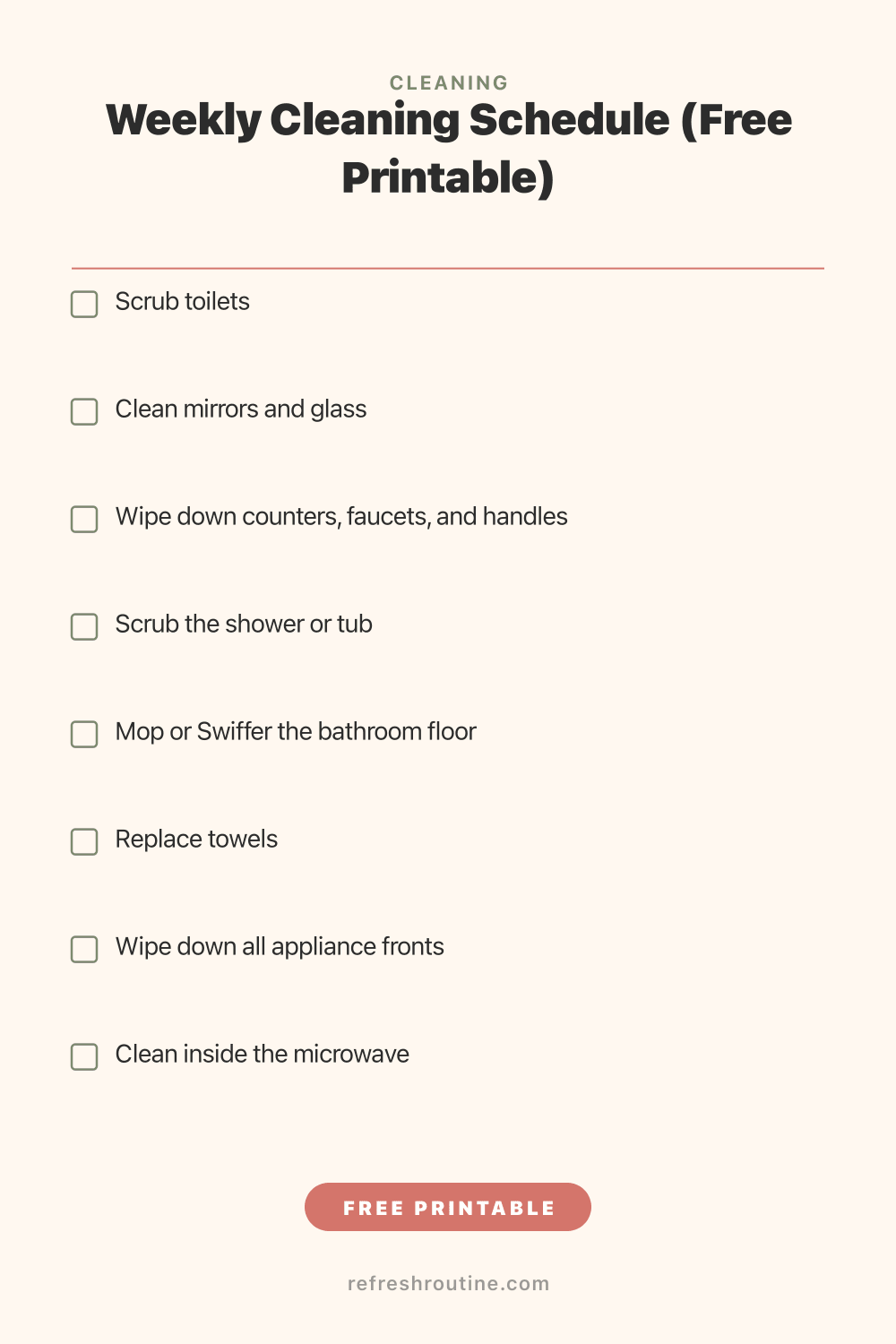
I spent three years trying every weekly cleaning schedule I could find on the internet. Complicated spreadsheets, color-coded apps, elaborate room rotations. None of them lasted more than two weeks. The problem was never motivation. It was that every schedule assumed I had hours of free time and zero interruptions.
So I built my own weekly cleaning schedule from scratch. One focus area per day, 30 to 45 minutes max, with built-in flexibility for the days that fall apart. I’ve been using this exact system for over a year, and my house has never been more consistently clean. Below, I’m sharing the full schedule plus a free printable checklist you can stick on your fridge today.
Why Does a Weekly Cleaning Schedule Work Better Than Weekend Cleaning?
A weekly cleaning schedule works better because it distributes the workload across seven days instead of cramming everything into Saturday. The American Cleaning Institute found that people who clean a little each day spend roughly 6 hours per week on housework, while weekend-only cleaners spend closer to 8.5 hours. Spreading tasks out also means your home stays cleaner throughout the week, not just on Saturday afternoon.
When I used to save everything for the weekend, my Saturdays disappeared. By Sunday night, I felt like I hadn’t had a weekend at all. Now my daily sessions average 35 minutes, and my weekends are actually free. That shift alone changed how I feel about cleaning.
The Weekly Cleaning Schedule (Day by Day)
This is the exact schedule I follow. Each day has one focus area plus your daily cleaning routine of 15 minutes. That means your total cleaning time is about 30 to 45 minutes per day on weekdays, with lighter weekend tasks.
Monday: Bathrooms
Monday is bathroom day. Starting the week with the room people dread most means you get it out of the way early.
- Scrub toilets inside and out with a disinfecting cleaner
- Clean mirrors and glass with a microfiber cloth and glass cleaner
- Wipe down counters, faucets, and handles
- Scrub the shower or tub (I alternate: shower one Monday, tub the next)
- Mop or Swiffer the bathroom floor
- Replace towels and hang fresh ones
Time estimate: 25 to 35 minutes for two bathrooms.
One detail that saves me time: I keep a caddy stocked with bathroom-specific supplies under each bathroom sink. Carrying a caddy between rooms wastes minutes and makes you less likely to finish. The American Cleaning Institute recommends keeping cleaning supplies in the rooms where you use them, and I completely agree.
Tuesday: Kitchen Deep Clean
Your daily routine already covers the kitchen basics. Tuesday is when you go deeper.
- Wipe down all appliance fronts (microwave, oven, fridge, dishwasher)
- Clean inside the microwave (I microwave a bowl of water with lemon for 3 minutes, then wipe)
- Degrease the stovetop and backsplash
- Wipe cabinet fronts that get touched often (the handles especially)
- Clean the sink thoroughly and run the garbage disposal with ice and salt
- Check and toss expired items from the fridge
Time estimate: 30 to 40 minutes.
If you want to take your kitchen organization to the next level, our pantry organization guide covers the full system I use.
Wednesday: Dusting and Surfaces
Dusting is one of those tasks that feels pointless until you skip it for a month and suddenly everything has a gray film. The EPA reports that indoor air can be 2 to 5 times more polluted than outdoor air, and dust is a major contributor.
- Dust all flat surfaces (shelves, mantels, nightstands, dressers)
- Dust light fixtures and ceiling fan blades
- Wipe down electronics (TV screens, monitors, keyboards)
- Dust baseboards in high-traffic areas
- Wipe light switches and door handles throughout the house
Time estimate: 25 to 35 minutes.
My trick: I start at the top of each room and work down. Dust falls, so cleaning the ceiling fan before the nightstand means you don’t do double work. I learned this the hard way after dusting my bookshelf three times in one session because I kept knocking dust down from the shelf above.
Thursday: Floors
Thursday is floor day. This is the task that makes the biggest visual difference in my home.
- Vacuum all carpeted rooms (move chairs and check under furniture edges)
- Vacuum or sweep all hard floors
- Mop hard floors (I use a spray mop with a reusable microfiber pad)
- Spot-treat any carpet stains
- Shake out doormats and entry rugs
Time estimate: 30 to 45 minutes depending on home size.
The average American home has about 2,000 square feet of living space (U.S. Census Bureau). If yours is larger, consider splitting floors across two days. I vacuum the upstairs on Thursday and the downstairs on Sunday during my light catch-up session.
Friday: Laundry and Linens
Friday is laundry’s dedicated day. I know some people prefer spreading laundry throughout the week, but batching it on one day works better for me because I only have to think about it once.
- Wash, dry, fold, and put away all accumulated laundry
- Strip and wash bed linens (sheets, pillowcases)
- Wash kitchen towels and cleaning cloths
- Check clothing for items that need mending, dry cleaning, or donating
Time estimate: Active time is about 20 minutes. The rest is machine time.
Research from the American Academy of Dermatology suggests washing sheets at least every one to two weeks to reduce allergens and bacteria. I aim for weekly. It sounds like a lot until you realize it takes 4 minutes to strip a bed and 3 minutes to remake it. If you need to make room in your closet for clean linens, check out our small closet ideas guide for space-saving strategies.
Saturday: Catch-Up and Extras
Saturday is my buffer day. Life happens. Kids get sick. Meetings run late. Thursday’s floor cleaning sometimes becomes Saturday’s floor cleaning, and that’s perfectly fine.
- Finish any tasks you missed during the week
- Tackle one “extra” project (clean a closet shelf, organize a drawer, wipe window tracks)
- Take out recycling and sort mail
Time estimate: 15 to 30 minutes, or zero if you kept up all week.
I made the mistake early on of treating Saturday as a full cleaning day on top of the weekly schedule. That defeated the entire purpose. Saturday is your safety net, not an extra workday.
Sunday: Rest and Light Reset
Sunday is intentionally light. You’ve earned it.
- Quick 10-minute tidy of shared spaces
- Prep for the week (check cleaning supply levels, start a shopping list)
- Set out tomorrow’s cleaning caddy so Monday morning is effortless
Time estimate: 10 to 15 minutes.
How Do You Stick to a Weekly Cleaning Schedule Long Term?
Consistency comes from making the schedule easy to follow and forgiving when you slip. The three strategies that kept me on track are: keeping the schedule visible (mine is on the fridge), batching tasks by type rather than room, and giving myself permission to skip a day without guilt. Research from University College London found that it takes an average of 66 days to form a new habit. Give yourself at least two months before judging whether the system works.
Customizing Your Weekly Cleaning Schedule
My schedule works for a family of four in a three-bedroom house. Yours might need adjustments.
- Studio or one-bedroom apartment? Combine bathrooms and kitchen into one day. Your whole schedule can fit into four days.
- Large home or multiple floors? Split floor cleaning across two days (one per level).
- Pets? Add a pet hair pass on Wednesday and an extra floor sweep on Monday.
- Working from home? Add a quick desk and office tidy to Wednesday’s dusting day.
- Kids? Assign age-appropriate tasks. My 7-year-old handles dusting baseboards and my 4-year-old sorts laundry by color (she treats it like a game).
The schedule also pairs perfectly with a decluttering plan. If you’re not sure where to start removing excess stuff, our where to start decluttering guide walks you through the process room by room.
Pro Tips From a Year of Using This Schedule
Here are things I wish someone had told me before I started.
The checklist is the system. Without a visible, physical checklist, the schedule lives only in your head. Print it. Stick it on the fridge. Check off each task with a marker. There is something deeply satisfying about seeing a full week of checkmarks, and it keeps everyone in the household accountable.
Never rearrange the order. I tried moving bathroom day to Thursday once because I “felt like it.” Within two weeks, the whole system fell apart because I kept second-guessing which day was which. Pick an order and commit to it for at least three months.
Do the worst task first each day. On bathroom day, scrub the toilet first. On kitchen day, degrease the stovetop first. Getting the unpleasant task out of the way makes everything after it feel easy.
Keep a “10-minute rule” for extras. If Saturday’s extra project is going to take longer than 10 minutes, save it for a dedicated decluttering session. The weekly schedule is for maintenance, not overhauls. Bigger projects belong on our spring cleaning checklist.
Play the same playlist every day. I play the same 35-minute playlist during every cleaning session. My brain now associates those songs with cleaning mode. It sounds silly, but after a few weeks, the music alone triggers the urge to grab a cloth and start wiping.
Key Takeaway
A weekly cleaning schedule works because it turns an overwhelming chore into a manageable daily habit. Assign one focus area per day, keep sessions under 45 minutes, and use a visible checklist to track your progress. Within two months, you will spend less total time cleaning, your home will stay consistently tidy, and your weekends will finally belong to you again.
Get Your Free Printable Checklist
Print the checklist, stick it on your fridge, and start with Monday’s bathroom clean. By the end of your first full week, you’ll already feel the difference.
If you’re building a complete cleaning system, start with our daily cleaning routine for the 15-minute foundation, then layer this weekly schedule on top. For a full overview of every cleaning strategy we cover, visit our cleaning hub to find the approach that fits your life.

Frequently Asked Questions
How do I create a weekly cleaning schedule that works?
Assign one focus area to each day of the week so you never clean more than 30 to 45 minutes. Monday could be bathrooms, Tuesday kitchen deep clean, Wednesday dusting, and so on. Keep weekends light for catch-up or rest. Consistency matters more than perfection.
How many hours a week should you spend cleaning?
Most households need 5 to 7 hours per week for a consistently clean home, according to the American Cleaning Institute. Spreading that across daily sessions of 30 to 45 minutes feels far more manageable than a single weekend marathon. Adjust based on your home size and family.
Should I clean one room a day or one task a day?
Either approach works, but task-based cleaning is more efficient for most homes. Cleaning all bathrooms on one day means you only pull out bathroom supplies once. Room-based cleaning works better for very large homes where moving supplies between floors takes time.