Spring Cleaning Checklist: Complete Room-by-Room Guide

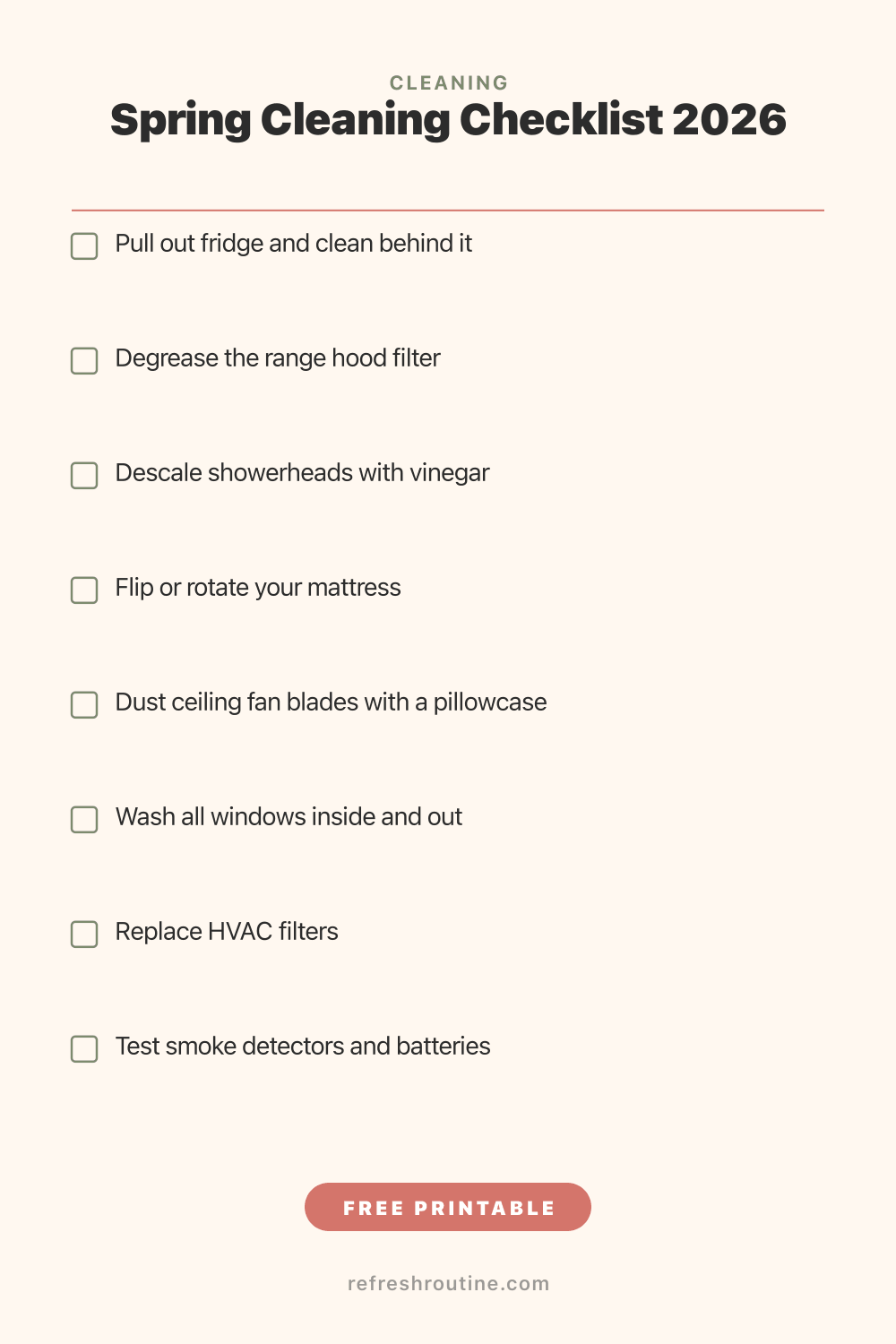
Spring cleaning isn’t just tradition. It’s the annual reset your home needs after months of being sealed up during winter. Dust accumulates in places you never think to clean, clutter builds up behind closed doors, and everything could use a thorough refresh.
This guide breaks the entire job into manageable room-by-room checklists. You don’t need to do everything in one weekend. Spread it out over a few weeks, tackle one room at a time, and check things off as you go. That approach is honestly the only way I’ve ever finished a full spring clean without burning out.
There is actually a practical reason behind the tradition. During winter, homes are closed up tight with windows sealed and heating systems running. The EPA estimates that indoor air can be two to five times more polluted than outdoor air. A thorough spring clean removes the dust, allergens, and buildup that have accumulated over those closed-up months. It is not just about a tidy house. It is about healthier air for your family.
Before You Start: Gather Supplies
Having everything ready before you begin prevents the “I’ll clean later, I need to go buy supplies” excuse. I’ve used that one more times than I’d like to admit.
Essential supplies:
- All-purpose cleaner
- Glass/mirror cleaner
- Microfiber cloths (at least 6)
- Scrub brush or magic eraser
- Vacuum with hose attachments
- Mop and bucket
- Trash bags and donation boxes
- Step stool for high areas
- Old toothbrush (for grout and tight spaces)
I want to share a specific tip about microfiber cloths. Buy at least six and color-code them. I use blue for glass and mirrors, green for kitchen surfaces, pink for bathrooms, and yellow for dusting. This prevents cross-contamination and means I never accidentally wipe my kitchen counter with the same cloth I just used on the toilet. A pack of 12 microfiber cloths costs about $8 and lasts for years.
Before you jump into the checklists, you might want to declutter first. In my experience, spring cleaning goes twice as fast when you’re not cleaning around stuff you don’t even need. If your home is fairly tidy already, skip straight to the kitchen.
Is It Better to Spring Clean All at Once or Over Several Weeks?
Spreading your spring clean over several weekends is far more effective than trying to do everything in one marathon day. Most people who attempt a single-day blitz run out of energy by early afternoon and leave rooms half-finished. Working room by room over two to four weekends gives you the time to deep clean thoroughly, and you end each weekend with the satisfaction of a fully completed space rather than a house full of partially cleaned rooms.
Kitchen Deep Clean
The kitchen is the biggest job, but it’s also the most satisfying when it’s done. If your pantry needs extra attention, our pantry organization guide goes deeper on that specific area.
- Pull out the refrigerator and clean behind and underneath it (the EPA recommends regular cleaning behind appliances to improve indoor air quality)
- Deep clean inside the fridge. Remove all shelves and drawers, wash with warm soapy water
- Clean inside the oven (self-clean cycle or oven cleaner)
- Degrease the range hood filter (soak in hot water with dish soap)
- Clean inside the microwave (steam with a bowl of water and lemon for 3 minutes)
- Wipe down all cabinet fronts. They collect grease film over winter and it’s honestly a little shocking
- Clean the dishwasher. Run an empty cycle with vinegar
- Descale the coffee maker
- Wash trash and recycling cans inside and out
- Clean the tops of cabinets and refrigerator
- Wash all light fixtures and replace burnt-out bulbs
- Wipe baseboards and door frames
The range hood filter is one that most people skip, and it makes a huge difference. Pull it out and look at it. If it is coated in a sticky grease film, your range hood is not ventilating properly. Soak it in a baking dish filled with very hot water and a generous squirt of dish soap for 15 minutes. Scrub gently with an old brush, rinse, and let it dry completely before reinstalling. I do this twice a year and it keeps my kitchen smelling fresh.
Bathroom Deep Clean
- Scrub tile grout (baking soda paste + old toothbrush works really well)
- Clean exhaust fan cover (remove and soak in soapy water)
- Descale showerheads (soak in vinegar overnight)
- Wash shower curtain and liner (most are machine-washable, which I didn’t realize for years)
- Clean behind the toilet and around the base
- Organize and purge under-sink storage. While you’re at it, declutter the whole bathroom
- Check for expired medications and beauty products
- Wash bath mats and replace if worn
- Clean mirror edges and light fixtures
- Scrub soap scum from glass shower doors
For the showerhead descaling, here is exactly what I do. I fill a plastic bag with white vinegar, submerge the showerhead in it, and secure the bag with a rubber band. I leave it overnight. In the morning, the mineral buildup dissolves completely, and the water pressure improves noticeably. This costs about 50 cents worth of vinegar and takes one minute of actual effort.
Bedroom Deep Clean
- Flip or rotate your mattress
- Wash pillows (most are machine-washable. Check the tag)
- Launder all bedding including duvet covers, mattress pad, and decorative pillows
- Dust ceiling fan blades (use a pillowcase to trap dust. This trick changed my life)
- Clean under the bed thoroughly
- Wipe down all furniture surfaces including tops of dressers and nightstands
- Wash windows inside and out
- Vacuum or steam clean curtains
- Dust blinds slat by slat (a sock on your hand works great)
- Clean closet. Vacuum the floor, wipe shelves. Perfect time for a closet organization session too
The pillowcase trick for ceiling fan blades deserves a little more explanation because it truly is brilliant. Slide an old pillowcase over one fan blade, then slowly pull it off while pressing gently. All the dust stays trapped inside the pillowcase instead of falling onto your bed and floor. No mess, no sneezing, and it takes about 30 seconds per blade. I wish I had known about this years ago.
According to the Asthma and Allergy Foundation of America, the average mattress can contain tens of thousands of dust mites. Flipping or rotating your mattress during spring cleaning, combined with washing bedding in hot water, significantly reduces allergens in your sleep environment.
Living Room Deep Clean
- Move furniture and vacuum underneath
- Deep clean upholstered furniture (vacuum crevices, spot-clean stains)
- Wash or dry-clean throw pillow covers
- Clean TV screen and electronics (microfiber cloth, no harsh chemicals)
- Dust all bookshelves. Remove books, dust shelf, replace
- Clean windows and window tracks
- Steam clean or shampoo carpets
- Wipe all baseboards, door frames, and crown molding
- Clean light fixtures and lampshades
- Dust ceiling corners for cobwebs
Window tracks are one of those spots that people forget about all year. By spring, they are usually filled with dust, dead bugs, and grime. I use an old toothbrush and a spray of all-purpose cleaner to scrub the tracks, then wipe with a damp cloth. It takes about three minutes per window and makes a visible difference when the window is open.
Home Office Deep Clean
If you work from home, this is a great time to set up a proper desk organization system too. A clean office makes such a difference for focus.
- Disinfect keyboard, mouse, and phone (they’re dirtier than a toilet seat, which is a fun fact I wish I didn’t know)
- Clean monitor screen
- Organize and shred old paperwork
- Dust all shelves and surfaces
- Clean under and behind the desk
- Untangle and organize cables
- Wipe light switches, outlet covers, and door handles
A study by the University of Arizona found that the average desk harbors 400 times more bacteria than a toilet seat. That statistic motivated me to add keyboard and mouse disinfecting to my regular routine, not just my spring cleaning list. A quick wipe with a disinfecting cloth once a week takes 30 seconds and makes a meaningful difference.
Whole-House Tasks
These apply to every room and are easy to forget, so I save them for the final weekend:
- Wash all windows inside and out
- Clean all light switches and door handles (high-touch surfaces)
- Dust or vacuum all vents and registers
- Replace HVAC filters
- Test smoke detectors and replace batteries (the National Fire Protection Association recommends testing monthly and replacing batteries yearly)
- Clean or replace welcome mats
- Pressure wash exterior, front porch, walkways, driveway
- Clean outdoor furniture for the season ahead
HVAC filter replacement is one of the most impactful tasks on this list. A clogged filter forces your system to work harder, which increases energy bills and reduces air quality. I write the date on the filter edge with a permanent marker every time I replace it so I always know how old it is. Most filters should be replaced every 60 to 90 days, but check the manufacturer’s recommendation for yours.
Pro Tips for a Faster, Better Spring Clean
These are the specific strategies that cut my spring cleaning time in half over the years.
Work top to bottom in every room. Dust and debris fall downward. If you mop the floor first and then dust the ceiling fan, you will have to mop again. Start with the highest surfaces (ceiling fans, top shelves, light fixtures), then work down to counters, furniture, and finally the floors.
Clean left to right around the room. Pick a starting point and move in one direction. This prevents the aimless back-and-forth that wastes time and makes you feel like you are not making progress.
Spray and walk away. Apply cleaning products to surfaces like the oven, shower, and grout, then move on to a different task while the product works. Come back in 10 minutes to wipe. This passive cleaning time saves you from scrubbing as hard.
Play a podcast or audiobook. Spring cleaning weekends go by much faster when you have something engaging to listen to. I save my favorite podcast episodes specifically for cleaning days. It turns a chore into something I almost look forward to.
Reward yourself after each room. I am a big believer in small rewards. After finishing the kitchen deep clean, I make myself a fancy coffee and sit in my freshly cleaned space for 10 minutes. After the bathrooms, I take a long shower in my sparkling-clean shower. It makes the work feel worthwhile.
Key Takeaway
Spring cleaning does not need to be a single overwhelming weekend. Spread it across four weekends, work one room at a time, and gather all your supplies before you start. The top-to-bottom, left-to-right approach keeps you efficient, and completing one room fully before moving to the next gives you visible progress that fuels your motivation. By the end of four weekends, your entire home will be deeply cleaned and ready for the season ahead.
Your Spring Cleaning Schedule
Spread it over 4 weekends for a stress-free deep clean:
- Weekend 1: Kitchen (the biggest job, so give it a full weekend)
- Weekend 2: Bathrooms + Bedrooms
- Weekend 3: Living Room + Home Office
- Weekend 4: Whole-house tasks + Outdoor areas
Want a daily cleaning routine for the rest of the year? Check out our 15-minute daily cleaning routine that keeps your home clean between seasonal deep cleans. Or visit our complete cleaning routines guide for weekly, monthly, and seasonal schedules.

Frequently Asked Questions
When should I start spring cleaning?
Most people spring clean between mid-March and mid-April. Start whenever you feel motivated — the exact date matters less than actually doing it. Budget one weekend per room for a thorough deep clean.
How long does a full spring clean take?
A thorough spring clean of an average home takes 2-4 weekends if you work room by room. Don't try to do everything in one day — that leads to burnout and half-finished rooms.
What supplies do I need for spring cleaning?
All-purpose cleaner, glass cleaner, microfiber cloths, a scrub brush, vacuum with attachments, mop, bucket, trash bags, and donation boxes. You likely already have most of these.