Hanger Organization: The Secret to a Functional Closet
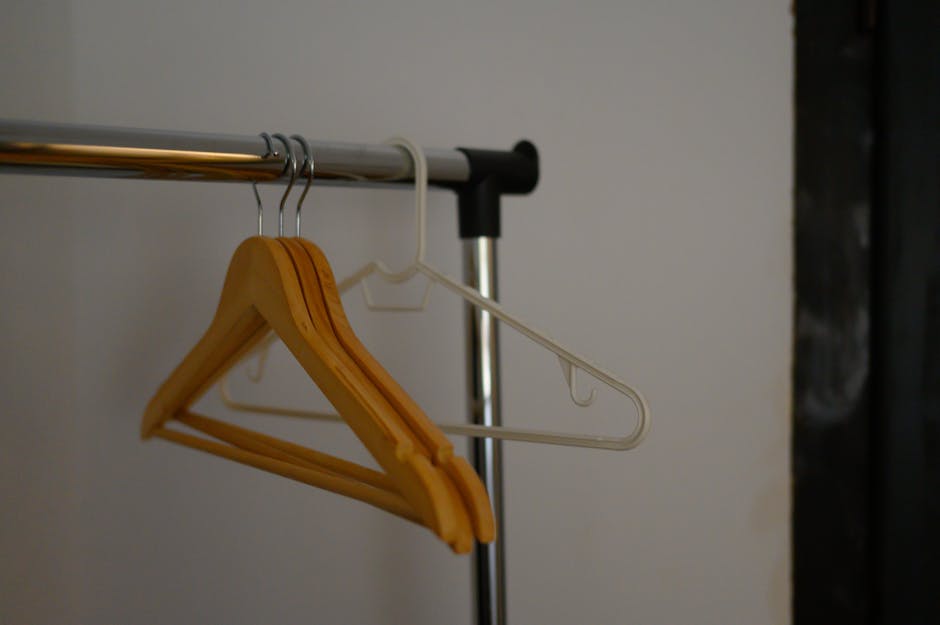
For 10 years I used a mix of plastic, wire, padded, and wooden hangers in my closet. The clothes looked uneven. The rod was overstuffed. Wire hangers from the dry cleaner kept multiplying. The closet looked busy and felt cramped.
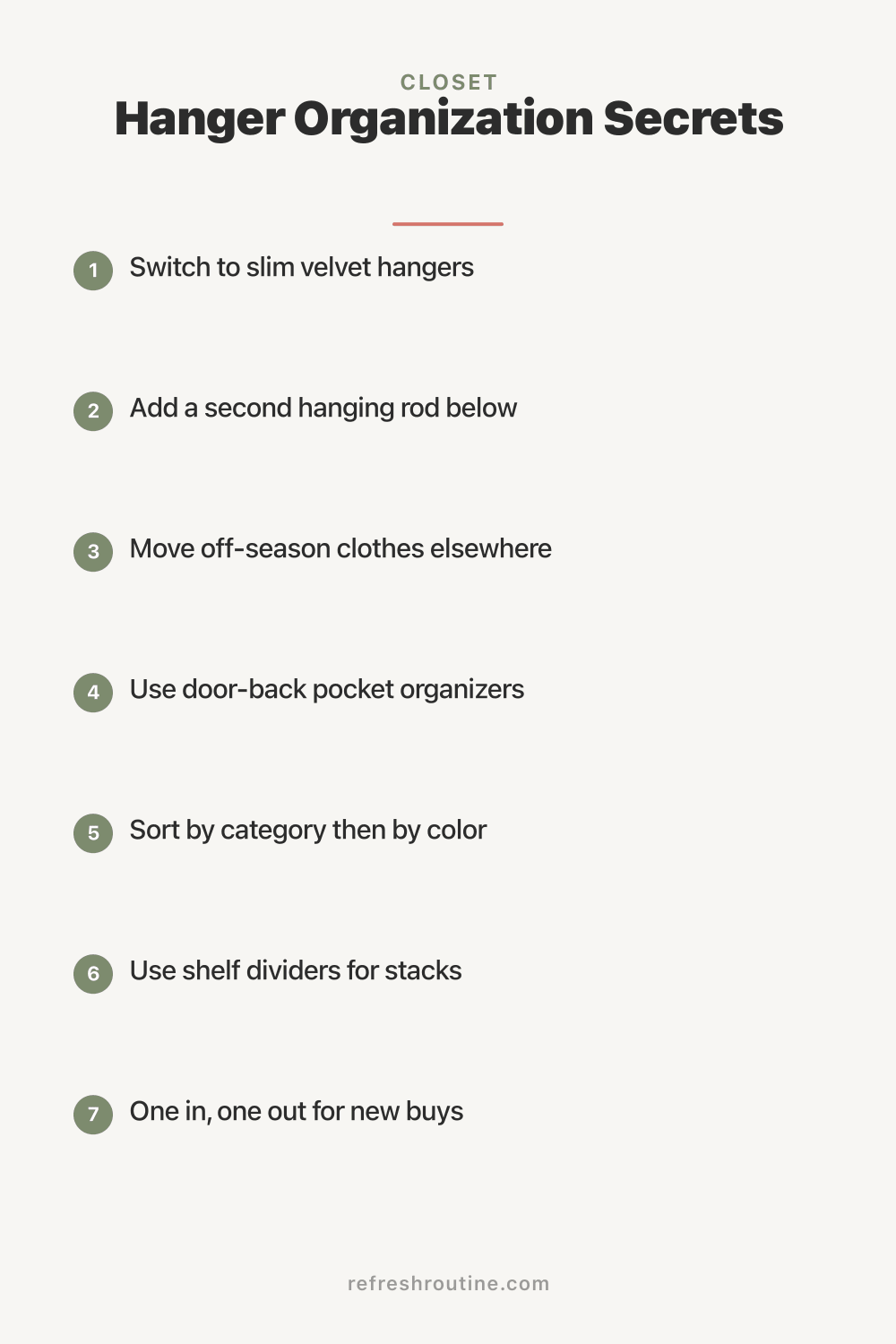
The single biggest closet upgrade I ever made was switching to matching slim velvet hangers. It cost $30 and changed everything. Here is the complete hanger organization system.
Why Hanger Choice Matters
Hangers seem like a minor detail. They are not. Hangers affect:
- Space: Slim hangers fit 2x more clothes per foot of rod
- Clothing longevity: Wrong hangers stretch necklines, distort shoulders
- Visual order: Mixed hangers create chaos
- Maintenance time: Bad hangers tangle, drop clothes
- Decluttering trigger: Limited hangers force decisions
According to research from Real Simple, switching to matching slim hangers is one of the highest-ROI closet investments, with most homes seeing 30 to 50% more usable rod space immediately.
What Are the Best Hangers for a Closet?
The best closet hangers are slim velvet hangers for most clothing (non-slip, space-saving, durable), wooden hangers for suits and coats (maintain shape under weight), and clear plastic hangers as a budget alternative. Avoid wire hangers entirely (they distort clothing). Mixing hanger types creates visual chaos and uneven hanging. Standardize on one main type for the majority of clothes.
The 5 Hanger Types Compared
1. Slim Velvet Hangers (Best Overall)
Pros:
- Non-slip surface keeps clothes from falling
- Save 50% of rod space vs plastic
- Uniform look creates calm
- Hold shirt, pant, and dress shapes well
- Affordable at scale ($1 to $2 per hanger)
Cons:
- Less sturdy than wood for heavy items
- Some velvet pulls off delicate fabrics
- Cannot hold extremely heavy coats
Best for: Most clothing in most closets
2. Wooden Hangers (Premium)
Pros:
- Sturdy enough for suits, coats, heavy items
- Look upscale, last decades
- Maintain shoulder shape under weight
- Some have built-in bar for pants
Cons:
- More expensive ($5 to $20 per hanger)
- Heavier (uses more rod space)
- Cannot match velvet’s slim profile
Best for: Suits, dress coats, leather jackets
3. Clear Plastic Hangers (Budget)
Pros:
- Cheap ($0.50 to $1 each)
- Light weight
- Don’t pull on knits
Cons:
- Slippery (clothes slide off)
- Bulky compared to velvet
- Less aesthetic
- Can crack under weight
Best for: Budget setups, secondary wardrobe areas
4. Padded Hangers (Specialty)
Pros:
- Protect delicate fabrics (silk, lace, knits)
- Prevent neckline stretching
Cons:
- Bulky (less space efficient)
- Often too thick for slim modern hangers
- More expensive than velvet
Best for: Delicate items only (bridal wear, evening gowns)
5. Wire Hangers (Avoid)
Pros:
- Free (come from dry cleaner)
Cons:
- Stretch shoulders
- Tangle constantly
- Look messy
- Slip easily
- Damage clothing over time
Best for: Never. Return to dry cleaner or recycle as metal.
Recommended Hanger Mix
For most closets, this combination works:
- 80 to 90% slim velvet hangers (everyday clothing)
- 5 to 10% wooden hangers (suits, formal coats)
- 0 wire hangers
- Clear plastic only if budget restricts
A 100-piece wardrobe needs about 75 to 90 hangers total (with 10 to 25% buffer for laundry rotation).
What I Wish I Knew About Hangers
After multiple closet overhauls, here is what helped most.
Get rid of wire hangers immediately. They are the single biggest closet upgrade for $0 cost.
Velvet pays for itself. A set of 50 velvet hangers is $30 to $40. The doubled rod space alone is worth it.
Match colors. All black, all white, or all wood. Mixed colors create visual noise even with matching shapes.
Hangers as a decluttering tool. If you run out of hangers, you have too many clothes. Hangers set the wardrobe cap.
Some clothes do not belong on hangers. Sweaters, t-shirts, jeans should typically be folded. Hangers distort knit shoulders.
What Should NOT Go On Hangers
Some clothing should be folded, not hung:
- Knit sweaters: Hangers distort shoulders
- T-shirts: Quickly stretch and pull
- Jeans and pants made of heavy fabric: Can be hung but folding is better for shape
- Tank tops with thin straps: Slip off hangers
- Underwear, socks, intimates: Fold or drawer-store
For folding strategies, see our folding clothes guide.
What SHOULD Go On Hangers
These clothing types hang best:
- Button-up shirts (cotton, linen, dress)
- Dress pants and trousers
- Dresses
- Suits and blazers
- Coats and jackets
- Skirts (with clip hangers or slot hangers)
- Silk and delicate blouses
- Items prone to wrinkling
Closet Organization Beyond Hangers
The right hanger system pairs with:
Color-Coding
Within each category (shirts, pants, etc.), arrange by color:
- White and light colors on left
- Medium tones in middle
- Dark colors on right
Some people prefer rainbow order (ROYGBIV). Pick a system and stick with it.
Category Grouping
Group clothing types together:
- All short-sleeve shirts together
- All long-sleeve shirts together
- All dress pants together
- All jeans together
- All dresses together
- All coats together
This system makes outfit decisions and laundry put-away faster.
Sectioning
Use closet dividers (small round disks on the rod) to physically separate categories. Available for $10 to $20.
For more on closet layouts, see our walk-in closet guide and small closet ideas.
How Do You Organize Hangers in a Small Closet?
Organize hangers in a small closet using all-matching slim velvet hangers (space-efficient), single direction facing (consistent visual flow), categorized by type (shirts, pants, dresses separately), then color-coded within each category (light to dark). Limit total hangers to physical space available. Most small closets fit 40 to 60 garments comfortably with slim hangers; force decluttering when hangers cap is reached.
Step-by-Step Hanger Switchover
Step 1: Audit Current Hangers (15 min)
Count what you have:
- Plastic
- Wire
- Wooden
- Velvet
- Padded
- Mismatched
This reveals the chaos visually.
Step 2: Buy Replacement Set (5 min online)
Order a set of slim velvet hangers based on your wardrobe size:
- Small (30): About $20
- Medium (50): About $30
- Large (100): About $50
I recommend Amazon Basics, Zober, or Cresnel. All similar quality.
Step 3: Take Everything Down (30 min)
Pull all clothing off old hangers. Pile on the bed.
Step 4: Throw Away Old Hangers (5 min)
Wire hangers: Recycle as metal at recycling center Plastic hangers: Donate to thrift stores (they need them) or recycle Wooden hangers: Save the best, donate the rest Padded hangers: Save for delicates, donate or toss the rest
Step 5: Sort Clothes Into Categories (45 min)
While clothes are off hangers, sort:
- Keep and hang
- Keep but fold (knits, t-shirts)
- Donate or sell
- Repair pile
Step 6: Re-Hang on New Hangers (60 min)
Place on new hangers, grouping by category. Color-code within each category.
Step 7: Add Dividers (Optional, 15 min)
Closet dividers between categories make the system visually clear.
Total project: 3 to 4 hours for a major closet overhaul.
Hanger Maintenance
Once installed, maintain with these habits:
Weekly: As laundry returns, re-hang on matching hangers immediately Monthly: Quick visual check for any rogue wire or plastic hangers Quarterly: Audit if any clothes are slipping off (replace failing hangers) Annually: Replace any worn-out velvet hangers
A good set of velvet hangers lasts 5 to 10 years with normal use.
Hangers for Different Items
Pants
Two options:
- Clip hangers: Hold pants by waistband
- Slot hangers (velvet): Pants fold over the bar
Slot velvet hangers are space-efficient and look cleaner. Reserve clip hangers for skirts.
Suits
Use wooden suit hangers with shoulder shape. Maintain the jacket’s structure. Allow jacket and pants to hang together if rod height permits.
Heavy Coats
Wooden coat hangers handle the weight. Wire and plastic hangers bend or break.
Dresses
Slim velvet works for most dresses. For heavy beaded or sequin gowns, use padded hangers.
Suits in Travel
Travel suit hangers fold flat for packing. Worth $15 to $25 if you travel for business.
Saving Money on Hangers
Even quality hangers can be expensive at scale. Strategies:
- Buy in bulk online: 50-packs cheaper per unit than 10-packs
- Watch for Amazon sales: Velvet hangers go on sale regularly
- Skip specialty designs: Plain colors work as well as fancy ones
- Mix tiers: Premium wooden for special items, velvet for everyday
Total hanger investment for full wardrobe: $30 to $80 in most cases.
Special Closets
Mudroom and Entry Closets
Heavier coat hangers needed for outerwear. Wooden or sturdy plastic only. Less concern about visual consistency since closet is less seen.
Kids’ Closets
Smaller velvet hangers exist specifically for kids. Adult hangers are too wide and pull on tiny clothes. See our kids’ closet guide.
Spare Bedroom or Guest Closet
Plain plastic or wooden hangers are fine. Less use, less need for premium systems.
Linen and Hall Closets
Hangers usually not needed in these closets (towels, sheets, household items). For coat closets, use sturdy hangers.
Decluttering Triggered by Hanger Limits
The hanger system becomes a self-regulating decluttering tool:
- Set total hanger count (e.g., 50)
- Use exactly that many hangers
- When the rod gets full, donate the items at the back
- New clothing in means old clothing out
The hanger cap forces decisions you might otherwise avoid.
Key Takeaway
Hanger organization is the single highest-ROI closet upgrade. Switching to matching slim velvet hangers doubles rod space, protects clothing shape, and creates visual calm. Most homes need 30 to 75 hangers total; mixing types creates chaos. Throw away wire hangers immediately (they damage clothing). Use wooden hangers for suits and heavy coats. Combine matching hangers with category grouping (shirts, pants, dresses) and color-coding within each category. The total project takes 3 to 4 hours and costs $30 to $50 in hangers. The daily benefit (faster outfit selection, more usable space, longer-lasting clothing) compounds for years. Start by buying 50 slim velvet hangers this weekend.
For more closet organization, see our walk-in closet guide, capsule wardrobe, and seasonal rotation posts.

Frequently Asked Questions
What are the best hangers for closet organization?
The best hangers for closet organization are slim velvet hangers (non-slip, space-saving), wooden hangers for suits and heavy coats (maintain shape), and matching plastic hangers as budget option. Velvet hangers save 50% of rod space compared to plastic. Mixing types causes visual chaos and uneven hanging.
How many hangers does one person need?
Most adults need 30 to 50 hangers total. Heavy wardrobes need 75 to 100. Capsule wardrobes work with 25 to 35. Always have 5 fewer hangers than you have clothes. If hangers always become full, you have too many clothes; the hanger limit is your decluttering trigger.
How do you organize different types of clothing on hangers?
Organize clothing by type then color: all shirts together (subdivided by sleeve length), then pants, then dresses, then suits. Within each category, sort by color (white to black, dark to light, or rainbow flow). This system makes outfit selection 50% faster and reveals duplicate items.