Sentimental Decluttering: The Compassionate Method
When my grandmother died, I inherited a box of her items. For 5 years it sat in my basement. I never opened it. I felt guilty every time I saw it. The grief wrapped itself around the box.
Eventually I learned a system that let me process the items with compassion. Some I kept. Some I released. The grief lessened. Here is the gentle method.
Why Sentimental Items Are Different
Sentimental items carry unique weight:
- Connection to people: Reminders of loved ones
- Connection to past selves: Items from younger versions of you
- Memory anchors: Tangible links to specific events
- Cultural value: Items with family or historical significance
- Guilt potential: Released items create complex feelings
Standard decluttering rules do not apply. Sentimental items need different approach.
According to grief researchers, sentimental items can serve healthy memory processing OR become barriers to healthy grief processing. The difference is whether you engage with the items or store them out of guilt.
What Is the Compassionate Approach?
The compassionate approach recognizes that releasing items does not erase the memories or connections. Items can be: photographed before release, distributed to family who will use them, transformed into functional items (a quilt from clothing), or simply released with intentional appreciation. The grief work happens parallel to the physical work.
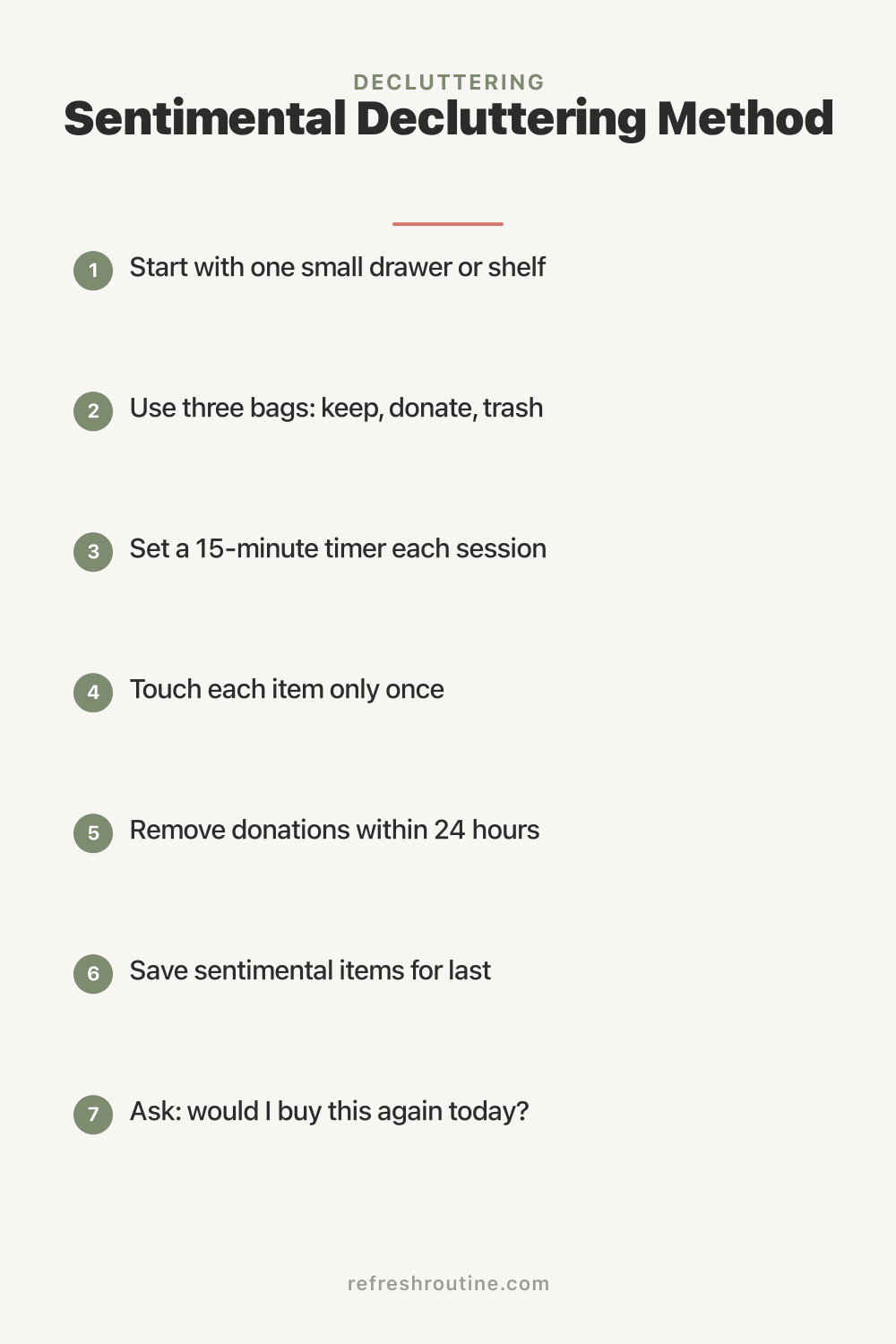
The 5-Step Process
Step 1: Choose Your Time
Sentimental decluttering happens when:
- You feel emotionally ready
- You have undisturbed time (3+ hours)
- You are not in acute grief
- You have support available
NOT during:
- Anniversary of loss
- Major life transitions
- Holidays
- Times of heavy emotional weight
Step 2: Set Up the Space
- Comfortable working area
- Tissue paper or padding for fragile items
- Camera or phone (for photographing)
- Notebook for stories
- Boxes/bags for keep/distribute/donate/toss
- Water and a snack
Step 3: Process Items in Categories
Work through one category at a time:
Photos and physical pictures:
- Sort into people you know vs unknown
- Keep meaningful photos
- Scan favorites
- Donate or release unknown person photos
Letters and cards:
- Read meaningful pieces
- Photograph keeper letters
- Save the most important
- Release routine cards
Specific person’s items:
- Take time with each piece
- Hear the story
- Decide: keep, distribute, photograph, release
Inherited or family items:
- Cultural or historical value first
- Family member interest second
- Personal connection third
- Release others
Step 4: Honor What You Release
For each released item:
Photograph it:
- Multiple angles
- Detail shots
- Provenance noted
Tell the story:
- Write it down
- Speak it aloud
- Share with family
Acknowledge the release:
- Brief ritual or moment
- Gratitude for the memory
- Permission to let go
This processing transforms release from loss to transition.
Step 5: Distribute and Release
For items released:
Family distribution: Items meaningful to family members Charitable distribution: Items that serve others Sale: For items of monetary value Trash: Items beyond repair or use
Process distribution within 7 days of decision.
What I Wish I Knew About Sentimental Decluttering
After processing my grandmother’s belongings, my own childhood items, and helping family members through similar work, here is what helped most.
Photos before release. Each item photographed before release. The memory transferred. I rarely look at the photos, but knowing they exist made release possible.
Stories matter more than objects. Items with stories I could tell to family felt richer. The retelling kept the memory alive.
Distribution to right people transformed releases. A scarf my grandmother loved went to my cousin who loved it. The joy on her face was bigger than the scarf.
Some items deserve to be kept. Not everything needs to be released. Some items are worth their space.
Grief work happens in background. The physical work of decluttering is also grief processing. Allow time for both.
How Do You Photograph Before Releasing?
Photograph sentimental items by taking multiple angles (full item, details, provenance like signatures or labels), with adequate lighting and a neutral background. Include any relevant story in metadata or a separate document. Store in a dedicated cloud folder (Google Photos, iCloud, Dropbox). The photos preserve the memory; the physical object can be released.
Categories of Sentimental Items
Childhood Items
Items from your childhood:
- School papers
- Childhood photos
- Personal mementos
- Toys you loved
Approach: Keep 5 to 10 most meaningful. Photograph 10 to 20 more. Release the rest.
Wedding and Major Event
Items from significant life events:
- Wedding gifts
- Wedding decor
- Special occasion items
- Sentimental jewelry
Approach: Display or use the meaningful pieces. Photograph extras. Distribute to family if appropriate.
Inherited Items
Items from deceased family:
- Personal belongings
- Family heirlooms
- Documents and photos
- Specific person’s possessions
Approach: See our inherited items guide for the complete approach.
Children’s Items
Items from your children’s lives:
- Artwork and projects
- Photos and videos
- Clothing milestones
- Toys with significant meaning
Approach: See our declutter kids’ artwork guide and declutter kids’ toys guide.
Travel and Experience Mementos
Items from travels and experiences:
- Travel souvenirs
- Concert memorabilia
- Event programs
- Photos from trips
Approach: Keep favorites that bring joy. Photograph the rest. Release items kept out of obligation.
Old Relationship Items
Items from past relationships:
- Cards and letters
- Gifts received
- Photos
- Memorabilia from significant relationships
Approach: Be honest about emotional weight. Release items that no longer serve.
For inherited items specifically, see our inherited items guide.
Difficult Categories
Items From People Who Have Died
The hardest category:
Timing: At least 6 to 12 months after loss Support: Have someone available Permission: Give yourself permission to feel Slow pace: Not a weekend project Family input: Coordinate with relatives
Items Marked With Achievement
- Trophies
- Awards
- Memorabilia from accomplishments
- Items from former identity
Approach: 1 to 2 representative items per period. Photograph the rest. Release.
Items From Failed Aspirations
- Diet supplements unused
- Hobby supplies for hobbies you quit
- Items from career changes
- Workout equipment
Approach: Recognize the aspirational identity is no longer current. Release with grace.
Working With Family
Sentimental decluttering involves others:
Open communication: Share what you are processing Ask before disposing: Especially family items Distribute to people who want: Don’t force items on relatives Document for the family: Photos and stories Respect different timelines: Each person processes at their pace
Tools for the Process
Useful resources:
Cloud storage: Google Photos, iCloud Scanner app: For documents and letters Voice memo: To capture stories Specific containers: Acid-free for important documents Padded boxes: For breakables
How Long Does Sentimental Decluttering Take?
Sentimental decluttering takes much longer than other decluttering. Plan for 6 to 12 months of intermittent work for an estate. Personal sentimental items can take 1 to 3 months of weekend sessions. The slow pace is intentional. Rushing the emotional decisions creates regret.
Common Mistakes
After multiple sentimental decluttering experiences:
Mistake 1: Rushing the process. Sentimental work needs time.
Mistake 2: Making decisions during grief. Wait until emotional capacity returns.
Mistake 3: Not photographing. Memories fade; photos preserve them.
Mistake 4: Forcing items on family. They may not want what you want them to want.
Mistake 5: Keeping everything out of guilt. The guilt does not honor the person.
For related topics, see our sentimental items guide and inherited items.
When to Seek Professional Help
Consider professional help for:
Hoarding: Especially of sentimental items Major estate: Professional organizer plus eldercare attorney Complex grief: Therapist plus organizer Family conflict: Mediator Cultural items: Specialty consultants for important items
Professional help costs $100 to $500+ but can save significant emotional and family conflict.
After Sentimental Decluttering
Once the work is done:
Take time to grieve: The release is emotional Notice what you feel: Lighter, freer, perhaps wistful Document for the future: Update family history records Plan for the next generation: Make your wishes clear
The work continues but it gets easier.
Building Resilience for Future Loss
This work prepares you for future:
Family history: Better organized Personal items: Clearer about what matters Future losses: Easier processing Cultural artifacts: Better preserved
For preventing this for next generation, see our Swedish death cleaning guide.
Key Takeaway
Sentimental decluttering is grief work disguised as decluttering. The relationship and memories live in you, not the objects. Photograph items before release to preserve the memory while releasing the object. Distribute meaningful items to family members who will use them. Wait until emotional capacity allows for the work (6 to 12 months after acute loss). Take time and allow the slow pace. Trust that release does not erase memory. Most homes can release 60 to 80% of sentimental items while keeping the most meaningful pieces. The lightness afterward honors the people more than holding onto everything ever would.
For related guides, see our sentimental items, inherited items, decluttering aging parent home, and Swedish death cleaning posts.

Frequently Asked Questions
How do you let go of sentimental items?
Let go of sentimental items by photographing them with their story, recognizing that memory lives in you not the object, distributing meaningful items to people who will use them, and accepting that letting go does not mean forgetting. The release becomes easier when you trust the memory remains.
Why is it so hard to declutter sentimental items?
Sentimental items are hard to declutter because they connect to people we love, past versions of ourselves, and memories we fear losing. Releasing items can feel like erasing those connections. Understanding that the relationship and memories live in us, not the objects, makes letting go possible.
What sentimental items should you keep?
Keep sentimental items that you actively engage with (look at, use, share), items with significant stories you can pass forward, items that bring more joy than weight, and items with monetary or historical value. Items that sit in storage causing guilt or burden are candidates for release.