Kitchen Cabinet Organization Ideas for Every Cabinet
When we renovated our kitchen, I thought new cabinets would solve our storage problems. They did not. The new cabinets were bigger and prettier but still chaotic after 6 months. The problem was not the cabinets, it was the system.
After studying how professional organizers handle kitchen cabinets, I redesigned ours using zones, vertical space, and the right organizers. Six months later, everything has stayed in place because the system makes sense. Here are the kitchen cabinet organization ideas that actually work.
Why Most Kitchen Cabinets Are Disorganized
Kitchen cabinets fail because of three common problems:
- No zones: Items are stored where there was empty space, not where they make sense
- Vertical waste: Half the cabinet height goes unused above stacks
- Wrong containers: Generic storage does not fit the items it holds
According to research from the National Association of Home Builders, the average American kitchen uses only 60% of its cabinet capacity due to poor vertical planning.
I learned this the hard way. My new cabinets had double the storage of my old kitchen, yet I still felt cramped within 6 months. The fix was vertical and zonal thinking.
What Is the Best Way to Organize Kitchen Cabinets?
The best way to organize kitchen cabinets is by zones based on cooking activity. Create a prep zone (cutting boards, knives, mixing bowls), a cooking zone (pots, pans, utensils near the stove), a baking zone (mixers, baking sheets, ingredients), a cleaning zone (dish soap, sponges, dishwasher supplies), and a storage zone (containers, wraps). Each zone holds only what supports that activity.
14 Kitchen Cabinet Organization Ideas
1. Add Shelf Risers (Best Quick Win)
Most cabinets have 12 to 14 inches between shelves. You only need 6 to 8 inches for plates. The wasted 6 inches above each stack equals 50% of your cabinet height.
Shelf risers ($15 to $25 for a set) double your storage by creating two levels in one cabinet space. Cost-benefit: incredible.
2. Use Cabinet Door Storage
The inside of cabinet doors is unused space worth 6 to 12 inches of storage. Mount:
- Spice racks for small jars
- Hooks for measuring cups
- Pocket organizers for cleaning supplies
- Magazine racks for cutting boards
3M Command products work without drilling. Direct mount works for permanent setups.
3. Tiered Spice Drawer Insert
Replace your spice cabinet with an angled drawer insert ($25 to $50). Spices lay on their sides with labels visible. No more digging through standing jars.
For more spice ideas, see our spice organization guide.
4. Vertical Plate Storage
Wide cabinet shelves with stacked plates waste space and risk chips. Instead:
- Use plate stands that hold plates vertically like books
- Install plate racks with slots
- Hang plates on cabinet doors with brackets
Vertical plate storage doubles capacity and makes retrieval one-handed.
5. Pull-Out Drawers in Base Cabinets
Standard base cabinets have a deep void where items get lost. Install pull-out drawers or sliding shelves for $50 to $100 per cabinet. Suddenly the back becomes accessible.
For renters, freestanding pull-out organizers achieve similar results without modification.
6. Lazy Susan for Corner Cabinets
Corner cabinets are storage black holes without a turntable. Lazy Susans ($30 to $75) rotate to bring back items to the front.
For lower corner cabinets, install a kidney-shaped or pie-cut lazy Susan that fits the corner space.
7. Knife Drawer Insert
Counter knife blocks take up valuable counter space. Drawer inserts ($30) hold knives safely in a dedicated drawer with foam blade protection.
8. Dish Rack Above Sink Cabinet
The cabinet directly above the sink can hold a built-in or pull-out drying rack. Wash dishes, place them in the cabinet, water drains into the sink. Pro setup.
9. Pegboard Inside a Cabinet for Pots
Install a small pegboard ($20) on the inside back wall of a cabinet. Hang pots and pans by their handles. Visual sorting and easy access.
10. Pot Lid Organization
Pot lids are the most annoying kitchen item. Solutions:
- Adjustable lid rack in a drawer ($15)
- File holder mounted to cabinet door (lids file vertically like papers)
- Tension rod across cabinet creates a horizontal lid divider
11. Tupperware/Container Organization
The Tupperware cabinet is everyone’s nemesis. The fix:
- Match every lid to a container, donate orphans
- Store lids separately in a vertical file organizer
- Stack containers without lids inside each other
- Use a few large containers instead of many small
I lost about 40% of my container collection during this purge. Kitchen feels twice as functional.
12. Trash and Recycling Pull-Outs
Free up floor space by installing a pull-out trash and recycling system inside a base cabinet. Premade systems run $80 to $200. DIY versions cost less.
13. Group by Frequency Inside Cabinets
Within each cabinet, place:
- Daily items at chest height (eye to waist level)
- Weekly items on higher shelves
- Monthly/seasonal items at the back or top
This frequency-based placement matches your physical reach to your use patterns.
14. Labels on Shelf Edges
Especially helpful for shared kitchens or families. Small labels on shelf edges remind everyone where things live. Makes “put it back where you found it” actually possible.
How Do You Organize a Deep Kitchen Cabinet?
Organize a deep kitchen cabinet using pull-out drawers, lazy Susans, or tiered organizers that bring back items forward. Without these aids, the back third of deep cabinets becomes dead storage. Add lights inside dark deep cabinets ($15 for battery-operated motion-activated LEDs).
What I Wish I Knew
After organizing 3 kitchens (mine and helping family members).
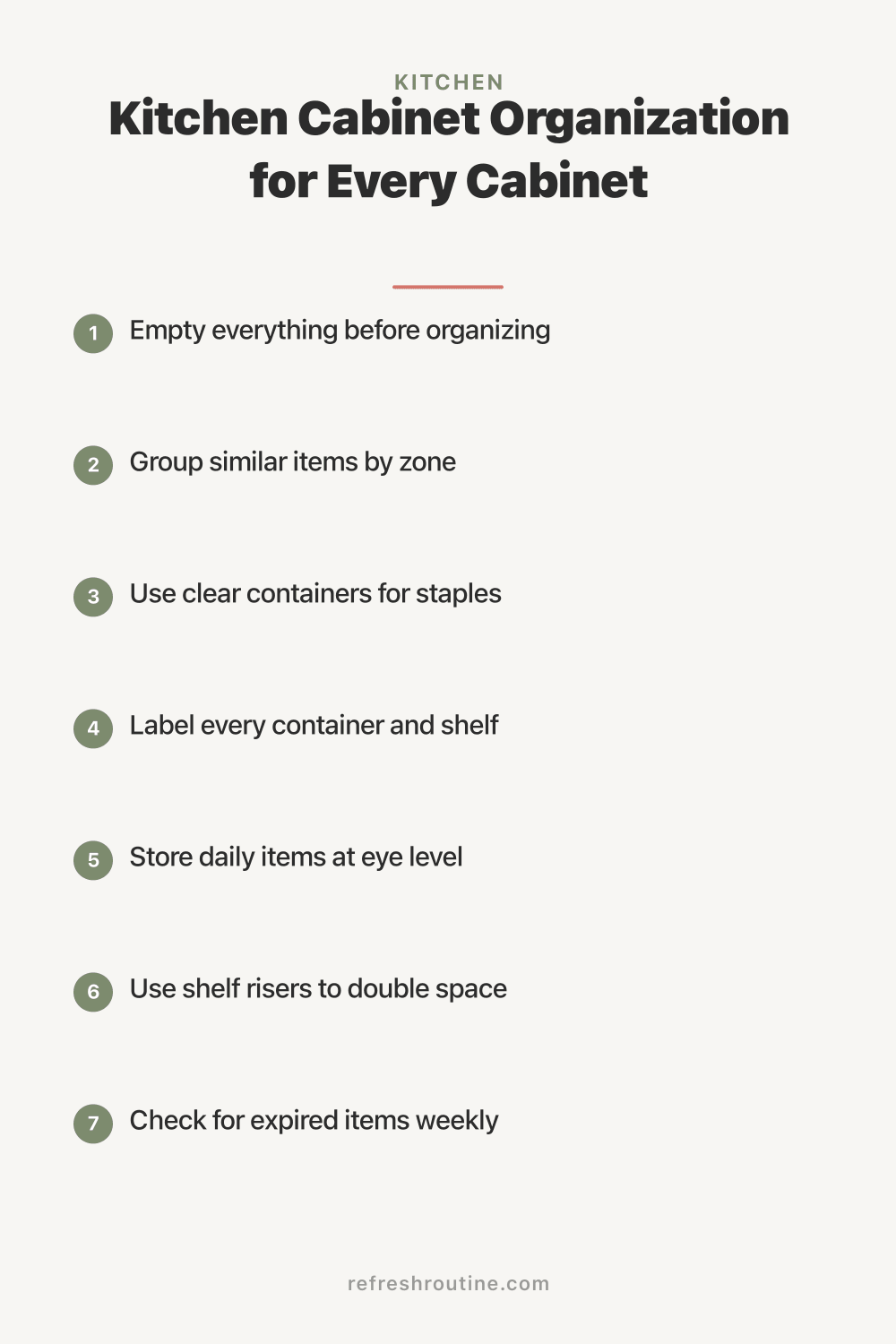
Empty everything first. I tried to organize while clothes were still in cabinets. Way slower. Empty everything to one surface, sort, then put back with a plan.
Donate duplicates ruthlessly. I had 6 wooden spoons, 4 spatulas, and 3 sets of measuring cups. Kept the best of each, donated the rest. Kitchen feels twice as spacious.
Group by zone, not category. I used to keep all baking items together because they were baking items. Better: keep mixer with mixing bowls with measuring cups all in the baking zone where I bake. Zone thinking beats category thinking.
Invest in good organizers for high-use cabinets. The Tupperware cabinet and the pots/pans cabinet justify nicer organizers. The seasonal cabinet does not need much. Spend money where it matters.
Walk through your cooking process. Before organizing, mentally walk through making your most common dishes. Note what you reach for first, second, third. Plan storage to match this sequence.
How Often Should You Reorganize Kitchen Cabinets?
Reorganize kitchen cabinets every 12 to 18 months. Habits change, equipment gets added or replaced, and family needs evolve. A quarterly walk-through to remove broken items and reset misplaced items prevents major reorganizations. Full reorganization is needed less often if maintenance happens regularly.
Kitchen Zone Setup
A functional zone layout for most kitchens:
Prep zone (near cutting space):
- Cutting boards
- Knives
- Mixing bowls
- Measuring cups and spoons
- Peelers and graters
Cooking zone (near stove):
- Pots and pans
- Cooking utensils
- Oils, salt, pepper, frequently-used spices
- Pot holders
- Aluminum foil and parchment
Baking zone (cooler counter area):
- Stand mixer
- Baking sheets and pans
- Flour, sugar, baking soda, etc.
- Rolling pin
- Cooling racks
Serving zone (near dining area):
- Plates and bowls
- Glasses
- Silverware
- Serving platters
- Napkins
Cleaning zone (under sink):
- Dish soap and brushes
- Dishwasher detergent
- Cleaning sprays
- Sponges (replace monthly)
- Trash bags
For pantry organization beyond the cabinet system, see our pantry organization guide.
Cabinet Organization on a Budget
If you cannot spend much, focus on these high-impact cheap changes:
- Shelf risers ($25): Doubles vertical space
- Tension rods ($5 each): Divide deep cabinets
- Mason jars ($15): Free containers for bulk items
- Painter’s tape labels ($3): Mark designated spaces
- Donated bins from around the house: Group items
Total: under $50 for major transformation. The system matters more than the storage product.
What to Avoid
Common cabinet organization mistakes:
- Filling every available inch (no flex space)
- Buying organizers before measuring
- Storing rarely-used items at chest height (wastes prime real estate)
- Keeping duplicates “just in case”
- Stacking heavy items above shoulder height
- Ignoring the inside of cabinet doors
For other kitchen improvements, see our kitchen drawer organization and under-sink storage guides.
Key Takeaway
Kitchen cabinets work when they are organized by zones, use vertical space fully, and store items where you actually need them. Shelf risers, cabinet door organizers, lazy Susans for corners, and pull-out drawers for base cabinets deliver 80% of the impact. Plan zones before buying organizers. Most kitchens have 30 to 40% wasted cabinet space until reorganized intentionally. Start with one cabinet this weekend (the Tupperware or pots/pans cabinet usually). The change will motivate you to tackle the rest.
For complete kitchen organization, see our pantry organization guide and refrigerator organization.

Frequently Asked Questions
How do you organize kitchen cabinets?
Empty all cabinets, group items by category and frequency of use, place daily items in easy-reach cabinets (between hip and shoulder height), add risers for vertical space, use clear bins for visibility, and label shelves for consistency. Plan zones based on where you actually cook.
What is the best way to store pots and pans?
Store pots and pans vertically in deep drawers with dividers, on pegboard mounted to the inside of cabinet doors, in hanging racks from the ceiling, or with lid organizers and pot stacking. Avoid stacking pots inside each other (scratches and inefficient retrieval).
How do you organize a small kitchen with limited cabinets?
Maximize vertical space with shelf risers, use door interiors for organizers, hang utensils on rails under cabinets, store rarely-used items in high cabinets or pantry, and group like items to find redundancies. Most small kitchens have 20 to 30% wasted cabinet space until reorganized.