Accessory Storage: Scarves, Hats, Bags, and More
I owned 23 scarves, 14 hats, 18 bags, and a tangle of accessories that I never wore because I could not find them. Each accessory was a single decision multiplied by daily friction.
A simple accessory storage system fixed all of it. Now I wear my favorite scarves regularly, my hats are organized by occasion, and my bags display rather than pile. Here are the 10 ideas that finally tamed my accessory chaos.
Why Accessory Storage Matters
Disorganized accessories cause:
- Forgotten favorites: Items at the bottom of piles never get worn
- Daily friction: 5 to 10 minutes finding what you want
- Shape damage: Bags lose form, hats lose shape
- Tangling: Necklaces, belts, scarves wrap together
- Reduced enjoyment: Wearing accessories feels harder than it should
- Visual chaos: Cluttered closet feels stressful
Smart storage solves all of this.
What Is the Best Way to Organize Accessories?
The best way to organize accessories matches storage to the item type: hooks or rods for hanging items (scarves, belts), vertical shelves for hats and bags, dividers in drawers for small items, and visible display for daily favorites. The goal is visibility: accessories you can see get worn. Hidden accessories accumulate and disappear into the bottom of drawers.
10 Accessory Storage Ideas
1. Scarf Hanger With Multiple Rings
A specialized hanger with 6 to 12 small rings. Each scarf gets its own ring. Hangs in closet.
Cost: $10 to $25 Best for: Scarf collections up to 15 pieces
2. Bag Display Shelf
Vertical shelves designed for bags. Holds 5 to 10 bags upright.
Cost: $30 to $80 Best for: Bag collections 5+ pieces
3. Hat Storage Tower
Vertical stand holding 6 to 12 hats. Caps stack flat, structured hats nest.
Cost: $30 to $60 Best for: Hat collections 5+ pieces
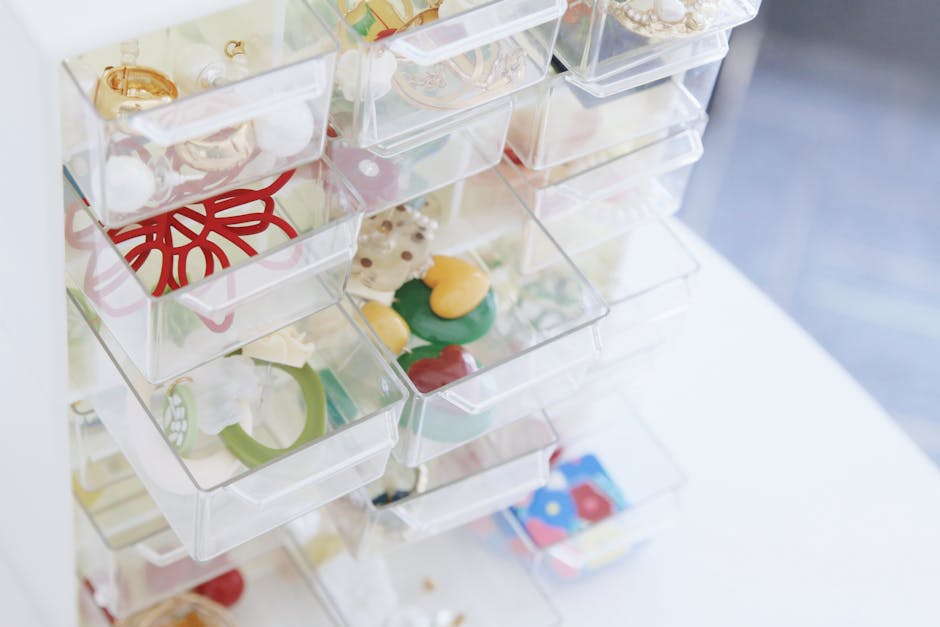
4. Drawer Dividers for Small Items
Compartmented drawer organizers for small accessories (jewelry, hair accessories, small items).
Cost: $15 to $40 Best for: Drawer storage
5. Wall-Mounted Hooks
Simple hooks mounted to closet wall. Hold belts, scarves, hats.
Cost: $10 to $25 Best for: Mixed accessory collections
6. Hanging Pocket Organizer
A door-mounted organizer with multiple pockets. Stores belts, scarves, ties, small bags.
Cost: $20 to $40 Best for: Renters, doors with hooks
7. Clear Acrylic Bins
Stackable clear bins for visible storage of seasonal accessories.
Cost: $20 to $50 per set Best for: Shelf storage, organized look
8. Specialized Sunglasses Holder
Storage specifically for sunglasses. Holds 6 to 10 pairs in dust-free environment.
Cost: $20 to $50 Best for: Sunglasses collections
9. Multi-Hook Belt and Tie Rack
Wall-mounted rack with multiple hooks for belts AND ties.
Cost: $25 to $50 Best for: Combined belt and tie storage. See our belt and tie organization for more.
10. Seasonal Rotation System
Two storage areas: current season visible, off-season in labeled bins.
Cost: $50 to $100 Best for: Comprehensive seasonal organization
What I Wish I Knew About Accessory Storage
After 5 years of refining the system, here is what helped most.
Visibility = wear. Visible items get worn. Hidden items don’t.
Quality over quantity. I had 23 scarves. Wore 6 regularly. Donated 17. The 6 get worn even more now.
Storage matches item type. Soft scarves need different storage than structured hats. Match storage to item.
Display can be elegant. Wall-mounted hat collections look like art when curated.
Seasonal rotation is freeing. Bringing out off-season items feels like meeting old friends.
Decluttering Accessories First
Before organizing, declutter:
Scarves
Keep:
- Worn at least 2x per season
- Quality or sentimental pieces
- Versatile colors that match outfits
Donate:
- Unworn in past 2 seasons
- Damaged or stained
- Synthetic that has degraded
Hats
Keep:
- Worn each season
- Quality investment pieces
- Specific occasion hats (1 to 2)
Donate:
- Outdated styles
- Damaged
- Wrong size
Bags
Keep:
- Daily-use bag (1 to 2)
- Formal bag (1)
- Work bag if needed (1)
- Travel bag (1)
- Weekend bag (1)
- Quality investment pieces
Donate:
- Past-style bags
- Worn-out interior
- Bags from old life stages
Other Accessories
Apply same criteria. If not used in 2 years, donate.
For more on decluttering clothing and accessories, see our decluttering clothes guide.
How Many Accessories Should You Own?
Most adults function well with 5 to 10 scarves, 3 to 6 hats, 3 to 6 bags, 3 to 6 belts (see our belt and tie organization), and 5 to 10 pieces of jewelry (see our jewelry organization). Quality pieces outperform quantity; rotation through fewer items provides more variety than a large unworn collection. Capsule wardrobe approaches use even fewer accessories.
Storage by Closet Type
Walk-In Closet
Most flexibility:
- Wall-mounted scarf hangers
- Built-in bag shelving
- Hat tower in corner
- Drawer organizers
- Designated accessory section
For walk-in setup, see our walk-in closet guide.
Standard Closet
Adaptable:
- Inside-door organizers
- Vertical wall hooks
- Bin storage for hats
- Sectioned shelves
Small Apartment Closet
Limited space:
- Vertical hat tower
- Door hooks
- One specific drawer
- Minimal collection
For small closet ideas, see our small closet ideas guide.
Specific Accessory Storage
Scarves
Hanging: 6-ring scarf hanger Drawer: Folded with dividers Display: Wall-mounted on hooks Stored: Padded box for delicate silks
Hats
Baseball caps: Stacked or on hooks Fedoras: Vertical hat tower Winter knits: Drawer storage Formal hats: Box storage with tissue paper
Bags
Structured: Upright on shelves with paper stuffing Soft: On hooks Seasonal: In bins when off-season Daily-use: Easily accessible
Sunglasses
Active rotation: Dedicated holder Backup: In original cases Travel: Designated travel pair
Belts
Wall hooks: By buckle. See our belt and tie organization. Drawer: With dividers Closet rod: With clip-on hangers
Hair Accessories
Drawer: With dividers Counter: In small dishes Hook: For headbands
Jewelry
See our complete jewelry organization guide.
Seasonal Rotation
Most accessories are seasonal:
Winter: Heavy scarves, beanies, gloves, warm hats Spring/Summer: Sunglasses, lighter scarves, sun hats, summer bags Year-round: Daily bags, jewelry, belts
System:
- Active season: Visible, daily access
- Off-season: Stored in labeled bins
- Transition: Rotate twice yearly
For more on seasonal rotation, see our seasonal rotation guide.
Common Accessory Storage Mistakes
After helping family and friends:
Mistake 1: Hidden storage. Accessories you cannot see do not get worn.
Mistake 2: Bunching together. Tangles and shape loss.
Mistake 3: No designated location. Items scatter.
Mistake 4: Too many accessories. Quality over quantity matters here.
Mistake 5: No rotation. Winter items in summer storage and vice versa.
For more closet organization, see our walk-in closet and capsule wardrobe guides.
Display Strategies
For visible accessory storage:
Hat collection wall: 6 to 12 hats on wall hooks Bag display shelf: Open shelf in bedroom or closet Scarf hanging rod: Visible from outside the closet Jewelry dish: On dresser surface
Display only items you love. Items you tolerate hidden away.
Hidden Storage Options
For people who prefer items hidden:
Inside closet only: Nothing visible from outside Inside drawer organization: All accessories in drawers Behind closet doors: Door hooks for hidden organization Under-bed storage: For rarely-used items
The hidden option works if you maintain inventory awareness. Easy to forget what you own.
Travel Considerations
Accessories for travel:
Travel scarf set: 2 to 3 versatile pieces Travel jewelry roll: Compact, prevents tangling Travel bag selection: 1 travel bag, 1 day-tour bag Travel hat: Crushable for packing Travel sunglasses: Always pack 2 pairs (in case of loss)
Maintenance Routine
Keep accessories in good shape:
Weekly: Quick organization check Monthly: Reset misplaced items Quarterly: Light decluttering of unworn pieces Annually: Major review, seasonal rotation, deep storage
For more, see our capsule wardrobe and walk-in closet guides.
Family Accessories
For shared spaces:
Per-person storage: Each family member’s accessories separate Color coded: Different colors for different people Designated hooks: Specific hook per person Visibility: Each person sees their items easily
Investment Pieces
Quality accessories deserve quality storage:
Padded boxes: For silk scarves and ties Climate control: For leather goods Dust covers: For seasonal bags Documentation: Note value of significant pieces Insurance: For high-value items
Key Takeaway
Accessory storage is one of the most overlooked closet upgrades. Smart storage by accessory type (scarf hangers, hat towers, bag shelves, drawer dividers for small items) creates visibility, which leads to actual wearing. Most adults own 30 to 50% more accessories than they wear; aggressive decluttering first reveals what actually deserves storage. Match storage to item type: hooks and rods for hanging items, shelves for structured bags and hats, dividers for small items, and seasonal rotation for off-season pieces. Total cost: $50 to $300 depending on collection size. The setup takes one Saturday morning. The result is accessory organization that displays favorites, protects investment pieces, and makes daily outfit decisions faster.
For more closet organization, see our walk-in closet, belt and tie organization, jewelry organization, and capsule wardrobe guides.

Frequently Asked Questions
How do you store scarves so they do not wrinkle?
Store scarves on hangers (folded over the bar), in drawer dividers (folded flat in compartments), on scarf rings (small loops for hanging), or on wall-mounted hooks. Avoid bundling without protection. Wrinkles set in folds; rotate folding patterns to prevent permanent creases.
What is the best way to store handbags?
Store handbags upright on shelves with structured bags supporting their shape, stuffed with paper or pillows. Hang straps on hooks. Avoid storing inside other bags (causes deformation). Use clear bins for smaller bags. Aim for visibility (you wear what you can see).
How do you organize hats in a closet?
Organize hats using a hat rack with multiple hooks, a vertical hat tower (stacks circular hats), wall-mounted hat displays, or storage bins for structured hats (baseball caps, fedoras). Match storage to hat type: caps stack flat; structured hats need shape preservation.
How many bags should one person own?
Most adults function well with 3 to 6 bags total: 1 daily bag, 1 dressy/formal bag, 1 work bag if needed, 1 weekend bag, 1 travel bag, and 1 specialty bag (clutch or sport). Beyond that, you wear duplicates. Quality over quantity creates a manageable collection.