10 Decluttering Mistakes That Sabotage Your Progress

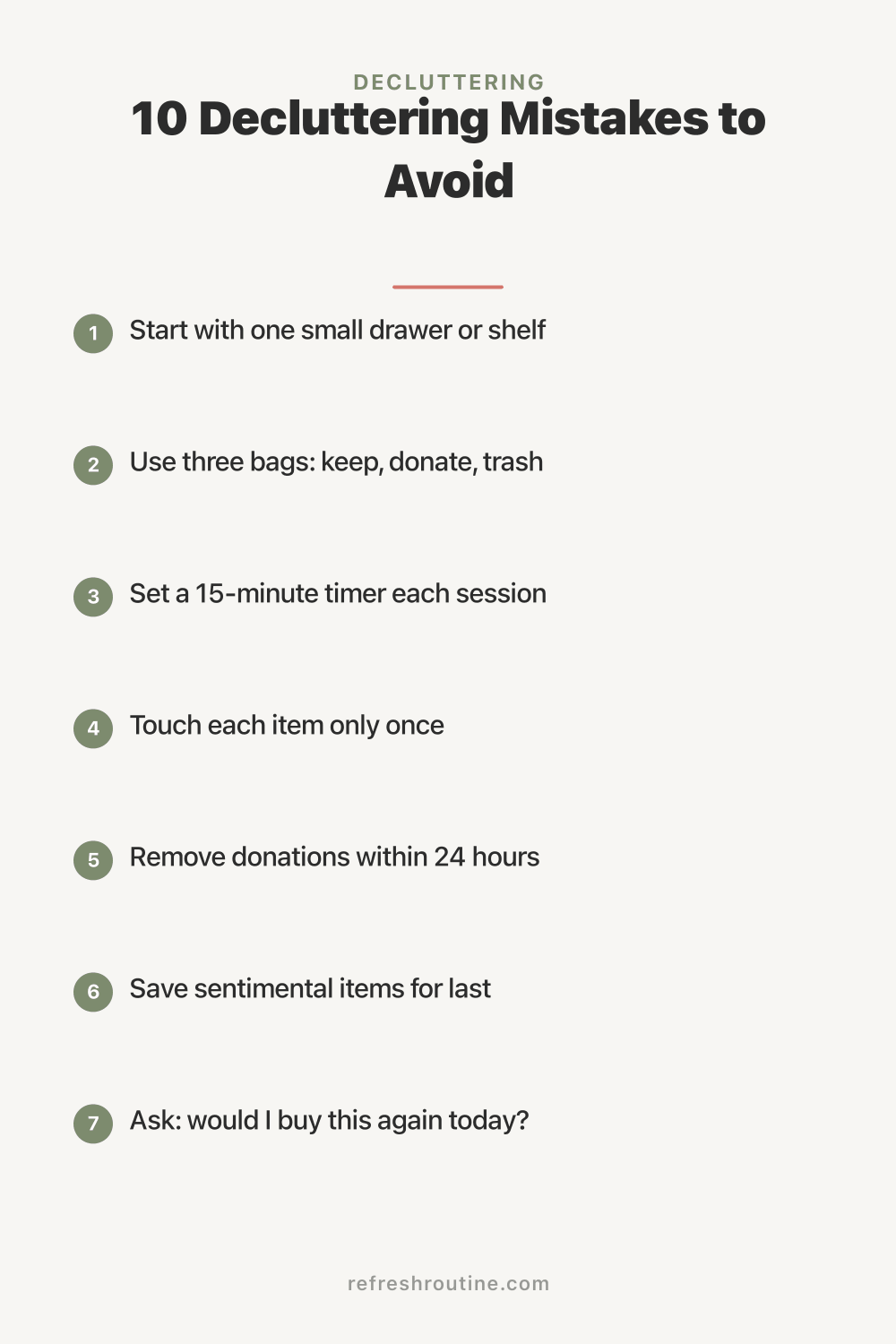
For years my decluttering attempts followed a pattern: marathon weekend, exhausting work, partial success, drift back to cluttered within months. I made the same mistakes repeatedly without recognizing them.
The pattern broke when I learned to identify the specific mistakes. Here are the 10 most common decluttering errors and how to avoid them.
Why Mistakes Matter
Most decluttering failures are not lack of effort. They are specific patterns that derail progress:
- Marathon vs habit: Wrong approach pattern
- Storage first: Inverted order
- Maybe boxes: Never resolved
- No destination: Items linger
- No maintenance: System collapses
Recognizing the mistakes is the first step to avoiding them.
What Is the Biggest Decluttering Mistake?
The biggest decluttering mistake is buying storage solutions before decluttering. Most homes do not need more storage; they need less stuff. Buying organizers first means organizing items that should be released. Declutter first, then size storage to remaining items. This single shift solves 50% of decluttering frustration.
10 Decluttering Mistakes to Avoid
1. Buying Storage Before Decluttering
The mistake: Going to The Container Store first Why it fails: Organizes items that should leave Fix: Declutter completely first, then buy minimal storage for what remains
2. Marathon Weekend Approach
The mistake: Trying to declutter whole house in one weekend Why it fails: Burnout, partial completion, drift back Fix: Daily 15-minute habits or annual calendar approach
For these approaches, see our 15-minute daily declutter and annual declutter calendar guides.
3. Creating a “Maybe” Pile
The mistake: Items go in maybe pile when uncertain Why it fails: Maybe piles never resolve Fix: Make decisions in the moment. Default to donate when uncertain.
4. Not Setting Donation Destinations
The mistake: Donate items sit in piles or trunks Why it fails: Items linger, often migrate back Fix: Identify donation destination before starting. Drop off within 24 hours.
5. Trying to Declutter Sentimental Items First
The mistake: Starting with emotional categories Why it fails: Emotional weight derails momentum Fix: Start with easy categories (trash, expired items, duplicates). Save sentimental for last.
For sentimental work, see our sentimental items guide and sentimental decluttering.
6. Buying New “To Replace”
The mistake: Buying new items after decluttering old ones Why it fails: Defeats the purpose; accumulation continues Fix: Live with what you have for 30 days before buying. Most items not missed.
7. Comparing to Pinterest
The mistake: Setting goal of magazine-perfect organization Why it fails: Unrealistic, demotivating Fix: Aim for functional organization. Function > photo aesthetic.
8. Not Maintaining
The mistake: Decluttering and assuming it stays Why it fails: Items accumulate, drift back to chaos Fix: Build maintenance habits (daily 15 min, weekly reset, monthly check)
9. Forcing Family Participation
The mistake: Decluttering others’ items without permission Why it fails: Creates conflict, betrayal of trust Fix: Only declutter your own items. Lead by example with family.
10. Quit at the First Setback
The mistake: One bad declutter day = abandon project Why it fails: Setbacks happen; abandoning loses momentum Fix: Forgive setbacks. Resume the next day. Long-term consistency wins.
What I Wish I Knew About These Mistakes
After making most of them at some point:
The buying-storage-first mistake cost me hundreds. I bought matching bins for “future organization.” They sat unused. Donated them years later.
Marathon weekend was always the wrong approach. Each marathon ended in burnout. The 15-minute daily habit transformed my home in 6 months.
Maybe piles never resolved. I created multiple. They became new clutter to declutter eventually.
Donation destinations matter. When I knew exactly where items were going, releases became easy.
Sentimental items last. Starting with emotional categories drained me. Saving them prevented the early derail.
How Do You Avoid Decluttering Mistakes?
Avoid decluttering mistakes by: declutter before buying storage, build habits not marathons, never create maybe piles, identify donation destinations in advance, start with easy categories before sentimental, don’t replace decluttered items, aim for functional not magazine-worthy, maintain through daily habits, respect others’ belongings, forgive setbacks and continue. These 10 principles solve 90% of decluttering frustration.
Common Patterns
These mistakes often appear together:
The Marathon Pattern
- Marathon weekend
- Buying storage during marathon
- Creating maybe boxes (too tired to decide)
- Not following through on donations
- Quitting at first setback
The Aspirational Pattern
- Pinterest-perfect goal
- Buying matching containers
- Forcing perfection
- Comparing to others
- Disappointment leads to quitting
The Family Conflict Pattern
- Forcing family participation
- Touching others’ items
- Conflict over decisions
- Damaged relationships
- Abandoning the project
Recognize the pattern. Break it.
Successful Decluttering Patterns
Effective approaches:
The Habit Pattern
- Daily 15-minute habit
- Realistic expectations
- Maintenance built in
- Long-term focus
- Lifestyle change
The Calendar Pattern
- Monthly area focus
- Manageable scope
- Predictable rhythm
- Maintenance habits
- Sustainable forever
The Method Pattern
- Choose system (4-box, KonMari, 12-12-12, etc.)
- Follow it consistently
- Adapt as needed
- Document progress
- Build on success
For successful methods, see our 4-box method, 12-12-12 method, and annual declutter calendar guides.
When Mistakes Happen
Even with awareness, mistakes happen:
Permission to fail: One mistake does not abandon the project
Identify the pattern: Which of the 10 mistakes happened?
Adjust approach: Modify what’s not working
Continue: Resume after a day or two
Document lessons: Note what to avoid next time
Family Considerations
For households decluttering:
Each person their own items: Never force on family
Lead by example: Your own work motivates others
Open communication: Share what you are doing
Respect refusals: Some family won’t participate
Set boundaries: Your space is yours
For more family approaches, see our decluttering aging parent home and decluttering with kids guides.
Long-Term Success
To make decluttering stick:
Build habits: Daily 15 minutes Identify your style: Which method works for you Maintain weekly: Quick reset Plan monthly: Annual calendar approach Adjust as life changes: Different seasons need different approaches
Specific Mistakes by Category
Kitchen
- Keeping every dish set
- Storing rarely-used appliances
- Trying to organize while clutter remains
Closet
- Trying on without honest assessment
- Keeping aspirational sizes
- Not respecting current body
For closet help, see our decluttering clothes guide.
Sentimental
- Starting with emotional items
- Forcing self into decisions before ready
- Not photographing before release
For sentimental help, see our sentimental decluttering guide.
Office and Paper
- Keeping documents you can find online
- Old electronics “in case”
- Random papers without homes
For paper specifically, see our paper clutter elimination guide.
Mistakes to Forgive
Some decluttering “failures” are not actually mistakes:
- Some items felt right to keep
- Some categories needed multiple rounds
- Some areas needed seasonal reconsideration
- Some decisions evolved over time
Decluttering is iterative. Multiple rounds are normal.
Building Resilience
To handle setbacks:
Daily wins: Build small wins Photo documentation: Visual progress Habit tracking: Mark each day Support system: Family, friends, online communities Self-compassion: Treat self kindly through process
Key Takeaway
The 10 most common decluttering mistakes (buying storage first, marathon weekends, maybe piles, no donation destinations, starting with sentimental items, replacing decluttered items, Pinterest comparison, no maintenance, forcing family, quitting at setbacks) sabotage most decluttering attempts. Recognizing these patterns is the first step to avoiding them. Build habits not marathons. Make clear decisions. Identify donation destinations in advance. Start with easy categories. Maintain through daily habits. Respect others’ belongings. Forgive setbacks and continue. These principles solve the recurring failures that prevent most homes from achieving lasting organization.
For successful approaches, see our where to start decluttering, 15-minute daily declutter, and annual declutter calendar guides.

Frequently Asked Questions
What is the biggest decluttering mistake?
The biggest decluttering mistake is buying storage solutions before decluttering. People buy bins, organizers, and shelving assuming they need to organize everything they own. They end up with too many bins for unwanted items. Declutter first, then size storage to remaining items.
Why do most decluttering attempts fail?
Most decluttering attempts fail because of unrealistic timelines (whole house in one weekend), buying organizers before decluttering, keeping items in 'maybe' boxes, not having clear donation destinations, and not maintaining the system long-term. Each of these prevents lasting change.
How do you make decluttering stick?
Make decluttering stick through realistic timelines (months, not weekends), clear yes-or-no decisions (no maybe pile), immediate donation drop-off, daily maintenance habits, and one-in-one-out rules for new purchases. Decluttering is a habit, not a project.