Decluttering Mindset: 15 Principles for Lasting Change

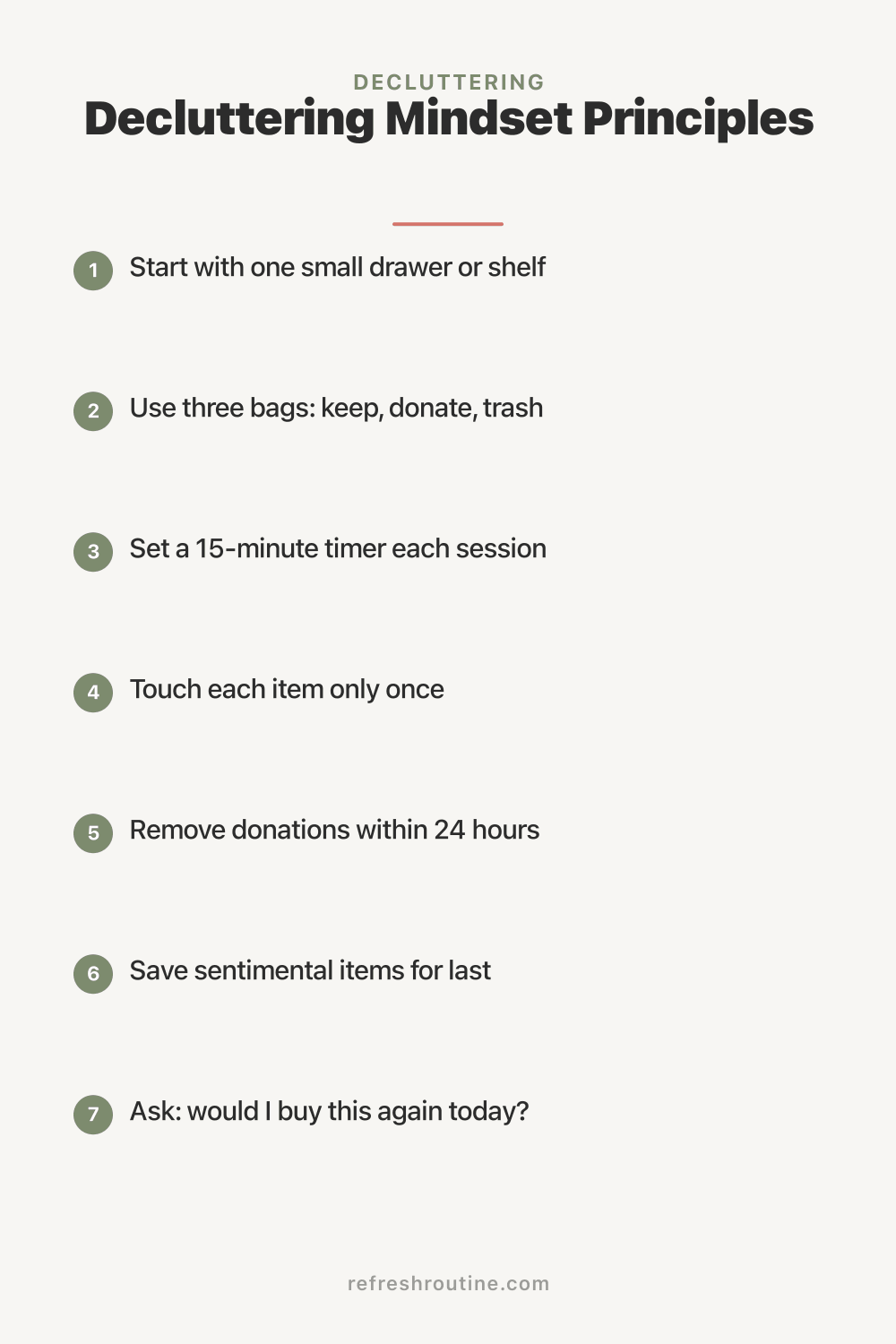
For 10 years I tried to declutter using various methods. KonMari, 4-box, minimalism. Each method worked temporarily, then I drifted back. The methods were not the problem. My mindset was.
When I finally addressed the mindset, everything changed. Here are the 15 principles that transformed my relationship with possessions.
Why Mindset Matters
Methods provide structure. Mindset provides motivation:
- Methods explain how: But not why
- Mindset explains why: And makes how stick
- Without mindset: Methods are gimmicks
- With mindset: Methods become tools
According to research from Dr. Pamela Druckerman and other behavior researchers, sustainable change requires both method AND mindset. Method alone fails long-term.
What Is the Foundation of Decluttering Mindset?
The foundation of decluttering mindset is the belief that possessions should serve you, not the other way around. Items earn their place by adding value to your life. Items that drain energy (require management, storage, attention) without adding equal value are candidates for release. Possessions are tools for living, not the goal of living.
15 Decluttering Mindset Principles
1. The Life You Want Comes First
The home should serve the life. Not the reverse. Identify what life you want; then organize possessions to support it.
2. Possessions Are Tools, Not Identity
You are not what you own. Items can be released without losing the person.
3. Memories Live in You, Not Objects
Releasing items does not erase memories. The memory was in your brain all along.
4. Mental Space Has Value
Cluttered space competes for cognitive resources. Mental clarity is worth space sacrifice.
5. Done Is Better Than Perfect
Perfect organization is the enemy of done. Aim for functional, not magazine.
6. Less Stuff Equals Less Maintenance
Every item requires some ongoing attention. Less stuff = less to manage = more time.
7. Releasing Is Generosity
Donated items serve others. The release becomes gift.
8. Future-Self Will Buy It If Needed
Most “I might need this” anxiety is unfounded. Most items can be repurchased for under $20.
9. Identity Is Becoming, Not Static
The person you were is not who you are. Items from past identities can be released.
10. Time Is the Real Currency
Maintenance time, decision time, search time. Time is more valuable than most items.
11. Gifts Were Already Given
The relationship was the gift. The object can be released without rejecting the giver.
12. The Aspirational Self Often Doesn’t Arrive
Items for the life you hoped to live but didn’t can be released.
13. Decision Fatigue Is Real
Every decluttering decision takes cognitive energy. Spread them out, accept the cost.
14. Maintenance Is the System
Decluttering once does not solve the problem. Ongoing maintenance is the solution.
15. The Process Has Value Too
The act of decluttering teaches what you value. The journey, not just the destination, matters.
What I Wish I Knew About Mindset
After 5 years of mindset work:
Method failed without mindset. I owned dozens of organizing books. None worked until mindset shifted.
Identity work was necessary. I had to figure out who I was becoming, not just who I had been.
Releasing was gift to others. Knowing items helped people elsewhere made release possible.
Mental space transformed everything. Cleared physical space cleared mental space. Both compounded.
Maintenance was the missing piece. Without daily practices, mindset wavered.
How Do You Build the Right Mindset?
Build the right decluttering mindset through: regular self-reflection on values, observing how possessions affect daily life, practicing release of one item at a time, learning from others who have done this work, and accepting that mindset is built through practice not just thought. The mindset develops through doing, not just thinking.
Specific Mindset Challenges
Sunk Cost Trap
Problem: “I spent $200 on this” Truth: Money is already spent. Keeping the item doesn’t recover it. Mindset: Past spending shouldn’t influence future decisions
Aspirational Trap
Problem: “I might be that person someday” Truth: Future-self might not arrive Mindset: Live as current you, not aspirational you
Sentimental Trap
Problem: “Grandma gave me this” Truth: The love was the gift, not the object Mindset: Memories live in you, not items
For sentimental specifically, see our sentimental decluttering guide.
Scarcity Trap
Problem: “What if I need this someday?” Truth: Most items can be repurchased Mindset: Future-self will figure it out
For specific approach, see our 20/20 rule guide.
Guilt Trap
Problem: “It was a gift” Truth: The gift was the gesture, not the item Mindset: Honor the giver by living your life
Hoarding Trap
Problem: “I always keep everything” Truth: That pattern was learned and can change Mindset: New patterns can be created
Mindset for Different Categories
Clothes
Mindset: “I am the body I have today, not the one I was or might be”
For specific approach, see our decluttering clothes guide.
Books
Mindset: “Books are meant to be read; unread books on shelves do not serve anyone”
For specific approach, see our declutter books guide.
Sentimental
Mindset: “The memory lives in me; the object can be released”
For specific approach, see our sentimental items guide.
Inherited
Mindset: “The relationship honored them; possessions don’t”
For specific approach, see our inherited items guide.
Children’s
Mindset: “The child is growing; items can grow with them or move on”
For specific approach, see our decluttering kids’ toys and declutter kids’ artwork guides.
Practical Mindset Exercises
Daily Reflection (2 minutes)
Each morning, ask:
- What life do I want today?
- What items support this?
- What items drain energy from this?
Weekly Inventory (5 minutes)
Each Sunday, ask:
- What did I struggle to release this week?
- What did I add that I am unsure of?
- What is one trap I fell into?
Monthly Reset (15 minutes)
Each month, ask:
- Has my mindset shifted?
- What am I learning?
- What new identity am I building?
Reading and Resources
Books that build mindset:
“The Life-Changing Magic of Tidying Up” - Marie Kondo “The More of Less” - Joshua Becker “Everything That Remains” - The Minimalists “Stuffocation” - James Wallman “The Year of Less” - Cait Flanders
Podcasts:
- The Minimalists Podcast
- The Becoming Minimalist Podcast
- The Lazy Genius
These resources help build mindset through stories and ideas.
Common Mindset Mistakes
After years of mindset work:
Mistake 1: Only working on method. Mindset is foundation.
Mistake 2: Thinking mindset is binary. Build over time.
Mistake 3: Comparing to others. Each person’s mindset different.
Mistake 4: Quitting when mindset wavers. It’s a practice.
Mistake 5: Not celebrating mindset wins. Recognize growth.
For methods that support mindset, see our four-box method, 12-12-12 method, and 20/20 rule guides.
Family Mindset
In households:
Lead by example: Show, don’t preach Don’t force: Mindset cannot be imposed Respect different paces: Each person grows differently Share resources: Books, podcasts, conversations Celebrate together: Family wins matter
When Mindset Wavers
Mindset is a practice, not a constant:
Setbacks happen: Life events shake mindset Holidays test you: Gift overload requires renewed practice Family pressure: Sometimes pulls you back Identity changes: Each life phase needs renewed mindset
The work is ongoing.
Long-Term Practice
After years of mindset work:
Year 1: Building foundation Year 2: Testing in real life Year 3+: Refining and adapting Forever: Maintenance is the practice
Most people don’t reach “decluttered” as destination. They reach “decluttering practitioner” as identity.
Mindset Plus Method
The combination wins:
Method without mindset: Temporary changes Mindset without method: Vague good intentions Method plus mindset: Sustainable transformation
Both matter. Build both.
For specific methods, see our annual declutter calendar, 4-box method, and where to start decluttering guides.
Key Takeaway
Decluttering mindset transforms what method alone cannot. The 15 principles include: prioritizing life over things, possessions as tools not identity, memories in you not objects, mental space has value, done over perfect, less stuff equals less maintenance, releasing as generosity, future-self will buy if needed, identity becoming not static, time as real currency, gifts already given, aspirational self often doesn’t arrive, decision fatigue is real, maintenance is the system, process has value. The mindset develops through practice not just thought. Combined with effective methods, mindset creates lasting transformation. Most people who maintain decluttered homes long-term have built both mindset and method foundations.
For supporting methods, see our minimalist home checklist, Swedish death cleaning, and annual declutter calendar guides.

Frequently Asked Questions
What is the right mindset for decluttering?
The right decluttering mindset prioritizes the life you want to live over things you own, recognizes that releasing items does not erase memories, treats decluttering as ongoing practice not one-time project, and accepts that perfect is the enemy of good enough. The mindset matters more than the method.
Why do I struggle to let go of things?
Struggling to let go often comes from: sunk cost (you spent money), aspirational identity (items represent future you), fear of scarcity (might need it someday), sentimental connection (memories), guilt (gifts, inherited), and habit (always kept everything). Recognizing the specific reason helps address it.
How do you change your mindset about possessions?
Change your mindset about possessions by recognizing that you can be the person without the object, that experiences matter more than things, that mental and physical space is valuable, that items can serve others, and that you own things, things should not own you. The mindset shift takes time but transforms the relationship with possessions.